

Gosaikunda Janaipurnima Trek 2026 is a sacred Himalayan pilgrimage that takes place during the full moon festival of Janai Purnima in August. Although the monsoon season is not typically ideal for high-altitude trekking in Nepal, this spiritual journey to Gosaikunda offers an unforgettable experience as devotees and trekkers alike gather to celebrate the holy occasion in the serene mountains
This year Janaipurnima / Rakshya Bandhan occurs in August 28, 2026 ( १२ भाद्र २०८३, शुक्रवार). Be prepare and start journey few days ago to get safe and comfort gosaikunda yatra.
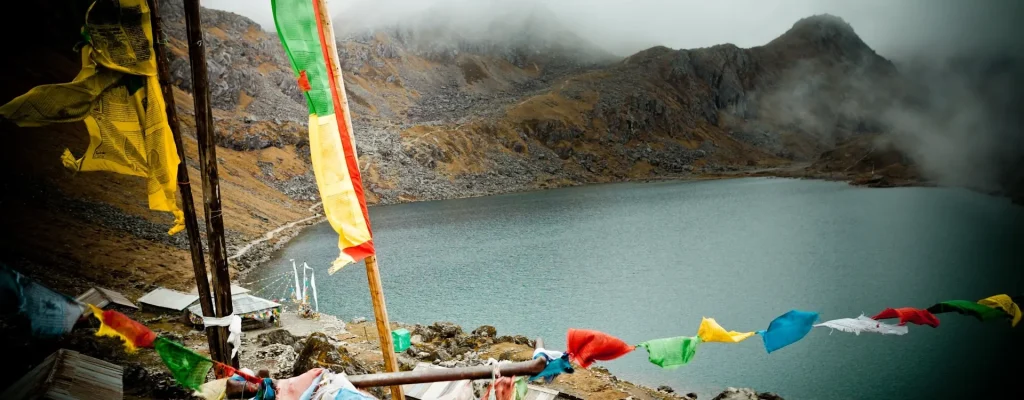
Gosaikunda, located on the northern side of Kathmandu in Rasuwa district and known for its religious and touristic significance, is also called Shiva Kunda. Situated at an altitude of 4,380 meters above sea level, this biologically diverse lake is famous not only for its religious importance but also as a popular destination that attracts both domestic and international tourists.
This unique gift of nature has not only enhanced Nepal’s reputation but has also earned Gosaikunda the distinction of being a must-visit destination for every traveler. In 2006 (September 2007), Gosaikunda was listed as a Ramsar site and lies within the Langtang National Park, where it is regarded as a protected, highly attractive, and charming area.
For nature lovers, it is a mystical haven. From a tourism perspective, both domestic and foreign visitors can enjoy panoramic views of places such as Deurali, Dhimsa, Chandanbari, Cholampati, and the Lauribinayak Buddha temple. Along this trail, visitors can easily spot various species of flowers, endangered wildlife, plants, and birds, offering a truly delightful experience.
Sacred Lakes in the Gosaikunda Region
Gosaikunda is part of a larger sacred lake system. There are 108 lakes in this region, according to myth and legend. The most prominent ones include:
- Gosaikunda (Main Lake) – The holiest, believed to contain the spirit of Lord Shiva.
- Parvatikunda – is a sacred lake near Gosaikunda named after Goddess Parvati, the consort of Lord Shiva.
- Bhairavkunda – Linked to Lord Bhairav; considered very powerful and deep.
- Saraswatikunda – Dedicated to the goddess of knowledge and wisdom.
- Surajkunda & Chandra Kunda – Symbolizing the sun and moon.
- Dudh Kunda – A smaller yet visually striking milky-white lake.
- Naag Kunda – Symbolic of the divine serpent (Naag).
Each of these lakes has its own spiritual legend and charm.
Gosaikunda: From Satya Yuga to Present
Gosaikunda has maintained its significance since the Satya Yuga. People’s religious faith continues to grow, and the number of scholars and observers studying the area is also increasing.
As described in ancient Hindu texts, during the cosmic event known as Samudra Manthan in the Satya Yuga—when gods and demons churned the ocean—a potent and deadly poison named Halahal (also called Kalkut) surfaced. Its emergence posed a grave threat to the entire universe, sparking fear among the celestial beings. In desperation, the gods turned to Lord Shiva for help. To protect creation, Lord Shiva drank the poison, which became lodged in his throat, causing intense burning.
Seeking relief, he journeyed north to the Himalayas and arrived at Betrawati. There, he struck a rock with a branch of the sacred Bet tree, releasing water to quench his thirst. However, the searing pain from the poison remained. Finally, upon reaching Niladri Mountain, he struck the rock with his trident (Trishul), from which the holy Ganga water (Trishul dhara) emerged. Gosaikunda lake form from trishul dhara further run to Bhairav kunda and saraswati kunda and ultimatelly converted to holy trishuli river. It is believed that Lord Shiva finally found peace by resting in the icy waters of what is now Gosaikunda. Due to the blue discoloration on his throat from the poison, he came to be known as Neelkantha Mahadev. A reddish-hued rock within Gosaikunda Lake is believed by pilgrims to resemble the divine figure of Lord Shiva himself.
Gosaikunda is about 600 meters long and 370 meters wide, exhibiting a unique appearance where some parts are bathed in sunlight while others are covered by clouds. The region has 108 lakes, sacred to Hindus, Buddhists, and followers of other religions. Among these, Bhairav Kunda, Saraswati Kunda, Parvati Kunda, and Surya Kunda are the most prominent. The natural environment makes the journey to Gosaikunda even more beautiful. Along the way, travelers encounter Tamang culture. Some come to hike, others to observe Tamang traditions, many seek religious merit, some couples come to pray for children or life partners, and many come for peace and the enjoyment of nature.
Why Visit Gosaikunda on Janaipurnima?
Janaipurnima, also known as Raksha Bandhan in the lowlands, is a full-moon festival during which Hindu men chant the Gayatri Mantra and change their sacred thread (janai) and protection thread (Rakshya Bandhan) after taking a ritual bath.
Every year during Dashain and Janaipurnima festivals, fairs are held that attract pilgrims from both inside and outside the country. On the day of Janaipurnima, thousands of Hindu devotees from nearby districts as well as distant corners of Nepal and even parts of India gather at Gosaikunda. Recognized as a famous religious and touristic destination, the Janaipurnima fair is held annually at Gosaikunda in Ward No. 5 of Gosaikunda Rural Municipality.
Taking a holy dip in the sacred waters of Gosaikunda and offering prayers to Lord Shiva is believed to wash away sins, grant peace to departed ancestors, and bring devotees’ heartfelt wishes to life. Thousands of devotees come every year to take a holy dip for these spiritual benefits.
From Dhunche, the headquarters of Rasuwa district, it takes nearly two days of steep uphill trekking to reach Gosaikunda. Pilgrims report that as soon as they bathe in the lake, their ailments fade away, fatigue disappears, and they feel a unique surge of energy.
Gosaikunda Janaipurnima Trek 2026 : How to Reach Gosaikunda ?
There are four main trekking routes to Gosaikunda, but the most popular and scenic one is via Dhunche:
- Dhunche – Chandanbari – Laurebina – Gosaikunda (Best Route)
The most used and well-facilitated route for pilgrims.
Lodges available at all key stops.
Sights: Deurali, Dhimsa, Sing Gompa, yak pastures, rhododendron forests. - Via Syabrubesi – Langtang Valley – Laurebina – Gosaikunda
Ideal for those combining Langtang Valley Trek with Gosaikunda
More scenic but longer. - Via Helambu – Gosainkunda (Sundarijal / Melamchi Ghyang route)
Requires more days, popular for extended Langtang–Helambu circuit. - Via Nuwakot – Betrawati – Ramche / Satdobato – Gosaikunda
Rarely used, offbeat and mostly unserviced for trekkers.
Dhunche Route remains the most suitable and recommended for Gosaikunda Yatra during Janaipurnima.
Dhunche to Gosaikunda Trek Trail:
If you trek quickly from Dhunche, you can reach Gosaikunda in about 12 hours. The route passes through places like Ghattekhola, Deurali, Chandanbari (home to the large Buddha statue at Sing Gompa), Dhimsa, Cholampati, and Lauribinayak — all offering spectacular views.
For a more relaxed pace, it typically takes one and a half days, with overnight stays at Chandanbari, Cholampati, or Lauribinayak. From Lauribinayak, a steep four-hour uphill climb begins, with some permanent lodges located at around 3,500 meters elevation. The view also includes several villages located downhill.
From the Buddha temple, the trail to Gosaikunda is less difficult, with mostly gentle ascents and some gradual uphill sections. Since Gosaikunda lies at around 4,400 meters, about 500 meters of additional elevation gain is required, which can be challenging due to the altitude and fatigue.
As you near the lake, a welcome gate greets visitors with the words, “Welcome to Gosaikunda.” Before reaching the main lake, travelers encounter Saraswati Kunda and Bhairav Kunda, which may appear to be the destination but are only for viewing; no rituals or bathing occur there. Other lakes in the region include Surya Kunda, Aama Kunda, and Dudh Kunda. After navigating narrow cliffs and crossing the Trishuli River, visitors often say they forget all their worries upon arrival.
The Weather at Gosaikunda Janaipurnima Trek 2026 / August
August is the tail end of the monsoon season in Nepal. Expect cool temperatures, ranging from 5°C to 15°C during the day and potentially dropping to 0°C or lower at night, especially near the lake. Rainfall is possible on the way up, but during Janaipurnima, the skies often clear up briefly, offering stunning views of the surrounding Himalayan peaks. Due to the altitude and changing weather, warm clothes and waterproof gear are essential.
A Natural Stage of Divine Beauty
Often described by filmmakers and artists as a “natural stage,” Gosaikunda enchants with its pristine alpine beauty. Its ever-changing moods—from misty mornings to golden sunsets over snow-capped peaks—feel like nature’s own cinematic masterpiece. Travelers and pilgrims alike are drawn back again and again, unable to resist the peaceful aura and raw beauty of this sacred Himalayan landscape.
Cradled in the high Himalayas, surrounded by rugged cliffs and serene glacial lakes, Gosaikunda is more than just a destination—it’s an experience. Its magnetic charm continues to captivate not just spiritual seekers during Janaipurnima, but also nature lovers, trekkers, and photographers from Nepal and around the globe.
Majestic Peaks Seen Along the Gosaikunda Janaipurnima Trek
The trek to Gosaikunda during Janaipurnima is not only spiritually enriching but visually unforgettable. On clear days, the trail offers some of the best panoramic views in the Langtang region. Some of the majestic peaks visible along the way include:
- Langtang Lirung (7,227 m / 23,711 ft) – The highest peak in the Langtang region, towering over the entire valley with grandeur.
- Ganesh Himal (7,422 m / 24,350 ft) – Often visible from higher viewpoints, its distant silhouette adds depth to the mountainous horizon.
- Himalchuli (7,893 m / 25,896 ft) and Manaslu (8,163 m / 26,781 ft) – On especially clear days, these giants of the Manaslu region make a dramatic appearance from high ridges.
- Dorje Lakpa (6,966 m / 22,854 ft) – A prominent and beautifully shaped peak visible along the trail.
- Surya Peak (5,145 m / 16,877 ft) – Located near Laurebina, this is a favorite for adventurous trekkers seeking panoramic views.
Each of these mountains adds to the spiritual and scenic atmosphere of the Gosaikunda trail, making the Janaipurnima pilgrimage in 2025 not just a religious journey—but also an unforgettable Himalayan escape.
Why plan to Gosaikunda Janaipurnima Trek 2026?
- Spiritual Rejuvenation: Participate in one of Nepal’s most revered festivals in a sacred mountain setting.
- Cultural Immersion: Witness local Tamang and Sherpa communities in their full religious and cultural glory.
- Stunning Views: Trek through rhododendron forests, stone villages, and glacier-fed streams, all with a panoramic view of Langtang Lirung, Ganesh Himal, and even distant Manaslu (8,163 m / 26,781 ft).
- Off-the-Beaten-Path Adventure: Far less crowded than Annapurna or Everest trails, but equally stunning.
Tips for Gosaikunda Janaipurnima Trek 2026
To make your pilgrimage successful and safe, consider these detailed tips:
1. Prepare Physically
- The trek includes steep ascents and high altitude.
- Start walking and climbing stairs regularly at least 2–3 weeks before.
2. Carry Essentials
- Warm clothes, sleeping bag, rain jacket, torchlight, dry food, glucose, personal meds.
- Pack light but smart.
3. Start Early
- Begin your journey at least 3–4 days before Janaipurnima (Aug 9).
- Lodges get full—early arrival means better accommodation.
4. Accommodation & Food
- Book lodges in advance if possible.
- Carry some ready-to-eat items for emergencies.
5. Altitude Safety
- Take it slow, especially beyond Laurebina (3,900m).
- Stay hydrated and recognize symptoms of altitude sickness.
6. Respect Local Culture
- The festival is sacred. Avoid alcohol, meat, and loud behavior.
- Follow instructions from local police and community volunteers.
7. Stay Connected
- NTC network usually works up to Chandanbari.
- Inform your family before losing signal.
Final Thoughts: Gosaikunda Janaipurnima Trek 2026
Gosaikunda Janaipurnima Trek 2025 is more than a trek — it is a life-changing spiritual journey. From rugged Himalayan trails and ancient legends to cold sacred waters and divine devotion, it offers a unique combination of adventure and faith. Whether you’re a pilgrim or a traveler, witnessing the chanting crowds, trident-carrying sadhus, and Himalayan sunrise over the lakes is an experience that will remain etched in your soul.
Besides Janaipurnima, Gosaikunda can be visited throughout the trekking season with the guidance of our experienced local team. For alternative routes and experiences in the region, check out our carefully designed itineraries:
Explore the Langtang region and trek at your own pace and discover the raw beauty, sacred lakes, and mountain panoramas beyond the festival season.


