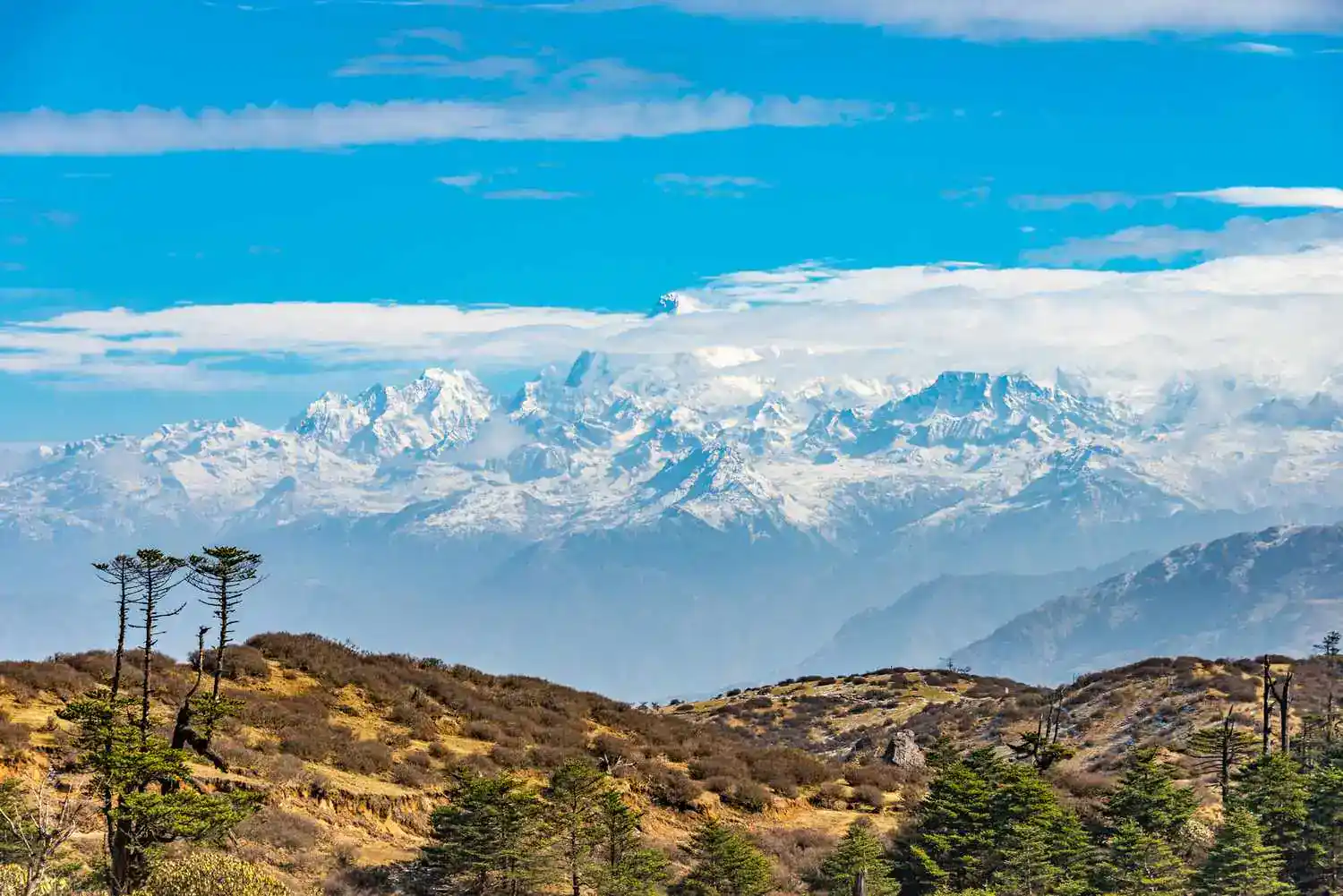
Kanchenjunga Circuit Trek – North and South Base Camp Trek - 21 Days
Discover Nepal’s most remote and awe-inspiring trekking route, the Kanchenjunga Circuit. This off-the-beaten-path adventure takes you to both the North and South Base Camps of Mount Kanchenjunga (8,586m), offering unmatched views of towering peaks, secluded valleys, and traditional mountain culture. Fewer crowds, greater rewards, and a true Himalayan wilderness experience await.-
Duration
21 DAYS
-
Activity
Trekking
-
Max. Altitude
5,143m / 16,877ft
-
DifficultyChallenging Trek
This trek represents the pinnacle of strenuous and challenging trekking, offering a true mountain climbing adventure. It ventures into rarely visited areas, requiring trekkers to walk for more than 8 to 9 hours each day. Given its intensity, this trek demands excellent physical condition and substantial prior experience in mountaineering and trekking. It is the toughest type of trek, designed for those seeking a formidable and rewarding challenge.
-
Starts
Kathmandu
-
Ends
Kathmandu
-
Group Size
1 Pax
-
Best Season
Spring / Autumn
PRICE PER PERSON
- 2 US$2200
- 3-4 US$2000
- 5-8 US$1900
- 9-12 US$1750
- 13-30 US$1600
Kenchenjunga North Base Camp and South Base camp - Complete Circuit Highlights
- Trek to both North and South Base Camps of the world’s third-highest peak (8,586m)
- Experience the untouched beauty of eastern Nepal’s remote landscapes and alpine valleys
- Witness five majestic Kanchenjunga summits from Pangpema and Oktang viewpoints
- Cross multiple high passes like Sinion La (~4,440m), Mirgin La (~4,480m), and the highest, Sinelapche La / Bhanjyang (~4,830m) in a single day
- Explore authentic villages like Ghunsa, Khambachen, Lhonak, Tseram, and Yamphuding
- Discover the rich culture of Limbu, Rai, Sherpa, and Tibetan Buddhist communities
- Spot rare Himalayan wildlife, including red panda, blue sheep, and snow leopard habitat
- Stay in cozy local teahouses, far from crowded commercial trekking zones
- Requires good fitness, proper acclimatization, and a spirit for real adventure
- Ideal for seasoned trekkers seeking solitude, scenery, and cultural depth in Nepal’s far east
TRIP OVERVIEW
The Kanchenjunga Circuit Trek stands out as one of Nepal’s most remarkable trekking experiences, perfect for adventurers drawn to untouched wilderness, solitude, and the breathtaking landscapes of the eastern Himalayas. Located in the remote eastern corner of Nepal bordering India’s Sikkim, this trek encircles the world’s third-highest peak—Mount Kanchenjunga (8,586m)—and leads to both its spectacular north and south base camps.
Unlike the more commercial trails of Everest and Annapurna, the Kanchenjunga region remains largely untouched. One of the major highlights of the Kanchenjunga Circuit Trek is the Kanchenjunga Conservation Area—a protected region rich in biodiversity, home to a wide range of flora and fauna including birds, butterflies, Himalayan black bears, red pandas, and the elusive snow leopard. It’s a restricted trekking area, preserving its pristine ecosystems and cultural authenticity. The journey unfolds over 21 days, taking you deep into alpine valleys, across high mountain passes, and through villages that feel frozen in time. From lush rhododendron forests to icy glaciers, this is a trek for true explorers.
The Kanchenjunga Circuit Trek itinerary starts from the bustling town of Bhadrapur, followed by a scenic drive to Taplejung, the gateway to the Kanchenjunga region. From there, the trail begins with a gradual descent to Mitlung and continues through lush valleys and ethnic villages to Chirwa and Lelep. As you trek deeper into the remote Himalayas, you’ll pass through Sekathum and Amjilosa, eventually reaching the beautiful village of Gyabla and then the Tibetan-influenced settlement of Ghunsa. The Kanchenjunga Circuit Trek trail continues to Kambachen and then Lhonak, a rugged high-altitude campsite near the glacier. The final ascend day, trail leads you to Pangpema, the breathtaking North Base Camp of Mt. Kanchenjunga.
After retracing to Ghunsa, the trail veers south through Sele Le Pass to Tseram, offering dramatic views of the surrounding peaks. From there, you trek to Ramche for a close look at the South Base Camp before descending to the villages of Torongding and Yamphuding. The journey winds down through the lower hills to Khebang and Khamdime and ultimately to kanyam, Ilam, where your trek concludes. A drive to Birtamode and a short flight back to Kathmandu mark the end of this epic 21-day Himalayan adventure.
Diverse Geography & Natural Beauty
The Kanchenjunga Circuit Trek begins from the mid-hill town of Taplejung and passes through subtropical farms, cardamom fields, bamboo groves, and dense conifer forests. As the altitude increases, the landscape shifts dramatically—revealing glacial valleys, icy ridgelines, and the towering Kanchenjunga massif.
You’ll trek along river corridors like the Tamor and Ghunsa Khola, cross suspension bridges above thundering gorges, and walk beneath ancient trees home to red pandas and Himalayan monals.
Eventually, you’ll reach the rugged alpine zones of Pangpema (5,143m) and Oktang (up to 4,903m)—two breathtaking viewpoints offering close-up vistas of Kanchenjunga and its satellite peaks.
Kanchenjunga Trek Routes: North, South & the Full Circuit
North Base Camp (Pangpema)
This Kanchenjunga North Base Camp Trek follows the Ghunsa Valley through Sherpa settlements and glacial terrain up to Pangpema—where the majestic north face of Kanchenjunga reveals its full glory, alongside dramatic views of Mt. Jannu, Nepal Peak, Wedge Peak, and the Twins.
South Base Camp (Oktang/Yalung)
The Kanchenjunga South Base Camp Trek trail leads you from taplejung to the Yalung Valley via Lali Kharka , Khesewa ,Pumphe Danda, Yamphuding, Torongding and Cheram /Tseram where North Base camp trail meets. This route takes you past serene alpine meadows and rambling glaciers toward Ramche and Oktang Viewpoint—offering sweeping views of Kanchenjunga South, Kabru, Talung, and Rathong Himal.
Kanchenjunga Circuit (North & South Combined)
This complete circuit trek connects both base camps via the Sele Le and Sinelapche La high passes, offering the most immersive experience of the region’s geography, wildlife, and culture. This is a trail for experienced trekkers eager for isolation, challenge, and authenticity.
People, Culture & Lifestyle
People, Culture and Lifestyle
From terraced farmlands to high-altitude hamlets, this trek offers a cultural mosaic. The lower hills are home to Limbu and Rai communities with rich agrarian traditions. As you ascend, the influence of Sherpa and Tibetan culture grows, seen in ancient monasteries, spinning prayer wheels, stone chortens, and fluttering prayer flags.
You’ll stay in family-run teahouses, dine on traditional Himalayan meals, and connect with locals who’ve lived in these harsh terrains for generations. Ghunsa village, the heart of the conservation zone, offers rare services like a health post, internet, and even a small monastery.
Useful Information
Best Seasons for Kanchenjunga Trek
- Spring (March to May): Blooming rhododendrons, warm days, and clear mountain views.
- Autumn (September to November): Cool, dry weather with crystal-clear visibility and stable trails.
- Winter (Dec to Feb): Trekking possible with caution—snow can block high passes.
- Monsoon (June to August): Not recommended due to heavy rain, landslides, and river swells.
Because the trek crosses eco-zones from lowland jungle to glacier, you must prepare for both warm days and freezing alpine nights.
Fitness, Permits & Preparation
This is a strenuous Grade 4/5 trek, suitable only for physically fit and mentally prepared trekkers. Daily walks range from 5–8 hours, and several nights are spent above 4,000 meters. Two major high-altitude crossings—Sele Le Pass (4,290m) and Sinelapche La (4,830m)—require acclimatization and endurance.
Training with uphill hiking, cardio fitness, and experience at altitude will help you enjoy this trek to the fullest.
Altitude Sickness and Safety
Altitude sickness is a potential risk during the Kanchenjunga South Base Camp Trek, as the trail reaches elevations of up to 4,700 meters. Symptoms like headaches, nausea, and breathing difficulties can occur, but these can be managed with proper acclimatization, hydration, and a steady pace. The trek itinerary includes ample rest days and gradual altitude gain to minimize risks. Experienced guides are always on hand to provide first aid and ensure safety throughout the journey.
Permits Required
- Kanchenjunga Restricted Area Permit (RAP)
- Kanchenjunga Conservation Area Permit (KCAP)
- Minimum of two trekkers required with a licensed guide
Outline Itinerary:
What's Included / Excluded
Cost Incluldes
- Airport pickup and drop-off services.
- 4 nights of accommodation at a BB Base hotel in Kathmandu.
- 18 nights of possible available accommodation at simple tea houses along the trek.( if intended to camping trek- Please inform earlier.)
- All expenses for meals, lodging, equipments, supplies, and transportation, including a professional English-speaking guide.
- All internal / domestic flights mention in above itinerary, (Kathmandu – Bhadrapur -Kathmandu ) flight.
- All necessary shared jeep/ Bus as itinerary.
- Three meals daily (breakfast, lunch, and dinner) along with a cup of tea or coffee during the trek.
- A trekking sleeping bag rated for temperatures down to -20°C.
- A pocket-sized map of the Kanchenjunga region.
- A company t-shirt and duffle bag.
- All necessary trekking permits KCAP ( Kanchenjunga Conservation Area Project ), including Kanchenjunga Restricted Area Permit.
- A farewell dinner in Kathmandu, featuring a traditional Nepali cultural theme.
- 1 porter to carry bags/gear for every two trekkers.
Cost Excludes
- Nepal visa fees: Approximately $30 USD for a 15-day visa (available upon arrival at Tribhuvan International Airport, Kathmandu; fees may vary for South Asian countries).
- Pre/post-trek accommodation and meals: Additional costs for stays and dining before or after the trek.
- International airfare: Flights to and from Nepal are not included.
- Personal expenses: Costs for shopping, hot showers, beverages, alcohol, snacks, bottled water, Wi-Fi, battery charges, and heaters.
- Travel insurance: Ensure the policy covers emergency rescue and evacuation up to 6,000 meters.
- Personal gear: Any extra clothing or equipment you may require.
- Other expenses: Any costs not mentioned in the “Includes” section of the program.
Kanchenjunga Circuit Trek - North and South Base Camp itinerary
Arrival in Kathmandu (1,350m / 4,429ft) and Transfer to Hotel
Trek Briefing and Evening Flight to Bhadrapur (91m / 298ft)
Drive to Taplejung / Phungling (1,820m / 5,971ft) – 7 to 8 Hours
Drive to Sekhathum via Chiruwa & Tapethok (1,585m / 5,200ft) – 6 to 7 Hours
Trek to Amjilosha (2,395m / 7,858ft) – 5 Hours
Trek to Gyabla (2,730m / 8,957ft) – 5 Hours
Trek to Ghunsa (3,427m / 11,242ft) – 5 Hours
Acclimatization Day in Ghunsa – Explore and Rest
Trek to Khambachen (4,050m / 13,287ft) – 5 Hours
Trek from Khambachen to Lhonak (4,780m / 15,682ft) – 6 Hours Trek
Trek to Pangpema (Kanchenjunga North Base Camp, 5,143m / 16,877ft) and Return to Lhonak – 6 to 7 Hours
Trek Back to Ghunsa (3,427m / 11,242ft) – 7 Hours
Trek from Ghunsa to Sele Le Camp (4,290m / 14,075ft) – 4 to 5 Hours
Cross High Passes to Tseram (4,646m / 15,249ft) – 8 to 9 Hours
Trek from Tseram to Ramche and Hike to Oktang (Yalung South Base Camp Viewpoint – 4,740m to 4,903m / 15,551ft to 16,090ft) and return to Tseram (14 km / 8.6 miles) – 7 to 8 hours
Trek from Tseram to Tortong (Torongding) (2,995m / 9,826ft) – 4 hours
Trek to Yamphuding (2,080m / 6,824ft) – 6 hours
YamPhudin to Kanyam, Ilam (1,500 m / 4,921 ft) Drive - 8hrs
Drive to Birtamode (91m / 298ft) 2-3 hours and Flight (45min) to Kathmandu (1,350m / 4,429ft)
Buffer / Leisure Day in Kathmandu
Departure from Kathmandu
Itinerary Note
Our standard itinerary may vary due to unforeseen circumstances like flight delays, weather changes, or health concerns. We advise arriving a day early to rest and prepare, with extra buffer days for international flights. The itinerary serves as a guideline and can be adjusted based on client preferences, fitness levels, and ground realities. If you're not satisfied or have an alternative plan please feel free to discuss it with us By Clicking :- ASK QUESTION or CUSTOMIZE YOUR TRIP.Join Fixed Departure
Fixed Departure Note
Join our group trek with a fixed departure date, or choose your own date with our Private Trip option, which offers daily availability.
Fixed Departure Status:
Guaranteed: The trip will definitely run on this date.
Available: The trip will run once the minimum group size is met.
Limited: Only a few seats left—book soon!
Closed: No seats left for this group. Please consider a private trip.
P.S.: We offer daily departures for the trek with a minimum of two participants. If you’re ready to begin your adventure, contact us in advance with your preferred dates and itinerary, and we’ll customize the trek to suit your needs.
Related Information
Why Choose Kanchenjunga Circuit Trek?
- Visit both north and south base camps of Mt. Kanchenjunga
- Experience raw, off-the-beaten-path Himalayan terrain
- Witness rare Himalayan wildlife in protected zones
- Interact with culturally diverse communities
- Ideal for expert trekkers seeking solitude and scenery
FAQ's
What is the Kanchenjunga Circuit Trek?
What is Pangpema and where it is ?
What is Oktang Viewpoint?
What is the Yalung Glacier?
Where does the Kanchenjunga Circuit Trek connect the North and South Base Camp trails?
What is the difficulty level of the Kanchenjunga Circuit Trek?
How long does the Kanchenjunga Circuit Trek take?
When is the best time to do the Kanchenjunga Circuit Trek?
Do I need special permits for the Kanchenjunga Circuit Trek?
Can I do the Kanchenjunga Circuit Trek solo without a guide?
What if i am alone and want to do Kanchenjunga Circuit Trek ?
What kind of food and accommodation is available in Kanchenjunga Circuit Trek?
How high is the highest sleeping point and trekking point on this Kanchenjunga Circuit Trek?
How cold does it get during the Kanchenjunga Circuit Trek?
Is altitude sickness a risk on Kanchenjunga Circuit Trek?
What kind of physical fitness is required on Kanchenjunga Circuit Trek?
Why is the trek called a “Circuit”?
Why aren’t we flying directly to Suketar or Taplejung?
Can the Kanchenjunga Circuit Trek be shortened?
Is mt. Kanchenjunga the same as mt K2?
Are hot showers or electricity available on the Kanchenjunga Circuit Trek?
What wildlife might I encounter?
Similar trip on Region
You may also like to explore similar packages from same region...explore more trips