

Many trekkers reach Everest Base Camp (5,364m / 17,598 ft) expecting it to offer the best view of Mount Everest (8,848.86m / 29,031.7 ft), but the most spectacular and unobstructed viewpoint actually awaits at Kala Patthar (5,545m / 18,192 ft).
You stand beside the Khumbu Icefall, surrounded by glacial debris and expedition camps. Climbers preparing for summit attempts move across the moraine, prayer flags flutter in the freezing wind, and the reality of standing at the foot of the highest mountain on earth slowly sinks in.
But something feels missing. The summit of Everest is not visible.
From Everest Base Camp, the massive wall of Nuptse (7,861m / 25,791 ft) blocks the upper section of Mount Everest itself. You are physically close to the mountain, yet visually disconnected from it.
The closeup Everest view most trekkers dream about comes later.
It comes during the final ascending day of the Everest Base Camp trek , when you hike to Kala Patthar (5,545m / 18,192 ft). This rocky viewpoint, known as Kala Patthar, is widely recognized as the ultimate Everest viewpoint along the entire EBC trail, offering an unobstructed panorama of Everest and the surrounding Himalayan giants.
For trekkers traveling with EBC Trails, the ascent to Kala Patthar marks the highest elevation reached during the Everest Base Camp Trek and delivers the most rewarding mountain views of the entire journey.
Understanding Kala Patthar: The Ultimate Everest Viewpoint
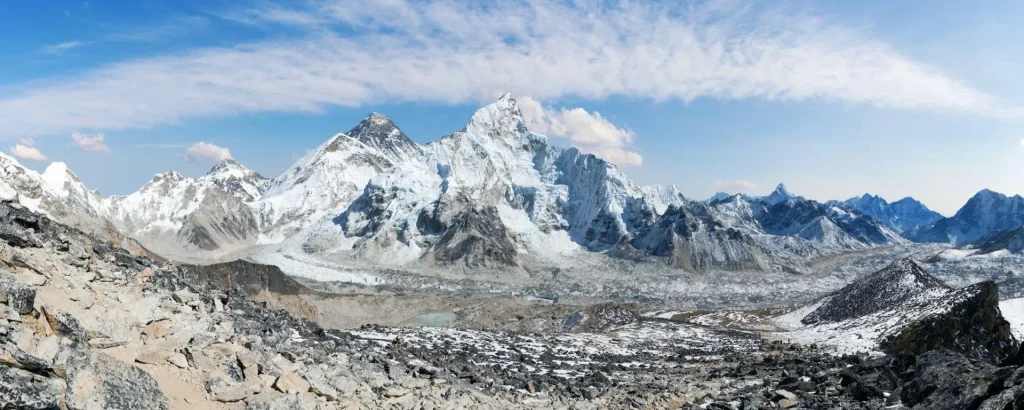
Kala Patthar, meaning Black Rock, is a high altitude ridge located above Gorakshep (5,164m / 16,942 ft), the last permanent settlement along the Everest Base Camp trail.
Positioned along the southern ridge of Pumori (7,161m / 23,494 ft), Kala Patthar (5,545m / 18,192 ft) is not technically classified as a mountain peak. Instead, it serves as a natural viewpoint formed by dark rocky outcrops rising above the surrounding glacier basin.
Despite its modest topographic prominence, Kala Patthar offers something that Everest Base Camp itself cannot provide.
A direct and unobstructed closeup view of Mount Everest (8,848.86m / 29,031.7 ft).
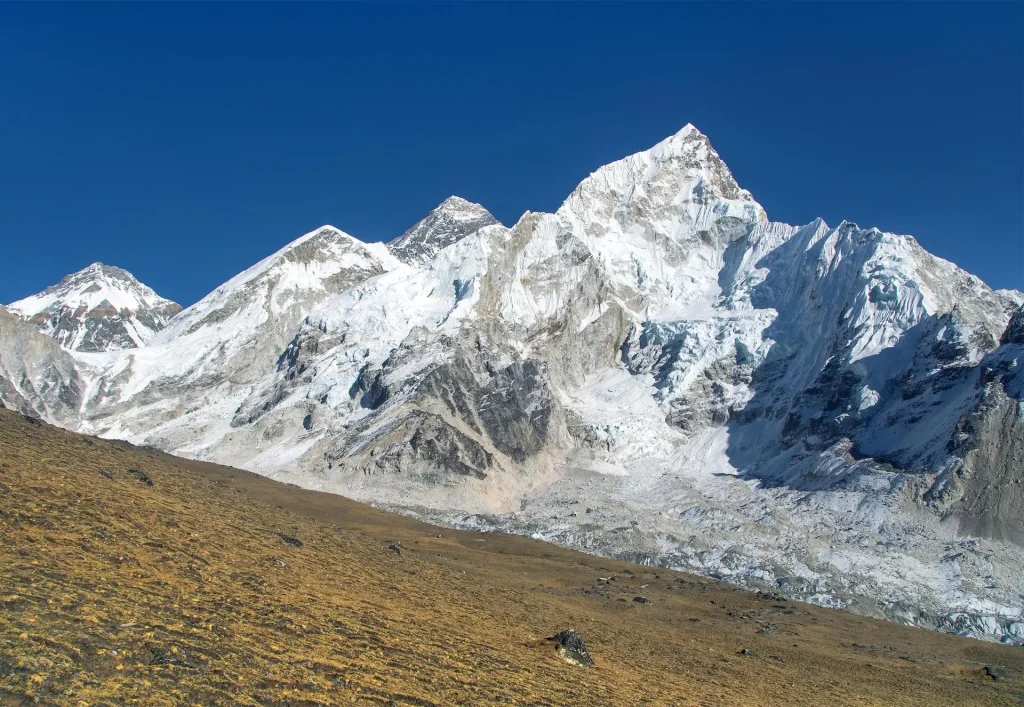
From this elevation, trekkers can clearly see the southern face of Everest, including the South Summit and Southeast Ridge used by climbers attempting to reach the top via the South Col route.
Standing at this Everest viewpoint allows you to observe the spatial relationship between Everest and neighboring peaks such as Lhotse (8,516m / 27,940 ft), Nuptse (7,861m / 25,791 ft), and Ama Dablam (6,812m / 22,349 ft), creating one of the most breathtaking Himalayan panoramas accessible on foot.
Kala Patthar vs Everest Base Camp: Why the View is Better
While Everest Base Camp (5,364m / 17,598 ft) holds immense symbolic significance, it sits on the valley floor of the Khumbu Glacier. The surrounding terrain limits visibility toward Everest’s summit.
Kala Patthar (5,545m / 18,192 ft), on the other hand, rises nearly 200 meters higher than Base Camp. This change in elevation transforms your perspective entirely.
From Everest Base Camp:
- Everest summit remains hidden
- Views are dominated by glacial ice and moraine
- Nuptse blocks the upper ridge of Everest
- Focus lies on expedition atmosphere
From Kala Patthar:
- Mount Everest (8,848.86m / 29,031.7 ft) stands directly ahead
- Lhotse (8,516m / 27,940 ft) rises alongside Everest
- Pumori (7,161m / 23,494 ft) dominates the foreground
- The Khumbu Glacier stretches below your viewpoint
- The South Col climbing route becomes visible
Instead of being surrounded by mountains, you now stand above the glacier basin facing the Himalayan giants.
Everest Base Camp puts you at the foot of the mountain. Kala Patthar allows you to truly see it.
The Final Ascent from Gorakshep to Kala Patthar
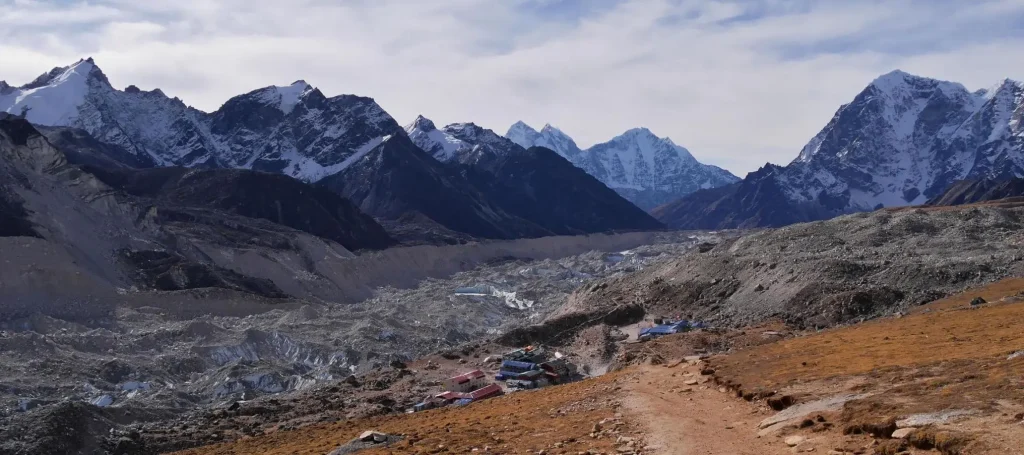
The hike to Kala Patthar (5,545m / 18,192 ft) begins from Gorakshep (5,164m / 16,942 ft). Although the summit lies only about 1.5 kilometers away, the climb involves an elevation gain of nearly 400 meters in thin air where oxygen levels are significantly reduced.
Trekkers typically begin the ascent early in the morning to catch sunrise over Mount Everest (8,848.86m / 29,031.7 ft).
The trail starts gradually before becoming steeper as you gain height along the rocky ridge. Due to the altitude, maintaining a slow and steady pace becomes essential.
With each step higher, the surrounding landscape starts to unfold. The frozen expanse of the Khumbu Glacier appears beneath you, while the towering forms of Nuptse (7,861m / 25,791 ft) and Pumori (7,161m / 23,494 ft) frame the horizon.
Eventually, the summit of Mount Everest emerges into view, creating the iconic Himalayan panorama that defines the Everest Base Camp trek experience.
Mountain Views from Kala Patthar
On a clear day, Kala Patthar (5,545m / 18,192 ft) offers uninterrupted views of several of the highest peaks in the Khumbu region. On clear days, you can spot views north into the Rongbuk area of Tibet and west to Cho Oyu, along with dozens of 6,000 to 8,000 meter peaks including Ama Dablam, Changtse, and Lingtren.
Visible summits include:
- Mount Everest (8,848.86m / 29,031.7 ft)
- Lhotse (8,516m / 27,940 ft)
- Nuptse (7,861m / 25,791 ft)
- Pumori (7,161m / 23,494 ft)
- Ama Dablam (6,812m / 22,349 ft)
- Changtse (7,543m / 24,747 ft)
- Lobuche East (6,119m / 20,075 ft)
- Thamserku (6,608m / 21,680 ft)
- Taboche (6,495m / 21,309 ft)
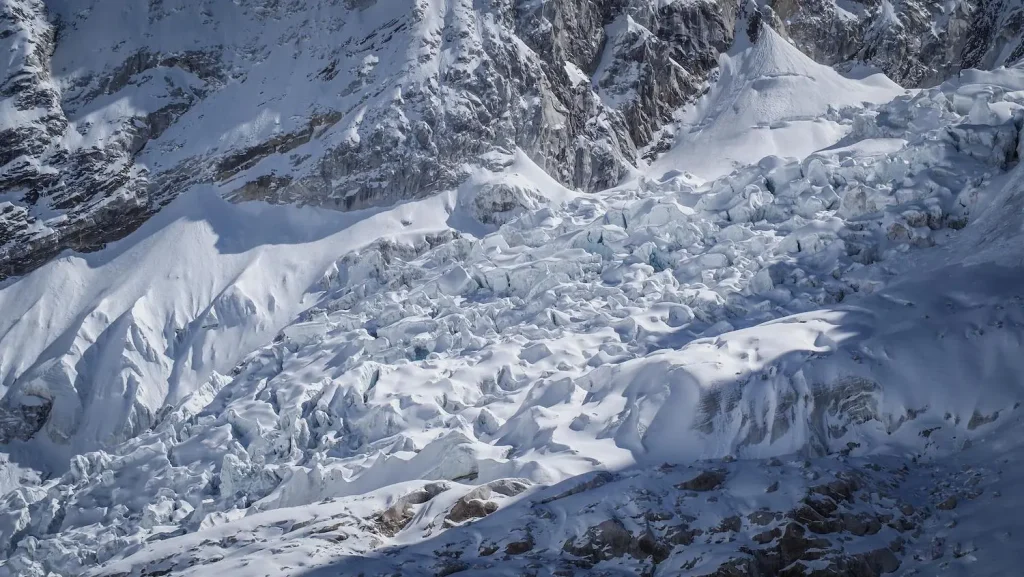
From this Everest viewpoint, the Khumbu Icefall appears like a frozen cascade of broken ice towers descending from Everest’s upper slopes. The glacial movement patterns become clearly visible from above, offering trekkers a rare perspective of the terrain used by summit expeditions.
Photography enthusiasts rank kala patthar as unparalleled for capturing Everest’s scale and grandeur. The 360-degree platform provides the classic Everest silhouette that appears in most iconic Himalayan photographs.
Sunrise vs Sunset at Kala Patthar
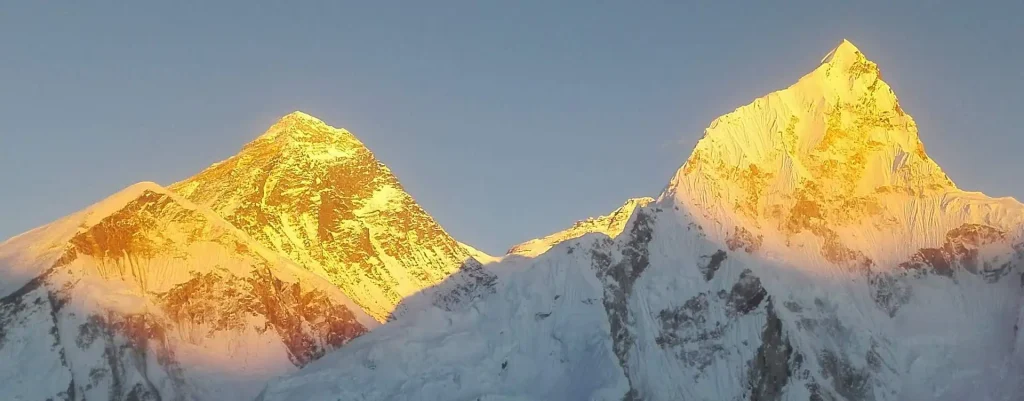
Sunrise remains the most popular time to reach Kala Patthar (5,545m / 18,192 ft).
As the first light strikes the summit of Mount Everest (8,848.86m / 29,031.7 ft), the snow covered peak glows in golden hues while the Khumbu Glacier below remains in shadow.
Morning conditions generally provide clearer skies and better visibility, making sunrise ideal for photography and panoramic views.
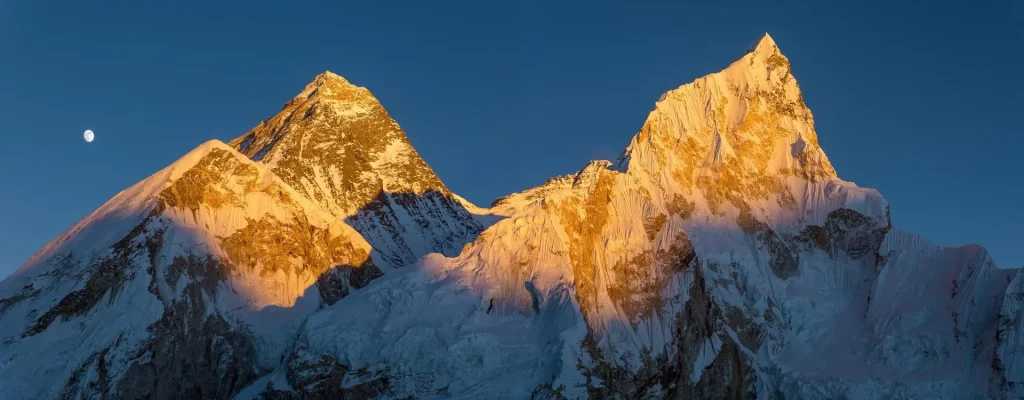
Sunset offers a different experience. The Himalayan peaks gradually turn orange and pink before fading into deep purple tones as night approaches. Fewer trekkers attempt the evening ascent, creating a quieter atmosphere at the summit.
Best Seasons to Visit Kala Patthar
Weather conditions significantly influence visibility at high altitude.
Spring from March to May offers stable weather and blooming rhododendrons along the lower EBC trail.
Autumn from September to November provides crystal clear skies following the monsoon season, making it one of the best times for panoramic Everest views from Kala Patthar (5,545m / 18,192 ft).
Winter trekking is possible but involves extreme cold temperatures and snow covered trails. Monsoon season from June to August often results in cloud cover that obscures mountain views.
For the best closeup Everest experience, spring and autumn remain the most recommended trekking seasons .
Acclimatization Before Attempting Kala Patthar
Reaching Kala Patthar (5,545m / 18,192 ft) requires proper acclimatization. A standard Everest Base Camp trek itinerary includes rest days at:
Namche Bazaar (3,440m / 11,286 ft)
Dingboche (4,410m / 14,469 ft)
These acclimatization stops allow trekkers to adapt gradually to decreasing oxygen levels before attempting the final ascent. Hydration, a slow walking pace, and adequate rest play a crucial role in preventing altitude sickness during the Kala Patthar hike.
At EBC Trails, our Everest Base Camp trek itinerary is designed to ensure safe acclimatization before reaching this ultimate Everest viewpoint.
Kala Patthar in the Everest Base Camp Trek Itinerary
Kala Patthar (5,545m / 18,192 ft) is typically climbed after an overnight stay at Gorakshep (5,164m / 16,942 ft) following your visit to Everest Base Camp (5,364m / 17,598 ft).
This ascent marks:
- The highest trekking point of the journey
- The best Everest viewpoint on the EBC trail / Everest Trek
- The visual highlight of the trek
- The final major achievement before descent
Reaching the top of Kala Patthar with Mount Everest (8,848.86m / 29,031.7 ft) towering right in front often becomes the most unforgettable moment of the Everest Base Camp trek.
Kala Patthar vs High Pass
Although the Everest range can appear broader from high passes like Cho La Pass (5,420m / 17,782 ft) and Renjo La Pass (5,360m / 17,585 ft), the closest and most direct view of Mount Everest (8,848.86m / 29,031.7 ft) is from Kala Patthar (5,545m / 18,192 ft). For trekkers who are not attempting the high pass trek, Kala Patthar remains the ultimate Everest viewpoint along the EBC trail.
Helicopter Tour Option to Kala Patthar
For travelers short on time or unable to complete the trek, helicopter tours offer an alternative route to Kala Patthar. These tours typically start from Kathmandu, taking 4-5 hours total with approximately 1.5 hours of flying each way. The helicopter stops at Lukla airport for refueling before continuing to Kala Patthar.
At Kala Patthar’s landing zone, helicopters typically allow 10-15 minutes for passengers to step out, view Mount Everest, and take photographs. Most tours include a stop at Hotel Everest View at 3,880 meters for breakfast before returning to Kathmandu.
Group-joining tours cost between USD 215-220 per person, while private tours for groups of four run approximately USD 200 per person. Weight restrictions apply at high altitude, with a maximum of 240 kilograms or two persons per flight from Lukla upward.
Also: Everest Base Camp Trek with Heli Return 6 Days
Conclusion
Everest Base Camp brings you to the base of Mount Everest (8,848.86m / 29,031.7 ft). Kala Patthar (5,545m / 18,192 ft) allows you to truly see it.
For trekkers seeking the ultimate Everest viewpoint along the EBC trail, the hike to Kala Patthar represents the most visually rewarding part of the Everest Base Camp Trek or other Everest Trek that goes via Everest base Camp.
This closeup Everest experience transforms the journey from a physical challenge into a moment of genuine Himalayan connection.


