
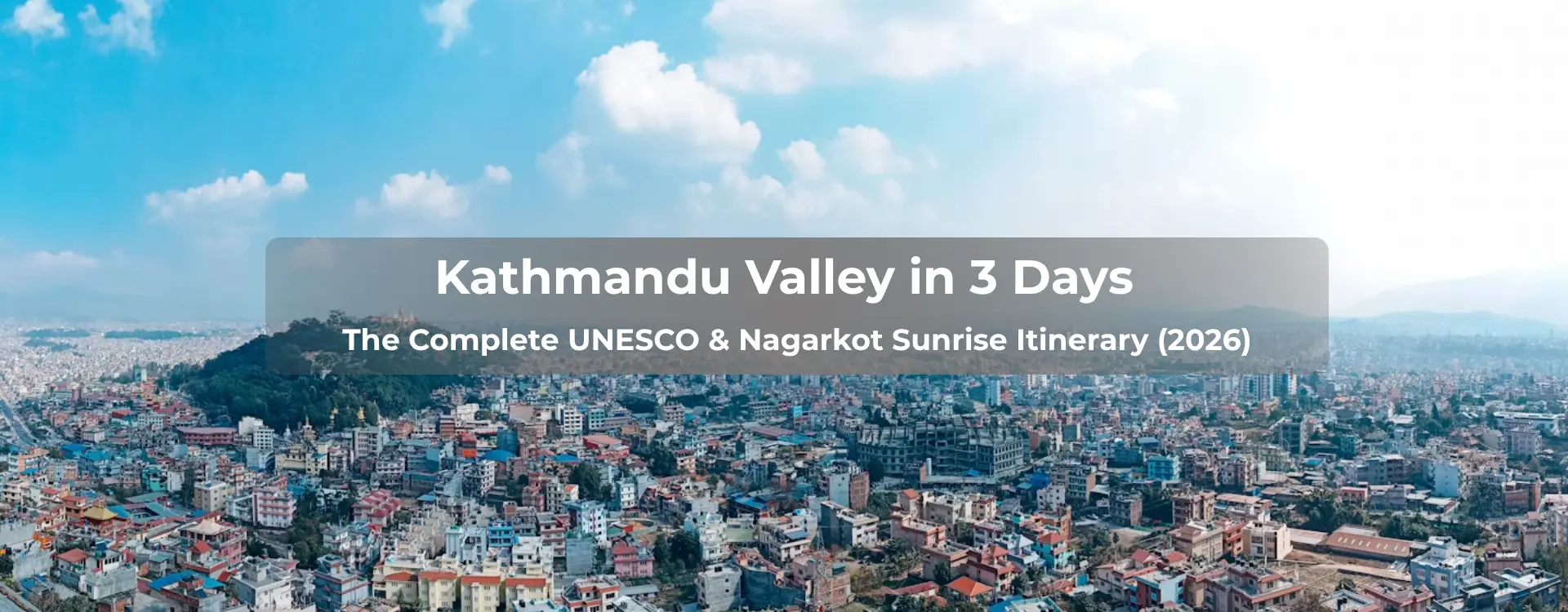
Most travelers give Kathmandu one rushed day, sandwiched between a flight in and a flight out. That’s a strange decision, given that the Kathmandu Valley holds seven UNESCO World Heritage Sites packed into an area you could drive across in under an hour—a concentration of living history that few cities anywhere can match.
So how many days does it actually deserve? That depends entirely on what you’re doing next. If Kathmandu is a brief stopover before your trip to the Everest Base Camp Trek, one well-planned day covers the essentials. If you’ve built in a buffer day, either way, two days let you add the valley’s most photographed experience: sunrise over the Himalayas from Nagarkot. And if Kathmandu itself is the destination—not just the gateway to it—three days let you see the valley’s three historic city-kingdoms properly, instead of skimming one and calling it enough.
This guide gives you all three versions. You can pick the one that fits your real schedule. You do not need to adapt someone else’s fixed itinerary.
One thing worth saying upfront: Kathmandu isn’t a polished postcard. Parts of Kathmandu Durbar Square are still under restoration from the 2015 earthquake. Traffic can turn a 20-minute drive into 45. Nagarkot’s sunrise doesn’t show up on schedule just because you woke up at 4am for it. None of that makes the valley less worth visiting—it makes it real, and it’s worth knowing before you land rather than after.
Find some of the best places to visit in Nepal if you are to extend your stay.
One Day in Kathmandu—The Essential Circuit
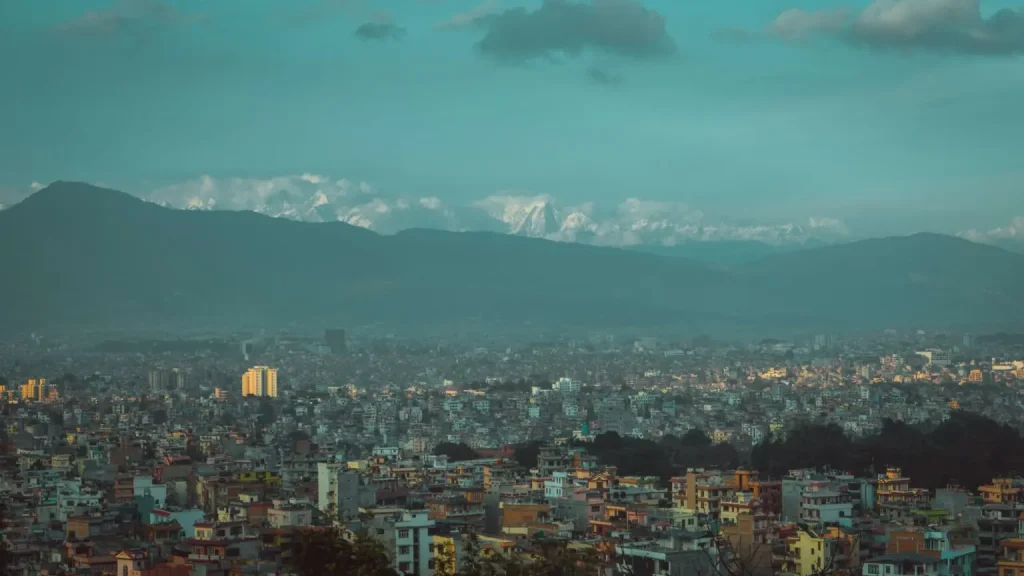
One day is enough to get a real feel for the valley, as long as you accept a simple trade-off: you’re choosing three or four experiences well, not skimming eight badly.
Start at Kathmandu Durbar Square in the morning, while the light is good for photos and the square hasn’t filled up yet. This was the ceremonial seat of the old Malla kings, and even with some sections still scaffolded from earthquake restoration, the carved wooden palaces and the Kumari Ghar—home of Nepal’s living goddess—are worth the hour or two you’ll spend here.
From there, head to Swayambhunath, the hilltop stupa known locally as the Monkey Temple. The climb up the 365 stone steps is short but genuinely steep, so pace yourself if you’ve just landed. The view over the valley from the top is one of the best free vantage points in the city—just keep a firm grip on your phone and any food, since the resident monkeys are fast and unbothered by tourists.
In the afternoon, visit Boudhanath, one of the largest stupas in the world outside Tibet. Walk the kora—the clockwise circuit around the stupa that monks and pilgrims follow—slowly rather than rushing through; the rooftop cafés ringing the square are a good place to sit and take in the scene before moving on.
Save Pashupatinath for last, timed for the evening Aarati ceremony along the Bagmati River, which runs roughly 6–7pm daily (earlier in winter). Build in real buffer time to get there—the route from Boudhanath can turn into a slow crawl at that hour, and arriving after the ceremony starts means missing the best part of it. The temple complex includes the ghats along the river, and it’s worth knowing that going in.
What You’ll Have to Skip
In one day, Bhaktapur, Patan, and Nagarkot simply don’t fit—trying to add any of them turns a considered day into a rushed one, fighting traffic between sites instead of actually experiencing them. If any of those three are non-negotiable for you, that’s your signal you need at least two days, not one.
Timing note: do Durbar Square and Swayambhunath before midday if you can—both get progressively more crowded and hot as the day goes on. Leave extra time for the time for the Boudhanath-to-Pashupatinath leg. That stretch is where Kathmandu’s evening traffic may make you miss the Aarati.
For travelers spending only a single day in the capital, it is highly recommended to look into Kathmandu to Lukla flight options in advance to guarantee you are fully set up.
Two Days in Kathmandu—Add Nagarkot Sunrise
With a second day, the addition that matters most is Nagarkot—a hill station about 32km east of the city and the valley’s best-known vantage point for sunrise over the Himalayas.
Day 1 follows the one-day circuit above: Durbar Square, Swayambhunath, Boudhanath, and Pashupatinath at dusk for the Aarati.
Day 2 starts before dawn. Pickup from Kathmandu is typically 3:30–4:30am, with the drive to Nagarkot taking roughly 1.5–2 hours depending on traffic—earlier departures aren’t just for atmosphere; they’re a real buffer against the same evening-traffic problem that affects Day 1. From the viewpoint at around 2,175m, you’re looking for Everest, Langtang, and Ganesh Himal on a clear morning.
Here’s the part most tour listings gloss over: clear Himalayan views at Nagarkot are closer to a coin flip than a guarantee, especially outside the best months. October to December and March to April give you the best odds; outside that window, haze and cloud cover are common enough that you should go for the experience of the hill station itself, not bank the whole morning on the mountains showing up.
Same-Day Round Trip vs. Overnight in Nagarkot

If this is your only spare day, a same-day round trip works fine—sunrise, breakfast, and you’re back in Kathmandu by midday. If your schedule has any flexibility, staying overnight in Nagarkot is the better choice: you get the sunset the evening before and the sunrise the next morning, without the 3:30am wake-up call immediately following a full sightseeing day. For most first-time visitors on a tight window, we’d lean toward the overnight option specifically because it removes that back-to-back exhaustion, not just because it “sees more.”
Optional: The Hike Down to Changu Narayan
If you’re not exhausted from the pre-dawn start, the walk from Nagarkot down to Changu Narayan—Nepal’s oldest temple and a UNESCO site in its own right—takes roughly 3–4 hours through pine forest and small Tamang and Newari villages. It’s a genuinely good add-on, but it does mean a longer, more physically demanding day than a straight round trip.
Cost note: private vehicle transfers, group sunrise tours, and independent public transport all price very differently—we’ll break down real cost bands for each in the Logistics section rather than guessing here.
If Nagarkot view hooks you, Pokhara gets you closer with more stunning scenery.
Three Days in Kathmandu—The Complete Valley Experience
A third day is when Kathmandu stops being “one big city” and starts being what it actually is: three separate historic kingdoms—Kathmandu, Patan, and Bhaktapur—that spent centuries as rival city-states before becoming one valley. Seeing only Kathmandu Durbar Square and assuming you’ve “done” the valley’s royal architecture misses that entirely.
Day 3 is best spent on Bhaktapur, with Patan added either that same day if you started early or folded into Day 1 if your pace allows (Patan is close enough to central Kathmandu that it doesn’t need its own dedicated day).
Bhaktapur vs. Patan vs. Kathmandu Durbar Square—What’s Actually Different
- Kathmandu Durbar Square was the seat of the Malla kings ruling Kathmandu itself—the most visited of the three and the one still most visibly under earthquake restoration.
- Patan Durbar Square, a short ride across the Bagmati in Lalitpur, is smaller and less crowded, with the finest concentration of Newar stone and metal craftsmanship in the valley. The Krishna Mandir and the Patan Museum (housed in the old royal palace) are the standouts—worth slowing down for rather than rushing past.
- Bhaktapur Durbar Square sits furthest out and rewards the extra travel time: the best-preserved of the three, with far less modern development crowding the old core. The pottery square, where clay pots are still hand-thrown and sun-dried in the open, and the five-tiered Nyatapola Temple are the reasons people rank Bhaktapur as their favorite of the three, even though it’s the one most visitors skip.
Worth Adding If You Have the Time
A cooking class or artisan workshop—pottery, wood or metal carving—is a genuinely good use of a flexible afternoon on this day and a more memorable stop than a fifth temple square would be. This isn’t essential, but it’s worth mentioning as an option rather than leaving the day as sightseeing only.
Entry fees: Bhaktapur and Patan both charge international entry fees, roughly in the $10–15 range as of recent reporting—we’ll confirm exact current figures with a dated source in the Logistics section rather than quoting a number here that could be stale by the time you read this.
Nepal’s Cultural and nature tour gives you the combination of history, traditions and unfiltered natural experience altogether.
Practical Logistics—Fees, Timing, and What Nobody Tells You Upfront
Entry Fees (verify before publishing — figures below are a mix of confirmed and unconfirmed)
| Site | Entry Fee (Foreign Nationals) |
|---|---|
| Kathmandu Durbar Square | NPR 1,000 |
| Swayambhunath | NPR 200 |
| Boudhanath | NPR 400 |
| Pashupatinath | NPR 1,000 |
| Patan Durbar Square | NPR 1,000 |
| Bhaktapur Durbar Square | NPR 1,800 |
| Changu Narayan | NPR 300-400 |
Being blunt about this table rather than filling every cell with a confident-looking number: I have real figures for two of seven sites and estimates for the rest. Given how central “verified, dated fees” is to this article’s whole positioning, this table cannot go live until every cell is checked against a current primary source (NTB, or a same-week call to each site’s ticket counter)—this is the one part of the article I will not let slide as a placeholder.
Traffic and Timing
Kathmandu’s traffic doesn’t follow a predictable rush-hour pattern the way many cities do—it’s dense most of the day, with the worst stretches typically late afternoon into early evening. Build real buffer time into any plan that involves crossing the city more than once, and treat Google Maps’ drive-time estimate as a floor, not a ceiling.
Dress Code and Temple Etiquette
- Cover shoulders and knees at religious sites—this isn’t strictly enforced everywhere, but it’s respectful and occasionally required for entry.
- Remove footwear before entering temple interiors; look for where locals are leaving shoes rather than guessing.
- Non-Hindus cannot enter Pashupatinath’s inner sanctum—the surrounding complex and ghats remain open to everyone.
- Avoid close-up photography of cremation ceremonies at Pashupatinath. Respectful distance is expected, not just polite.
Cash and Payments
Entry fees are generally cash-only in Nepali rupees, though some sites accept USD. ATMs are sparser near Bhaktapur and Patan’s old cores than in central Thamel—withdraw what you need before heading out rather than assuming you’ll find a machine on arrival.
Honest Expectations—Safety, Scams, and What to Actually Watch For
Monkeys at Swayambhunath
The monkeys are fast, used to tourists, and genuinely will grab an unzipped bag, a dangling phone, or anything that looks like food. This isn’t a rare event travelers exaggerate—keep bags zipped and closed, don’t eat while walking through the complex, and hold your phone with a real grip when taking photos near the stupa.
Sadhu Photo Requests
Sadhus (Hindu holy men) at Pashupatinath and elsewhere are often dressed for photographs and expect a small payment in return —this is a known local norm, not a scam being pulled on you specifically. Keep small NPR notes on hand, agree on it before you take the photo, and it’s entirely fine to decline and walk on if you’d rather not.
Earthquake Restoration—Still Ongoing, Worth Seeing Anyway
Parts of Kathmandu Durbar Square in particular still show visible restoration work from the 2015 earthquake. This isn’t a reason to lower expectations—it’s a chance to see centuries-old craftsmanship being actively preserved rather than viewing it as a finished museum piece. Being upfront about this before someone arrives is better than letting them discover it and feel shortchanged.
General Safety
Kathmandu is a safe city for tourists by most measures, but pickpocketing in crowded areas like Thamel and around major stupas is a real, if occasional, risk—the usual precautions apply. If broader safety conditions are a concern for your travel dates, our Nepal Trekking Safety in Autumn 2025] post covers the current situation in more depth.
Using Kathmandu Days Before or After Your Trek
If you’re one of the majority of readers here on the way to or from a trek, your Kathmandu days aren’t just sightseeing time—they’re spent doing real logistical work: adjusting to the time zone, starting altitude acclimatization (Kathmandu sits around 1,400m before you fly or drive higher), and picking up any last-minute gear.
Match your day count to your trek’s built-in buffer. Most Everest and Annapurna region trek itineraries already include a rest or acclimatization day—if yours does, a full 3-day Kathmandu itinerary before flying out may leave you more tired at the trailhead than rested. If your itinerary is tighter, one focused day covering the essentials is the safer call, saving the fuller exploration for after the trek instead.
Complete cost breakdown for Everest Base Camp Trek so that you are not left wondering.
A genuine tension is worth naming directly: the Two-Day itinerary earlier in this guide recommends a 3:30am Nagarkot departure and an optional multi-hour hike back down. That’s a good use of a spare day in general—but if you’re doing it the day before an early Lukla flight or a long trek-day drive, it works against you, not for you. Treat the Nagarkot add-on as a “before your trek, if you have true rest days to spare” or “after your trek, to unwind” option—not something to stack immediately before a demanding departure.
Gear shopping in Thamel is a legitimate use of a pre-trek day, not just a sightseeing filler. Down jackets, trekking poles, and last-minute layers are widely available, both for purchase and rental, and this is often more useful time than an extra temple visit if your pack list has gaps.
Conclusion—Pick Your Days, Not a Generic Itinerary
The right amount of time in Kathmandu isn’t a fixed number—it’s whatever matches what you’re actually doing next. One day covers the essential circuit if the valley is a stopover. Two days hence adds Nagarkot’s sunrise, odds and all. Three days lets you see the valley’s three historic kingdoms properly instead of just one.
The one action worth taking before you book anything: check your day count against your trek itinerary’s existing buffer days, not against what any single blog—including this one—says is “enough.” If you’re arriving with tight margins, protect your rest days rather than filling them with sightseeing.
Kathmandu rewards travelers who come in with realistic expectations more than the ones chasing a postcard version of it. The restoration scaffolding, the coin-flip sunrise, the traffic—none of it makes the valley less worth three days of your trip. It just means you’ll actually get what you came for instead of being surprised by it.
FAQ
How many days do I need in Kathmandu Valley?
One day covers the essential UNESCO circuit if you’re passing through. Two days hence adds Nagarkot’s sunrise. Three days lets you properly see Kathmandu, Patan, and Bhaktapur as the three distinct historic kingdoms they are.
Is the Nagarkot sunrise worth the early start?
The hill station and the atmosphere are worth it regardless. The Himalayan view itself is closer to a coin flip than a guarantee, with the best odds from October to December and March to April.
Can I visit all 7 UNESCO sites in one trip?
Indeed, it is best to allocate three days for this endeavor; attempting to squeeze all seven UNESCO sites into just one or two days inevitably results in a hurried experience, where you would likely miss out on the rich details and cultural significance of each site.
Is Kathmandu safe for first-time travelers?
Generally yes, with the normal precautions of any dense tourist city—watch for pickpocketing in crowded areas, and expect Swayambhunath’s monkeys to be genuinely opportunistic around food and phones.
Do I need a guide for Kathmandu Valley sightseeing?
Not strictly required for most sites, but a guide adds real context at places like Kathmandu Durbar Square and Pashupatinath, where the history and etiquette aren’t always obvious to a first-time visitor.


