
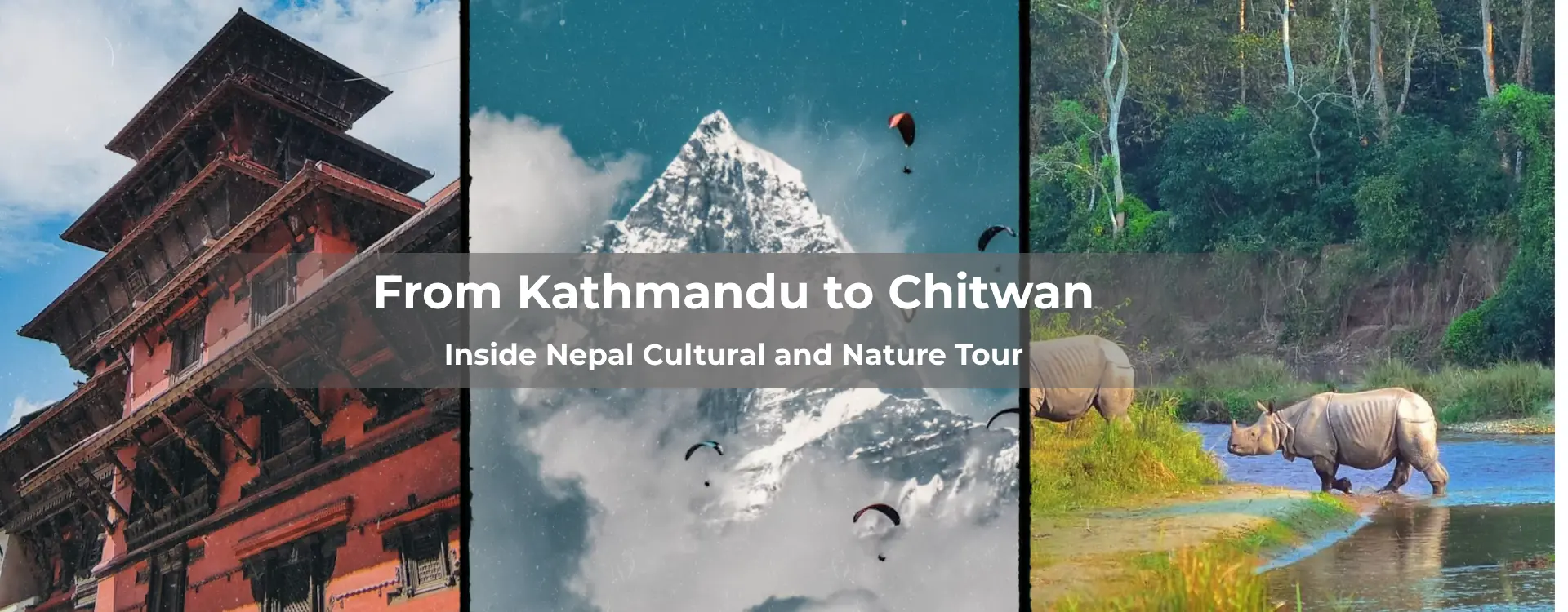
Nepal usually gets sold in fragments. A mountain flight here, a jungle safari there, a temple tour squeezed into a layover on the way to something bigger. Few itineraries truly connect the pieces. Even fewer let you feel the country change underfoot. You move from incense-thick courtyards in Kathmandu. Then you climb to a hill town that time forgot. You drop to a lake beneath 8,000-meter peaks. You cross quiet ridges lined with farms. You enter the calm of Buddha’s birthplace. Finally, you reach a jungle where rhinos outnumber road signs.
That’s the route this guide follows – six regions in thirteen days, no trekking poles required. If you’ve been trying to figure out how these places actually fit together and what each one really feels like once you’re standing in it, this is that walkthrough.
| Planning this exact journey? eBcTrails runs this full circuit as the Nepal Cultural and Nature Tour Package – 13 days, private transport throughout, and every stop covered in this article included as standard. |
Kathmandu – Where the Journey Begins
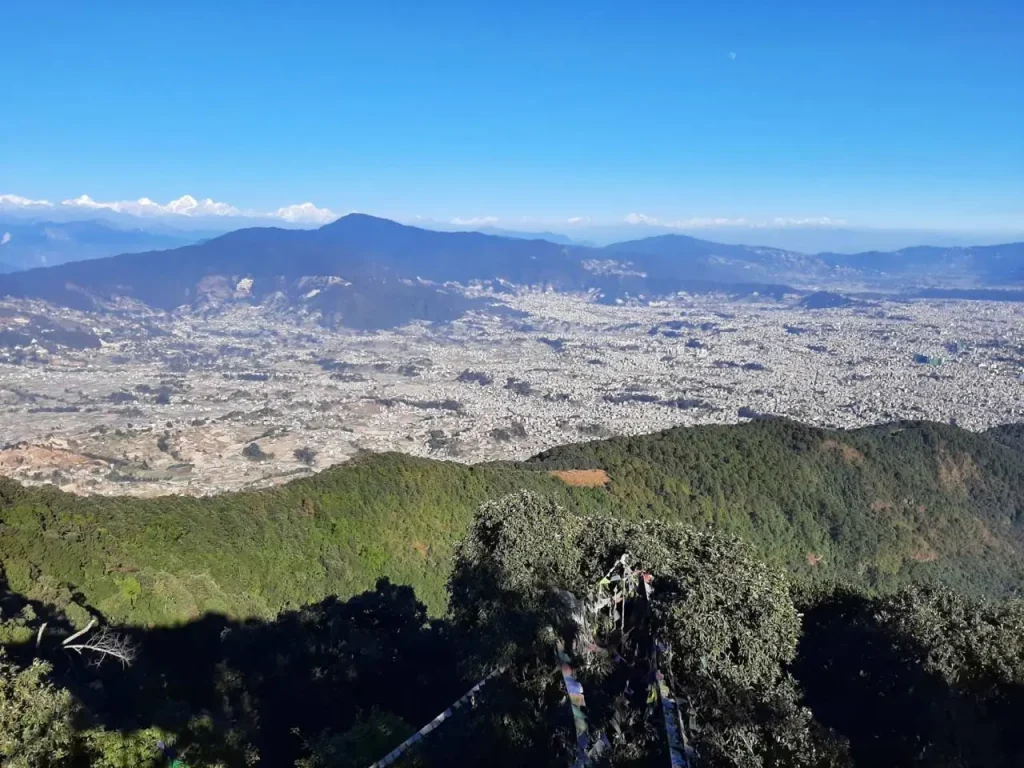
Every version of this trip starts the same way: landing in a valley that has absorbed a thousand years of Hindu and Buddhist coexistence without ever quite settling into one identity. Kathmandu doesn’t ease you in. Within your first 24 hours you’ll likely stand in four places that would each anchor a lesser city’s entire tourism industry – Pashupatinath, Boudhanath, Swayambhunath, and Kathmandu Durbar Square, all part of the UNESCO-inscribed Kathmandu Valley World Heritage property.
Pashupatinath is the one that catches most first-time visitors off guard. It’s Nepal’s most sacred Hindu temple complex, sitting along the Bagmati River, and it’s also an active cremation site – not a museum piece, but daily life and death happening in the open. Dress modestly. Keep your camera down near the cremation ghats specifically, and let your guide tell you when it’s appropriate to photograph and when it isn’t; this is one part of the trip where following local cues matters more than getting the shot. Boudhanath is a different register entirely – pilgrims circling the stupa clockwise, prayer wheels turning under their hands, and incense drifting over Thamel’s rooftops in the distance. Swayambhunath (the “Monkey Temple”) adds elevation and a panoramic view of the valley; Kathmandu Durbar Square adds the political and architectural layer, with palaces of the Shah and Malla kings standing a few hundred meters from where locals still do their morning shopping.
Reality check: after a long international flight, day one is not the day to try to see all four sites at once. A welcome dinner with traditional Nepali music and dance, an early night, and a properly paced city tour on day two will serve you far better than pushing through jet lag to check boxes.
| Want the Kathmandu day expanded further? Our dedicated Kathmandu City Tour with Nagarkot guide breaks the valley’s heritage sites down site by site, with a Himalayan sunrise add-on. |
Bandipur – The Hill Town Nepal Tourism Forgot
This is the stop almost no competing itinerary includes, and it’s the one you’ll likely talk about most once you’re home.
Bandipur sits at about 1,030 meters. It is a Newari trading town. The highway moved away decades ago, so the town was bypassed. As a result, it never modernized. The payoff is a genuinely traffic-free main street: stone paving, timber-framed shopfronts, and mountain views that open up unexpectedly between buildings. Nothing here has been staged for tourists. It’s just been left alone long enough to stay itself.
The drive up from Kathmandu is where the itinerary’s real value starts to show. You’re no longer moving between curated sites – you’re watching rural Nepal unfold at ground level: terraced hillsides, roadside villages, and farmers working plots that haven’t changed shape in generations. Most trekking-focused itineraries never pass through anything like it, because trekking routes start where the road ends. This one drives straight through the in-between.
Accommodation breaks from the standard 3-star pattern you’ll find in Kathmandu and Pokhara – a traditional heritage-style hotel instead, built into the same stone-and-timber character as the town around it. Spend the evening walking the old bazaar rather than staying in your room. Bandipur rewards unstructured time more than almost any other stop on this route, and it’s short enough – one night – that it’s easy to undervalue until you’re actually there.
Pokhara – Lakes, Sunrise, and the Annapurna Wall
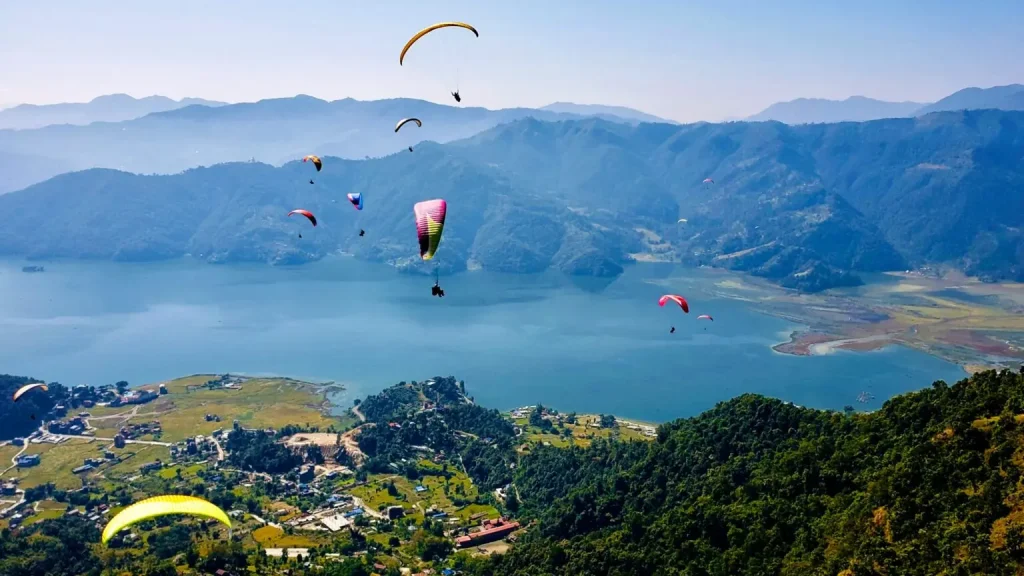
The shift from Bandipur to Pokhara is a shift in pace as much as geography – from a quiet hill town to a lake city that’s become Nepal’s most popular base for trekkers and non-trekkers alike.
Phewa Lake in the early evening is the first proper introduction: the Annapurna range reflected across still water, lakeside restaurants filling up, and a noticeably different energy from Kathmandu’s density. But the real headline is the following morning. An early drive up to Sarangkot (1,600 m) puts you in front of a sunrise over Annapurna, Dhaulagiri, and the unmistakable fishtail silhouette of Machhapuchhre – weather permitting, and in Nepal that caveat matters more than in most places. Clear mornings deliver one of the most photographed sunrises in the country; overcast ones deliver a good breakfast and a story about trying again next time.
The rest of the day usually includes Devi’s Fall, Gupteshwor Cave, and Bindabasini Temple. It ends with a relaxed boat ride on Phewa Lake. Worth being honest about one thing here: Pokhara is where most travelers on this route wish they had an extra day or two. If your schedule has any flexibility, extend this stop.
Not because the standard itinerary shortchanges it, but because Pokhara is made for lingering.
| Considering a longer stay in the Pokhara region, or are you curious about trekking from here instead? Explore the Annapurna Region Trek options, or if cost is part of your decision-making, our Annapurna Base Camp Trek Cost in 2026 guide breaks down what a trekking extension would actually add to your budget. |
Palpa (Tansen) – The Route’s Quietest Transition
Between Pokhara and Lumbini sits Palpa, and specifically the old town of Tansen – the stop this itinerary spends the least time on, and one with almost no dedicated English-language travel content anywhere online, despite genuinely deserving more attention.
The drive itself is the point. You’re descending through hill terrain toward the Terai plains, past terraced farms and settlements that look largely unchanged by the tourism economy running through Pokhara an hour behind you. Tansen’s old streets and viewpoints are worth a stop if timing allows, even briefly – a Newari hill town with its own distinct character, separate from both Kathmandu’s density and Bandipur’s stillness.
It’s fair to call this a transition day rather than a headline destination, and this guide won’t oversell it as anything else. But it’s exactly the kind of connective tissue that turns six separate destinations into one coherent journey instead of a list of stops assembled for a brochure.
Lumbini – Stillness at the Birthplace of Buddha
The arrival into Lumbini changes the trip’s register entirely. After hill terrain and lake views, you’re suddenly in the flat, quiet plains of the Terai, standing in one of the most significant pilgrimage sites in the world.
Lumbini is the birthplace of Siddhartha Gautam – the Buddha – and the Maya Devi Temple marks the precise site, alongside the Ashokan Pillar erected in the 3rd century BCE and a sacred garden surrounded by monasteries built by Buddhist communities from around the world, from Thailand to Germany to Vietnam, each built in that country’s own architectural style. It’s an active monastic zone, not a static heritage site.
The etiquette here matters more than at any other stop on this route. Move quietly and slowly. Dress modestly – shoulders and knees covered, footwear removed at temple entrances. Photography is generally welcome in the outer garden but should be approached with restraint near monasteries and inside temple interiors; ask your guide before photographing monks or active prayer. This is not a checklist of rules for their own sake. Lumbini is a working pilgrimage site for Buddhists worldwide. The respect it asks for is the same you expect at any sacred place.
Most travelers describe Lumbini as the emotional midpoint of this journey. It is a calm pause between mountain scenery on both sides.
Chitwan – Jungle, River, and Tharu Culture
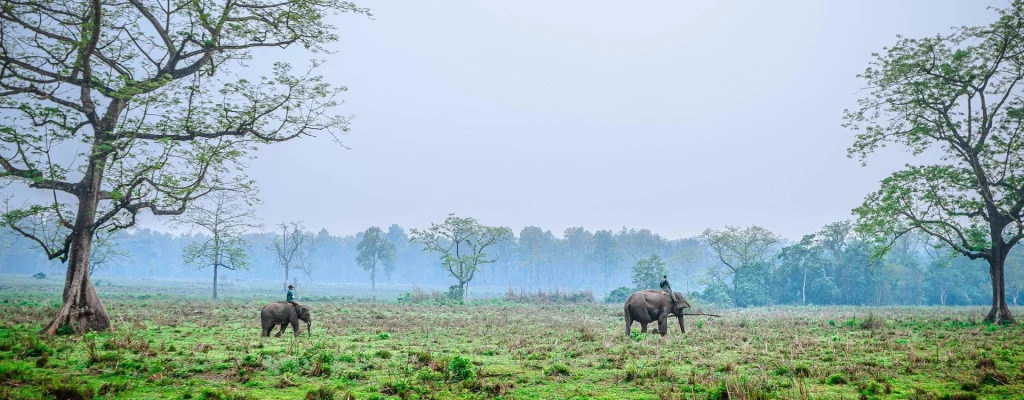
From Lumbini’s stillness, the route shifts again – this time into lowland jungle and one of Nepal’s most ecologically significant protected areas, Chitwan National Park.
The Chitwan leg typically opens with a canoe ride along the Rapti River, followed by a jeep safari through the park itself. Sightings vary by season and luck, but one-horned rhinoceros, spotted deer, crocodiles, and a genuinely wide range of birdlife are all realistic – this isn’t an overpromised “big five” experience, and it shouldn’t be marketed as one. What Chitwan reliably delivers is a completely different Nepal than the five regions before it: humid lowland forest instead of a Himalayan backdrop and a Tharu indigenous community with a culture, cuisine, and architecture distinct from anything encountered earlier in the trip.
An evening Tharu cultural performance typically closes the day – worth attending with genuine curiosity rather than treating it as background entertainment. The stick dance in particular reflects generations of Tharu agricultural and community life, not a routine assembled for visitors.
| Want a shorter wildlife-focused trip instead of the full circuit? The Trishuli River Rafting and Chitwan Tour covers Chitwan’s jungle safari experience as a standalone 4-day option. |
The Return – Everest Flight, Bhaktapur, Nagarkot, and What You’d Miss by Flying
The drive back to Kathmandu closes the ground-level loop, but the itinerary has one more contrast left to offer: an early-morning Everest mountain flight, putting Everest, Lhotse, and Nuptse in view from the air after thirteen days spent entirely at valley and hill elevations. It’s a genuinely different register of experience – five days of ground-level culture and wildlife, followed by fifty minutes of high-altitude perspective on the same country, with no trekking boots involved.
The final days typically add Bhaktapur’s Durbar Square and a sunset excursion to Nagarkot (2,175 m) – a proper closing chapter rather than an afterthought squeezed in before departure. Bhaktapur, less rebuilt than central Kathmandu after past earthquakes, retains a density of preserved Newari architecture that rewards unhurried walking. Nagarkot’s sunset over the Himalayan range is the itinerary’s last big mountain view before departure.
It’s worth addressing directly here what a faster version of this trip actually costs you. This route can be shortened by flying between Kathmandu, Bhairahawa (for Lumbini), Pokhara, and Chitwan instead of driving – domestic flights between these cities run frequently, generally under 40 minutes each way, which sounds like an obvious upgrade. But flying the full route skips Bandipur and Palpa entirely, since neither has an airport and both exist specifically along the overland road. If this is your first visit to Nepal, that’s a real trade-off, not a minor one. Bandipur in particular is one of the strongest reasons to take this journey at all, rather than a faster, thinner version of it – cutting it for time savings is the single decision most likely to leave you wishing you’d planned differently.
What This Journey Actually Costs
The published range for this exact 13-day itinerary runs from USD 1,350 to 1,460 per person, with price scaling down as group size increases:
| Group Size | Price Per Person |
|---|---|
| 1 traveler | $1,460 |
| 2–4 travelers | $1,420 |
| 5–7 travelers | $1,400 |
| 8–20 travelers | $1,350 |
What’s included: accommodation throughout (3-star hotels in Kathmandu, Pokhara, and Lumbini; traditional heritage hotel in Bandipur; jungle lodge or standard resort in Chitwan), private ground transportation for the entire route, the Everest mountain flight, guided sightseeing and park activities, all entrance fees and permits, and a professional English-speaking guide.
What’s excluded: international airfare, your Nepal visa fee, personal expenses, travel insurance, and tips. Budget these separately, the same way you would for any international trip – a rough planning figure of $150–$300 covers visa fees and incidental personal spending for most travelers, though insurance costs vary by provider and home country.
Meals: Daily breakfast is included in Kathmandu, Pokhara, and Lumbini. Chitwan runs full board due to the safari schedule. A welcome (or farewell) cultural dinner in Kathmandu is included. Lunch and dinner in Kathmandu and Pokhara are not included in the base price, which gives you flexibility to eat where you want in the cities with the most restaurant variety.
One upgrade worth knowing about: the standard itinerary uses no internal flights, which is precisely how it preserves the Bandipur and Palpa stops. A luxury upgrade – swapping in domestic flights and 4–5 star hotels – is available on request, but it comes with the same trade-off described above: less driving, less cost efficiency in some cases, and two of the route’s most distinctive stops removed from the itinerary entirely.
Pace, Season, and Who This Journey Suits
Thirteen days sounds long on paper, but the itinerary is structured to manage fatigue rather than create it: a dense cultural day in Kathmandu, a genuinely restful hill town, an active but leisurely Pokhara stretch, a quiet transition day through Palpa, a reflective day in Lumbini, and an engaging – not exhausting – stretch in Chitwan before the flight-based finale. Families, older travelers, and first-time visitors to Nepal consistently find this pacing comfortable. There’s no trekking, no significant altitude gain beyond Nagarkot’s 2,175 m, and no day that demands serious physical exertion. Short walks, guided sightseeing, and jeep-based safaris make up the entire activity list.
Best time to go: spring (March–May) and autumn (September–November) offer the clearest mountain views for Sarangkot, Nagarkot, and the Everest flight specifically – both are peak season for a reason, and both come with more travelers on the road and in hotels as a result. Winter months bring fewer crowds and generally comfortable temperatures at the elevations this route covers, though early-morning viewpoints will be colder. Since this itinerary spends most of its time below 1,700 m, it’s considerably less weather-sensitive overall than a high-altitude trek – a hazy sunrise at Sarangkot is a disappointment, not a safety concern.
FAQs on Nepal Cultural and Nature Tour
-
How many days does this full Nepal cultural and nature tour take?
The standard itinerary runs 13 days, starting and ending in Kathmandu, and covers Kathmandu, Bandipur, Pokhara, Palpa, Lumbini, and Chitwan, plus an Everest mountain flight and a Bhaktapur/Nagarkot excursion near the end.
-
Is Bandipur worth including, or can it be skipped?
Bandipur is one of the strongest reasons for Nepal cultural and nature tour to take the overland route rather than a flight-shortened version of this trip. It’s a preserved, traffic-free Newari hill town with almost no dedicated tourism infrastructure elsewhere in Nepal’s mainstream itineraries – skipping it removes one of the journey’s most distinctive stops.
-
What’s lost if you fly between cities instead of driving?
Flying between Kathmandu, Bhairahawa, Pokhara, and Chitwan saves significant travel time, but neither Bandipur nor Palpa has an airport – both exist specifically along the overland road route, so a fully flight-based version of this trip skips them entirely.
-
Is this Nepal cultural and nature tour suitable for children or older travelers?
Yes. This is classified as an easy tour with no trekking and no significant altitude gain – the highest point on the standard itinerary is Nagarkot at 2,175 m. The pace is deliberately gentle, and private transportation is used throughout.
-
Do you need a trekking permit for any part of this route?
No. This itinerary is entirely non-trekking – city touring, short walks, cultural visits, and guided wildlife safaris – so no TIMS card or conservation area permit is required for any stage of the journey. If you’re considering adding a trek before or after, check current requirements for that specific region separately.
-
What’s the best time of year for a cultural and nature tour of Nepal?
Spring (March–May) and autumn (September–November) offer the clearest mountain views, particularly for the Sarangkot sunrise, Nagarkot sunset, and the Everest mountain flight. Winter is a comfortable, less-crowded alternative, since most of this itinerary sits well below high-altitude terrain.
What This Route for Nepal Nature and Cultural Tour Actually Gives You
Six regions, one connected arc: temple courtyards to a forgotten hill town, lake views to farming ridges, sacred stillness to jungle wildlife, and a final flight over the peaks that shaped the whole trip’s backdrop without ever needing you to climb them. Few itineraries in Nepal actually connect this much of the country in a way that feels like one journey instead of six separate excursions – the overland drive between Bandipur and Palpa alone shows you more of rural Nepal than most week-long trips manage.
| Start planning your journey. View the full Nepal Cultural and Nature Tour Package for complete pricing, fixed departure dates, and customization options, or get in touch directly if you’d like the itinerary adjusted around your own timeline. |


