
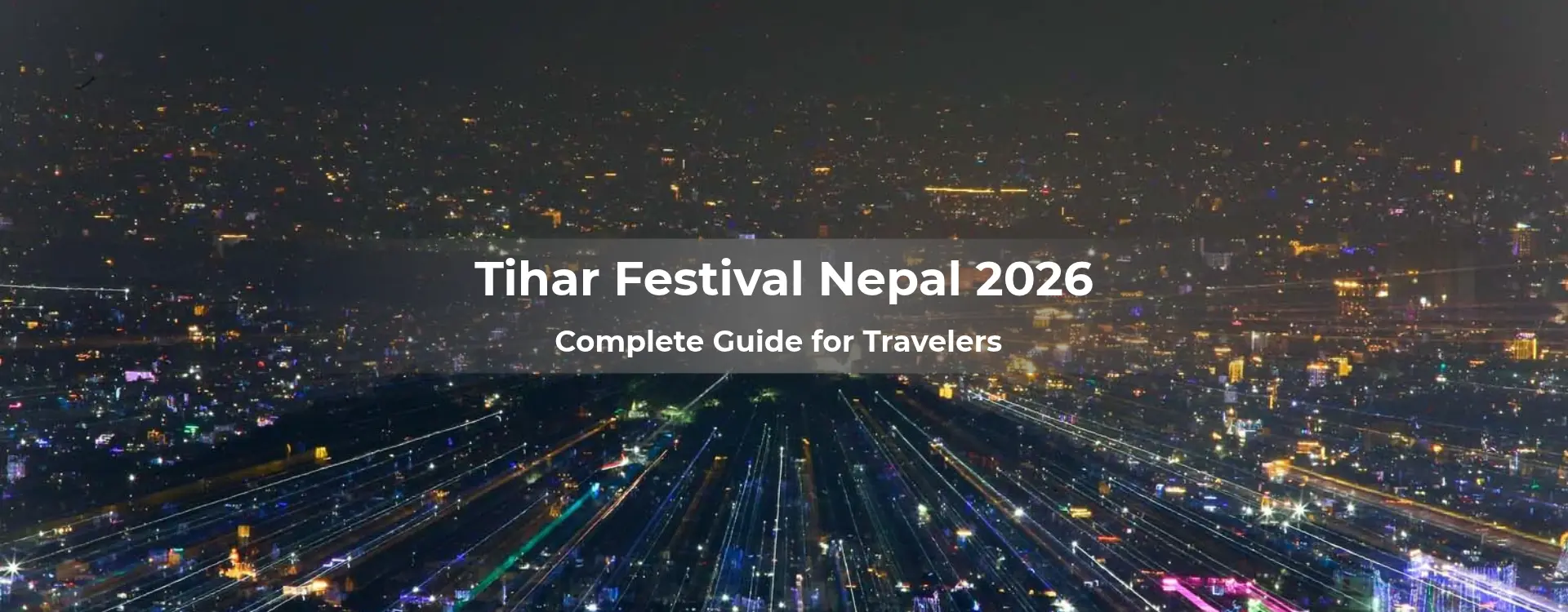
Tihar is Nepal’s five-day festival of lights, and in 2026 it runs from 7 to 11 November. The main night, Laxmi Puja, falls on the evening of 8 November, and the festival closes with Bhai Tika on 11 November.
Can you travel to Nepal during Tihar? Yes, and it is one of the best times to see the country’s culture up close. Hotels, restaurants and tour operators keep running, and the Kathmandu Valley glows with lamps after dark. The practical catch is a government holiday from 8 to 12 November, fuller transport and some closed shops.
This guide covers the dates, what each day means, where to see the celebrations, how cultural tours and treks fit around the festival, and how to take part respectfully. Observance varies by family, community and region, so treat the dates and customs below as a guide rather than a guarantee when planning your Nepal tour.
Tihar Festival Nepal 2026 at a Glance
| Question | Answer |
| Dates | Saturday, 7 November, to Wednesday, 11 November, 2026 |
| Main night | Laxmi Puja, Sunday evening, 8 November |
| Last day | Bhai Tika, Wednesday 11 November |
| Public holiday | Listed from 8 to 12 November (confirm with the Ministry of Home Affairs) |
| Kathmandu weather | Dry, sunny days with cool evenings |
| Best for | Evening lamp-lit streets, Newar traditions, family-style festival experiences |
Tihar Festival Nepal 2026 Dates: Day by Day
Tihar lasts five days, and each day honors something different. This year the calendar has a quirk worth knowing about before you plan.
| Day | Observance | Date (2026) | What visitors may notice |
| 1 | Kaag Tihar (crow day) | Sat 7 Nov | Offerings of grain and sweets for crows, mostly at home and on rooftops |
| 2 | Kukur Tihar (dog day) and Laxmi Puja | Sun 8 Nov | Dogs garlanded in the morning, homes lit in the evening, the busiest and brightest night |
| 3 | Gai Tihar (cow day) | Mon 9 Nov | Cows worshipped and fed; a quieter public holiday |
| 4 | Goru Tihar, Govardhan Puja and Mha Puja | Tue 10 Nov | Oxen honored; Newar communities hold Mha Puja and mark Nepal Sambat 1147, their new year |
| 5 | Bhai Tika | Wed 11 Nov | Sisters apply tika to brothers; most services closed in the morning |
It is important to know that in 2026 Kukur Tihar and Laxmi Puja fall on the same day, 8 November. In most years the dog and the crow each get a day before Laxmi Puja, so some older articles and calendars still show a different order or put Laxmi Puja a day earlier or later. Newar communities and some towns, including Bhaktapur in some years, can also observe a day apart. If a date matters for your plans, ask your host or guide before you commit.
The holiday block is slightly longer than the festival itself. Calendars that follow the government notice list 8 to 12 November, with 12 November as an extra holiday after Bhai Tika.
Tika Time: How to Confirm the Muhurat
Bhai Tika is applied at an auspicious time, the saait or muhurat, set by Nepal’s Panchanga Nirnayak Samiti and announced close to the day. Families gather for that moment, so don’t schedule a flight, bus or sightseeing slot around it.
What Is Tihar and How Is It Celebrated?
Quick answer: Tihar, also called Deepawali and Yama Panchak, is Nepal’s second-biggest festival after Dashain. It is five days of lamps, flowers and offerings that honor crows, dogs, cows, the goddess Laxmi, oxen and the bond between brothers and sisters.
It follows the Dashain festival in Nepal by a few weeks, and the mood is very different. Dashain is about family reunions and Durga’s victory. Tihar is about light, gratitude and welcoming prosperity into the home. Nepali media often note that the Kathmandu Valley, quiet during Dashain, becomes bright and festive with lights during Tihar.
Why Is Tihar Celebrated?
The festival’s other name, Yama Panchak, means the “five days of Yama,” the Hindu god of death. By tradition, crows are seen as Yama’s messengers and dogs as his companions, which is why they are honored first. Laxmi Puja welcomes the goddess of wealth into clean, lit homes. On the final day, Bhai Tika draws on the story of Yama and his sister, and sisters pray for their brothers’ long life. Sources such as Wikipedia’s Tihar entry give more background if you want the full mythology.
As with Dashain, communities tell these stories differently. Treat the version here as a general picture rather than a universal rule.
Lights, Rangoli and Deusi-Bhailo
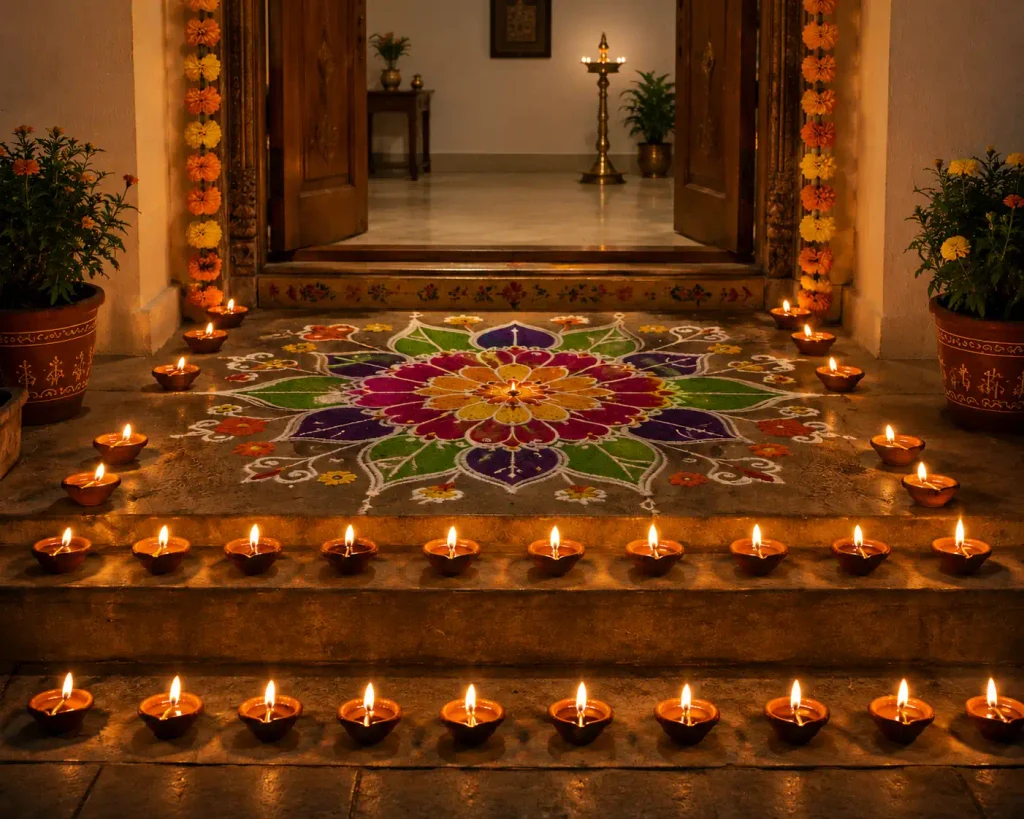
Lamps and lights. Families clean their homes and line windows, doorsteps and rooftops with oil lamps (diyo), candles and electric lights. Many homes draw a rangoli, a colorful pattern at the doorway, to welcome Laxmi.
Deusi-Bhailo. From Laxmi Puja night, groups of children and young people go door to door singing and dancing. Households offer money, fruit or snacks in return. The Himalayan Times lists it among the festival’s defining traditions. If a group arrives at your guesthouse or a home you are visiting, welcome them and give a small amount.
Food and games. Sweets, fruit and fried breads such as sel roti fill the table. Card games are also a Tihar tradition in many households.
The Five Days of Tihar Explained
Day 1: Kaag Tihar (Saturday, 7 November)
Tihar opens with offerings of grain, seeds and sweets for crows, believed to carry messages from Yama. Offerings are usually placed on rooftops, courtyards and window ledges. Visitor tip: the best moments are in the early morning, when you may see offerings laid out quietly in Newar neighborhoods.
Day 2: Kukur Tihar and Laxmi Puja (Sunday, 8 November)
In the morning, dogs are garlanded with marigolds, given tika and fed good food, as thanks for their loyalty and protection. You will see this at homes, shops and even among street dogs.
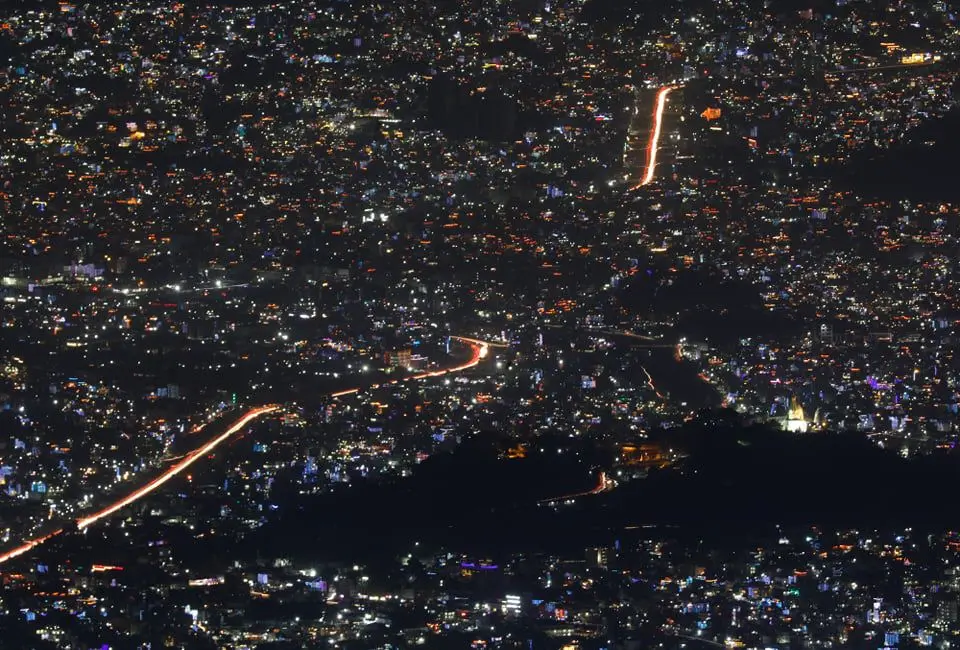
In the evening, Laxmi Puja takes over. Homes are cleaned, lit and decorated, and families make offerings to Laxmi. Firecrackers, music and Bhailo groups fill the streets. This is the single best night to see Tihar in the Kathmandu Valley and also the loudest and most crowded. Visitor tip: go out after dark, keep your valuables close and plan your ride back before the crowds peak.
Day 3: Gai Tihar (Monday, 9 November)
Cows, sacred in Hinduism and linked with prosperity, are worshipped, garlanded and fed. It is a public holiday, and the day feels calmer after Laxmi Puja night. Visitor tip: use this day for heritage sites or a short hike, since many tourist services stay open and the roads are lighter.
Day 4: Goru Tihar, Govardhan Puja and Mha Puja (Tuesday, 10 November)
Oxen are honored for their work in the fields, and some families perform Govardhan Puja. For the Newar community, this is also Mha Puja, a ritual of worshipping oneself performed in the evening and at the start of the Nepal Sambat new year (1147 in 2026). Deusi singing continues. Visitor tip: this is the most distinctive day for culture lovers. Ask your guide about Newar neighborhoods and nearby villages where Mha Puja is held.
Day 5: Bhai Tika (Wednesday, 11 November)
Sisters apply a seven-colored tika to their brothers’ foreheads, place garlands around their necks and offer sweets and fruit. Brothers give gifts in return. Families travel to be together, and the morning is quiet for businesses. Visitor tip: if you are invited to a home, accept graciously, bring a small gift such as sweets or fruit and expect to be offered food.
Can You Travel to Nepal During Tihar 2026?
Short answer: yes, but plan ahead. Nepal’s tourism industry keeps running through Tihar. What changes is logistics: government services pause, many local people travel to be with family and the whole country celebrates at once.
What May Close or Operate Differently
| Service | What to expect | Confidence |
| Government offices | Closed on public holidays, listed 8 to 12 Nov | Fairly firm; confirm with MOHA |
| Banks | Closed on the holidays; ATMs can run low | Likely |
| Local shops | Many close from Laxmi Puja night to Bhai Tika; tourist-area shops often stay open | Varies by area |
| Hotels, restaurants, tour operators | Generally open, sometimes with reduced staff | Varies by area |
| Heritage sites and trekking trails | Open | Generally reliable |
| Visa extensions and permits | Limited during the holiday | Plan around it |
Visas and permits. Sort out visa extensions and trekking permits before 7 November. The Department of Immigration has the current rules, and our guide to the Nepal tourist visa covers the basics.
Unlike Dashain, Kathmandu is lively. Where the capital is quiet during Dashain, Tihar fills streets and courtyards with people and light. That makes sightseeing atmospheric, though busier after dark.
Practical Tips for Visitors
- Book transport early. Expect fuller buses and domestic flights in the days around Laxmi Puja and Bhai Tika, especially on routes between Kathmandu and Pokhara.
- Allow buffer days. Don’t schedule an international departure straight after a domestic leg.
- Expect noise. Firecrackers and loud music run late on Laxmi Puja night and the following evenings. Pack earplugs if you are a light sleeper.
- Carry cash. Banks are closed on the holidays, so withdraw before 7 November.
- Dress for dry days and cool evenings. Kathmandu in early November is usually sunny, with daytime highs in the high teens to low twenties °C and chilly nights. A light jacket is enough in the city. For more on the season, see our guide to the Nepal trek in autumn.
- Confirm staffing. Ask your operator whether your guide and driver are available for your exact dates.
Cultural Tours and Where to Experience the Tihar Festival in Nepal
Where you are changes what you will see. The Kathmandu Valley has the biggest displays and the richest Newar traditions. Pokhara and the hills are quieter and more family-centered. Ask your guide which neighborhoods and temples hold events on each night, since local timings vary.
- Kathmandu and Thamel. Decorated streets, lit shopfronts and crowds on Laxmi Puja night. For a structured way to see the old city, read our Kathmandu city tour details.
- Swayambhunath and Boudhanath. Evening lamp-lighting draws locals and visitors to these stupas. The Kathmandu Valley is a UNESCO World Heritage Site, so heritage areas are busy and well worth the time.
- Patan and Bhaktapur. Strong Newar traditions and lamp-lit squares. Bhaktapur has sometimes observed festival days are a day apart from the rest of the country, so check locally.
- Newar villages near the Valley. Guides often take visitors to places such as Bungamati and Khokana for Mha Puja and Nepal Sambat on 10 November.
- Pokhara. A calmer experience with lit lakeside restaurants and family celebrations.
- Homestays and rural villages. The closest look at everyday Tihar, usually by invitation.
For ideas on how to pace a Valley visit, see our Kathmandu Valley in 3 days itinerary.
A Sample Tihar-Week Cultural Tour
This is an example of how a Tihar-timed tour can be built, not a fixed package. We adjust it to your dates and interests.
| Day | Date | Focus |
| 1 | Sat 7 Nov | Kaag Tihar offerings, Kathmandu old city, Swayambhunath at dusk |
| 2 | Sun 8 Nov | Kukur Tihar, Patan, in the afternoon; Laxmi Puja evening in the old city |
| 3 | Tue 10 Nov | Bhaktapur and a Newar village for Mha Puja and Nepal Sambat |
| 4 | Wed 11 Nov | Bhai Tika with a host family if invited, then a slow morning at Boudhanath |
Monday 9 November is left open on purpose. It is Gai Tihar and a public holiday, so it works as a rest day or a short hike.
What a Tihar-timed tour can and can’t promise. A good tour puts you in the right places with a guide who explains what you are seeing, and it may lead to a family invitation. It can’t guarantee tika, access to private rituals or an identical experience on every date, and you should be wary of anyone who says it can.
If you want to pair the festival with more of the country, our Nepal cultural and nature tour can be adapted, and our post on what the tour looks like day by day shows the pace. If your interest is religious, take a look at our Hindu pilgrimage tour in Nepal. Or tell us your dates and interests and we will suggest what fits.
Trekking in Nepal During Tihar
Short answer: yes, you can trek during Tihar. Early November sits inside Nepal’s autumn trekking season, with clear skies and stable weather. Teahouses and trails stay open. The impact is on logistics, not on whether you can go.
Guides, porters and drivers usually want to be home for Bhai Tika, so tell your operator early which dates matter and expect a sensible conversation about a rest day or a late start. Domestic flights and buses are fuller around the festival. If you need a flight to the Everest region, our guide to Kathmandu to Lukla flight options explains the airport arrangements, and spare days are wise.
| Option | Why it suits Tihar | Watch out for |
| Kathmandu Valley hikes, such as the Valley rim hike | Combines festival evenings with clear daytime views | Busy roads on Laxmi Puja night |
| Short treks, such as the short Annapurna Base Camp trek | Fits between holiday days and needs fewer travel days | Less buffer if transport is delayed |
| Longer treks that start after 12 November | Avoids the holiday block and the fullest transport days | Colder nights at altitude in late November |
How to Experience Tihar Respectfully as a Visitor
Tihar is a family and community festival, so the best way to see it is as a guest. You don’t need to do anything elaborate. Be curious, be modest and let invitations come to you.
| Do | Avoid |
| Dress modestly at temples and cover shoulders and knees | Treating rituals and families as photo opportunities |
| Ask before photographing people, altars or private ceremonies | Photographing homes or Mha Puja rituals without permission |
| Accept tika and garlands graciously if they are offered | Asking strangers for tika or blessings |
| Welcome Deusi-Bhailo groups and give a small amount | Ignoring or mocking groups who come to your door |
| Bring sweets or fruit if you are invited into a home | Assuming every family celebrates in the same way |
| Keep a calm distance from street animals during Kukur Tihar and Gai Tihar | Setting off firecrackers near people or animals |
| Ask your guide or host before joining anything private | Entering restricted temple areas |
Receiving tika is a blessing, so accept it with a smile and don’t wipe it off straight away. Dakshina, a gift of money that elders give to younger relatives, is a family custom, and visitors shouldn’t expect it.
Tihar vs Dashain vs Diwali
Visitors often ask how Tihar differs from Dashain and from India’s Diwali. This table sorts the three.
| Festival | Timing in 2026 | Focus | What visitors notice |
| Dashain | 11 to 25 October | Goddess Durga’s victory, family reunions, tika and jamara | Quiet Kathmandu, crowded buses, government closures |
| Tihar | 7 to 11 November | Lights, Laxmi, animals and the sibling bond | Lamp-lit streets, Bhailo singing, Bhai Tika |
| Diwali (India) | Main day also on 8 November | Festival of lights centered on Lakshmi worship | Shares the lamps and Lakshmi worship, but not Nepal’s animal days or Bhai Tika as celebrated here |
Tihar and Diwali share roots and the same lamp-lit look, but Tihar adds days for crows, dogs, cows and oxen and a distinct sibling ritual. For the earlier festival, read our Dashain festival Nepal 2026 guide.
Frequently Asked Questions About Tihar Festival Nepal 2026
When is Tihar festival in 2026?
Tihar 2026 runs for five days, from Saturday 7 November to Wednesday 11 November. Laxmi Puja is on the evening of 8 November, and Bhai Tika is on 11 November. The government holiday is listed from 8 to 12 November.
What are the five days of Tihar?
The days are Kaag Tihar (crows), Kukur Tihar (dogs), Gai Tihar (cows) with Laxmi Puja, Goru Tihar with Govardhan Puja and Mha Puja (oxen and the Newar new year), and Bhai Tika (brothers and sisters). In 2026, Kukur Tihar and Laxmi Puja share 8 November.
When is Bhai Tika in 2026?
Bhai Tika is on Wednesday 11 November 2026 (Kartik 25, 2083 BS). Families apply tika at an auspicious time set by Nepal’s Panchanga Nirnayak Samiti and announced close to the day. Avoid scheduling travel around it.
When is Laxmi Puja in 2026?
Laxmi Puja is on the evening of Sunday 8 November 2026 (Kartik 22, 2083 BS), the same day as Kukur Tihar. Homes are cleaned, lit and decorated, and it is the brightest night of the festival.
Is Tihar the same as Diwali?
Not exactly. Tihar features the same lamps and Lakshmi worship as Diwali, but in Nepal it lasts five days and includes special days honoring crows, dogs, cows, and oxen, ending with Bhai Tika. Nepali families also play Deusi-Bhailo, which is not part of Diwali elsewhere.
Can tourists take part in Tihar?
Often, but by invitation. Tihar is mainly a family festival. If a host, guide or family invites you to a meal, a tika or Deusi-Bhailo, accept warmly. Don’t ask for tika or expect access to private rituals.
Is Tihar a good time to trek in Nepal?
Yes. Early November is part of the autumn trekking season, with clear skies and open teahouses. Book flights first, arrange permits before 7 November and tell your operator which festival dates matter to your guide and porters.
Tihar Festival Nepal 2026: The Short Version
Tihar is the festival that turns Nepal into a field of lamps, and in 2026 it runs from 7 to 11 November. Nepal stays open to visitors, and trekking continues through the autumn season.
Remember these five things:
- Dates: 7 to 11 November, with Laxmi Puja on the evening of 8 November and Bhai Tika on 11 November.
- Closures: government offices and banks are on holiday from 8 to 12 November, so arrange visas, permits and cash early.
- Transport: buses and domestic flights fill up around the festival, so book ahead and keep a spare day.
- Culture: Kathmandu Valley is the best place to see Tihar, and 10 November is the day for Newar traditions.
- Respect: you are a guest in a family festival, so ask before photographing and accept invitations warmly.
If you plan around the logistics, Tihar is one of the most beautiful times to see Nepal.
Plan Your Tihar Tour or Nepal Trek
Planning to be in Nepal for Tihar? Whether you are already booked or still deciding, our team can help you work out transport, guides and dates around the festival.
Tell us your dates and interests and we will suggest a plan that fits, or explore our Nepal tour packages to compare options. If you would like to see the culture up close, take a look at our cultural tour.
Have a Tihar question of your own? Send it to us and we will add useful answers to this guide.


