
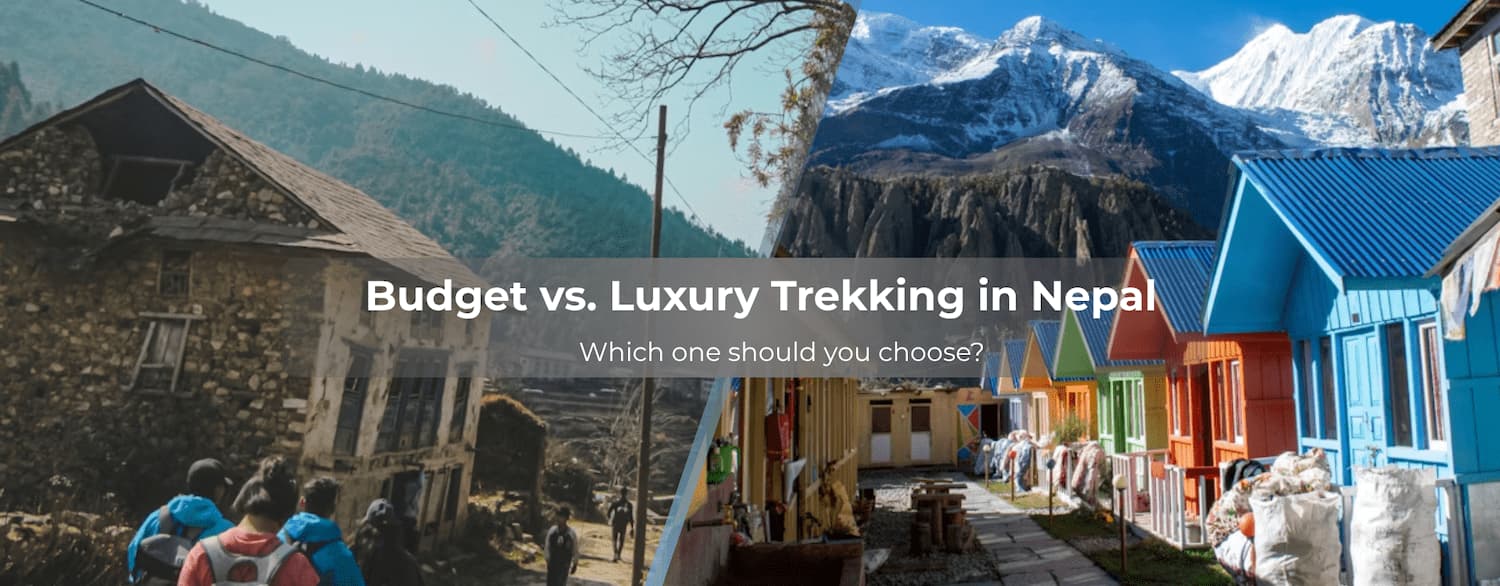
The adventure to the Himalayas has evolved from a ‘one-size-fits-all’ backpacking market to a sophisticated multi-tiered industry. There were more than one million tourists that visited Nepal in 2025 to experience treks and tours around the lap of the mountain. With this surge of guests, one question is being raised in the market: Budget vs. Luxury Trek in Nepal—which is better?
There’s a notion ongoing that trekking in Nepal should be about the hardships and discomfort, like sleeping in barely comfortable lodgings. While there’s a truth to it, there is always a luxury alternative for those who just want to see the mountain peaks, enjoy nature and experience the culture of the country.
You don’t have to walk for too long with heavy backpacks and eat the bare minimum to see famous peaks like Everest Base Camp or Annapurna Base Camp. With the rise of tourism in Nepal, much infrastructure is being developed, like premium lodgings with private rooms and dining experiences, for those who are trying to explore on their own in their comfort zone for various needs.
The TMC Profile for Budget vs Luxury Trekking in Nepal
Before the comparison of Luxury vs. Budget Trek, you have to consider three things for decision-making before your trek in Nepal. We call it the TMC profile (Time, Money and Comfort).
- Time: Consider the time you have and want to spend on travelling within the mountains of Nepal.
- Money: Figure out how much you can spend on your Nepal tours and treks.
- Comfort: Your comfort will determine whether you want to travel on a budget or use luxury services.
What is Budget Trekking in Nepal?
Budget Trekking is a self-managed and affordable option for trekkers who want a raw experience of their livelihood within the laps of the Himalayas. Trekkers have to be accustomed to local teahouses for lodgings and food. Travelling in shared jeeps or local vehicles, eating in communal halls, and sleeping in unheated shared rooms can be a key proposition for many social or solo treks in Nepal.
Budget trekking in Nepal can be a genuine experience of what people of those regions are experiencing on a daily basis. While you withdraw from familiar comforts, such an occurrence can also serve as a trigger for memories.
What actually defines Budget Trek in Nepal in 2026?
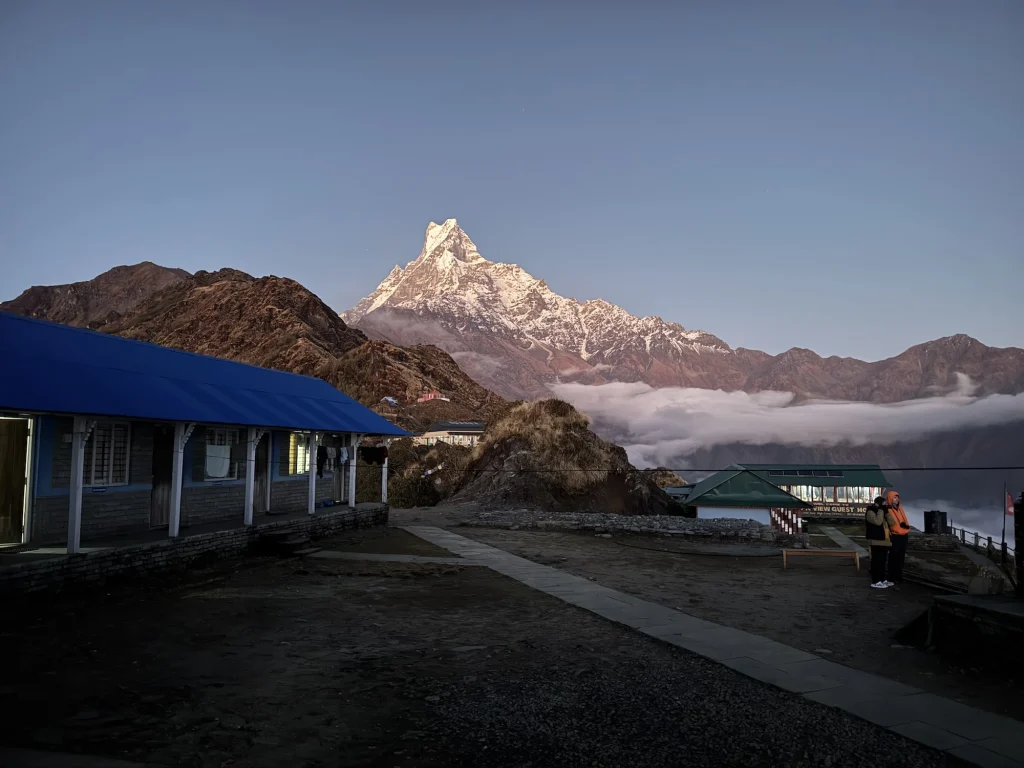
Local Teahouse Living
Local Teahouse Living is the most common form of accommodation for budget trekkers. These lodges provide basic rooms, usually with two single beds, simple bedding, and a shared, unheated bathroom (sometimes an outhouse) down the hall. While comfort is minimal, staying in teahouses is central to the budget experience, allowing for immersion in the local community and providing an opportunity to socialize with other trekkers and locals in the communal dining hall, often warmed by a central stove.
Self-Managed Logistics
You will use local buses and shared jeeps, which are common modes of transportation in Nepal, to reach the trailheads. This option is a key characteristic of budget trekking, offering a glimpse into local life but often involving longer, less comfortable journeys. While basic, English-speaking guides are provided to you for navigation and to manage logistics, they are typically less experienced or lack advanced certifications compared to those on luxury treks.
Minimalist Nutrition
Budget trek in Nepal allows you to experience the local cuisine. While your nutrition count on daily intake can be an issue, local staples like Dal Bhat can be a great option to manage your cost while maintaining energy for your next hike.
Interdependent or Independent Spirit
While Solo Trekking is allowed in various regions, Guides are considered compulsory as per the Nepal government. Meaning, while you can travel to many regions without a group, you will still need a guide with you. This mandate maintains a sense of autonomy while protecting against a variety of issues such as navigation risks, safety concerns, and permit requirements.
What is Luxury Trekking in Nepal?

The premium version of trekking in Nepal, where you have your accommodation and dining settled, supported logistics, and overall upliftment in services can be known as Luxury Trekking. The general consensus is always that trekking must be rough with limited services, but with the growing tourism in Nepal, that is being tackled. The uprising of high altitude premium hotels, trekking companies in Nepal like eBctrails who provide you with services that allows you to enjoy the trek and without worrying about travel and accommodations.
How do you define Luxury Trekking in Nepal?
Premium Lodging Infrastructures
Forget the bare-bones teahouses! On a luxury trek, you’re looking at the best available lodging, which often means boutique mountain lodges with private, heated rooms, en-suite western bathrooms, hot showers, and unbelievably comfortable bedding. It’s about a cozy, restorative night’s sleep that prepares you perfectly for the next day’s journey.
Gourmet Nutrition
This is definitely not your standard dal bhat three times a day (though we love dal bhat!). Luxury trekking elevates mountain dining to an art form. Expect menus designed by professional chefs, offering a wide array of local and international cuisine, fresh ingredients (sometimes flown in!), and unlimited hot beverages. Dietary requirements are effortlessly catered to, ensuring your body is optimally fueled.
Helicopter Logistics
This is the ultimate convenience factor. Luxury trekking often incorporates helicopter tours and travels for speedy transfers from Kathmandu to the trailhead and back, allowing you to bypass long, bumpy, and unpredictable drives. This saves precious time and energy. It can also be used as a vital safety net for quick, comfortable evacuation in a serious emergency.
Staff-to-Trekkers Ratios
In the luxury bracket, you get unparalleled personal attention. The ratio of dedicated trekking staff (guides, porters, cooks, and support crew) to trekkers is significantly higher than on a budget trip. This means your every need is properly addressed, your gear is handled with extra care, and you have highly experienced guides who can focus on an intimate group experience.
Health and Safety Protocols
Safety is paramount, and luxury operators treat it as such. This includes carrying comprehensive medical kits, high-tech communication devices (like satellite phones or high-altitude Wi-Fi), and employing highly-trained guides certified in Wilderness First Aid. In a luxury setting, you’ll also find that operators often include hyperbaric chambers or PAC bags and have robust, well-rehearsed evacuation plans ready to go at a moment’s notice.
Key Differences in Budget vs. Luxury Trekking in Nepal
| Categories | Budget Trekking | Luxury Trekking |
|---|---|---|
| Accommodations | Basic Teahouses; Shared Rooms with twin beds and communal bathrooms; Minimal to No-heating rooms | Premium lodges; private rooms with attached bathrooms; heated rooms and electric blankets. |
| Food and Dining | Simple local meals like Dal Bhat, Noodles and Porridges; Limited Menu Variety; Community Dining Halls | International Menu; Professional Barista Services; Nutritional and organic ingredients option |
| Guide and Extra Support | Shared Licensed Guide; Optional or Shared Porter services | Private senior guides; high staff-to-trek ratios; dedicated personal potters. |
| Safety and Medical needs | Standard first aid kits; Individual responsibility for emergency insurance | Oxygen monitoring; satellite phone services; Comprehensive Evacuation Insurance services and pre-arranged medical protocols. |
| Amenities | Can incur extra costs for additional services like Hot Shower, devices charging and Wi-Fi | All Inclusive Packages are made available; no need to pay for extra services |
| Expected Cost | $40–$65 per day; approx. $800–$1,400 for a standard 14-day expedition. | $175–$600+ per day; approx. $3,000–$6,000+ for a standard 14-day expedition. |
Cost Comparision: Budget vs Luxury Trekking for 2026
Since the mandatory guide obligation and inflationary pressure, the Trekking costs in Nepal has been shifted significantly. While the estimation remains, it is always best to consult with your guide and trekking agency for actual cost of your preferred trek.
With that said, here’s the breakdown of the cost that might incur during budget or luxury trekking in Nepal
Daily Budget
If you plan to trek on budget, you should expect around $40-65 expenses per day. Such amount will cover you for basic teahouses along the trail, shared guides and local meals. Extra services like Wi-Fi, Device Charging and Hot shower can increase the expense.
While if you chose Luxury trekking as an alternative, you will have more expenses and comfort hand-in-hand. Expect the daily expenses be $300+ which will include premium lodging with private bathrooms, proper transportation and experienced guide. You will also get the more options for meals including international cuisines in various stops.
Permits and other Regulation Fees
The Permits costs remains fixed, no matter the choice of your type of trekking in Nepal. In 2026, the TIMS Card Cost around $14-$20, while National Park fees (Sagarmatha or Annapurna Conservation Area) are roughly around $20-$35. Restricted areas like Upper Mustang, Tsum Valley are required special permit range of cost based on the place. It is to be noted that special trekking permits can only be granted via registered trekking agency like eBc Trails.
Professional Support
You can no longer so go solo for the trek in major regions. Therefore, a licensed guide will be necessary for your travel. Generally, the guide costs around $25- $50 per day depending on their experiences, which covers their salary, insurance, and food. You will also have to take porter, a dedicated one if you plan on taking luxury trekking in Nepal. The cost will be in between $20-30 per day for 20 KG of load.
Besides mentioned points, there are other fees that might incur especially if you have chosen budget trekking in Nepal. Extra services like Wi-Fi, Hot Showers and Device Charging facilities will cost up to $10 per day. While not a mandatory expense, it is also cultural expectation of locals to tip some percent (10% to 15%) of the total cost to your guide and porter crew.
The Hidden Value of Luxury Trekking in Nepal
The distinction between luxury and budget trekking is often the most evident in how body recovers from the physical stress in high altitude. Treks like Everest Three Passes Trek and Nar Phu Valley Trek can take up to 17-18 days, which can stress up the body especially in the environments with thin oxygen.
Luxury lodges will provide you with heated room and electric blankets, that will help you to recover from bodily stress and high altitude. Premium operators prioritize strict hygiene and high quality ingredients that can help you reduce any illness like gastrointestinal which is actually the major reason for the ‘failed’ trek.
Luxury packages will include oxygen monitoring, oxygen cylinders, and satellite phones for communication in dead zone. Such packages also covers insurances with evacuation protocols for immediate helicopter dispatch. For comparison, going on a budget, trekkers will have to verify their insurance to dispatch for evacuation.
Choosing Budget or Luxury Trek based on the Region
While there is a rapid development of insfrastructure all around the country, each region generally focuses on it with respect to the amount of tourist they get. For instance, famous treks like Everest or Annapurna will have premium lodges and facilitate most of the needs of the trekkers. But off beaten treks like Kanchenjunga and Rara Lake Trek may not have as much as facilities.
Everest Region Trek is considered capital for luxury trekking. With high concentration of premium lodges, which offers all the required services like heated rooms and en-suite bathrooms. Annapurna Region Trek is best known for its variety. It accommodates all budget tiers with high-quality experiences. With all the trailheads accessible by the roads, it is also almost 30% cheaper than Everest region.
Langtang Trek is one of the best affordable trek of Nepal. Due to its accessibility via roads and considerably shorter distance, it is generally loved by those who are just beginning to trek. Manaslu remains the wilder choice which requires a specialized permits and mandatory group sizes.
Budget vs Luxury Trekking: Which one should you choose?
As we have previously mentioned, the main determining factor is your TMC profile (Time, Money and Comfort). If you are an authentic traveller who actually enjoy the social culture of Nepal like sharing ‘Common’ room and have a view of travel and adventure with hardship, then Budget trekking is the proper choice for you.
But if you lean on comfort, travelling with family, or are senior by age then choose Luxury packages for the trek. Such packages prioritizes safety, health without minimizing overall experience.
There is also hybrid version which is becoming trend known as ‘walk up heli down‘ model. You just have to walk to the Base Camp or ultimate destination of your trek, experiencing every bit of social culture and challenges, then after that you can take the helicopter package back to the capital. This saves many days of returning journey which can taxing once you’ve achieved your goal.
Finally, it is to be said that while Budget Trekking provides you with native and unfiltered experiences, Luxury Trekking just tones it down, but it doesn’t change the core experience of your travel. The enormous mountain views, Sherpa cultural, and most importantly personal sense of achievement is all the same regardless the price.
FAQs for Budget vs Luxury Trekking in Nepal
What is the average price difference between a budget and luxury trek in Nepal?
For 2026, a budget trek typically costs between $40 and $65 per day, while luxury packages range from $175 to $350+ per day. For a standard 15-day Everest Base Camp Trek, a budget traveler should expect to spend between $1,000 and $1,500 (based on eBc Trails prices), whereas a luxury trekker may pay more depending on the inclusion of private helicopter transfers and their overall itinerary.
Does the actual trekking route change if I choose a luxury package?
No, the physical trails, Sherpa villages, and mountain vistas remain identical regardless of your budget. The “luxury” refers strictly to your experience outside of walking hours like staying in heated lodges with en-suite bathrooms, enjoying gourmet à la carte menus, and utilizing helicopter returns to save time and reduce physical strain.
What are the most common “hidden” costs on a budget trek?
Budget travelers often encounter several daily micro-transactions that are not included in the base price. These include fees for hot showers ($2–$7), Wi-Fi accessibility ($1–$5), devices charging ($1–$5), and safe boiled drinking water, which can cost up to $3 per liter at high altitudes. Luxury packages typically bundle all these services into a single all-inclusive price. The prices may also vary depending on the region..
Can I still trek solo and independently in 2026 to save money?
No, new regulations implemented in 2026 mandate that all foreign trekkers must hire a licensed guide for almost all major routes, including the Everest, Annapurna, and Langtang regions. While you can still choose the “budget” option by staying in basic teahouses, you must factor in the mandatory guide fee, which currently ranges from $30 to $50 per day.
Is luxury trekking safer than budget trekking?
Luxury trekking offers significant safety advantages through better physiological recovery. Sleeping in heated rooms with high-quality bedding helps the body maintain its core temperature, which facilitates better acclimatization and reduces the risk of fatigue-related Acute Mountain Sickness (AMS). Additionally, luxury operators provide senior guides, twice-daily oxygen saturation monitoring, and guaranteed helicopter evacuation insurance.


