
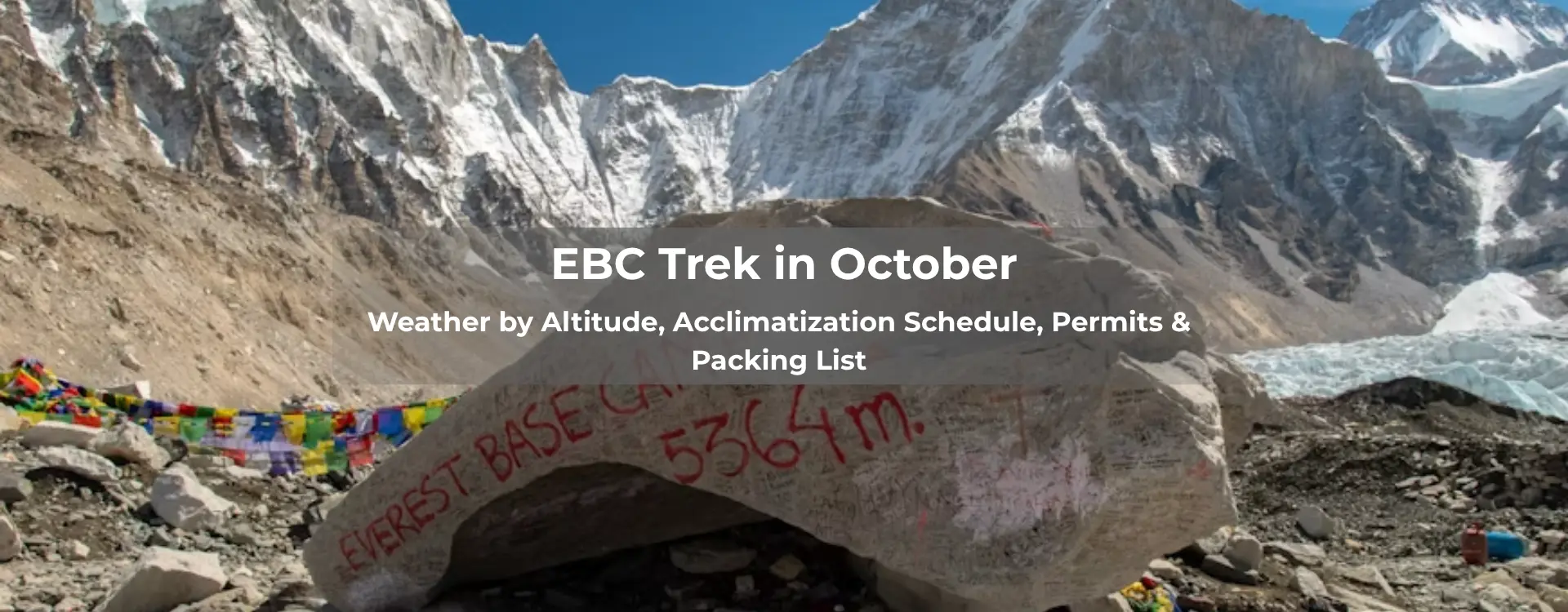
There is a reason so many of the famous photographs of Everest were taken in autumn. By October the monsoon has washed the haze out of the air, the trails have dried, and the Khumbu opens up into deep blue skies and sharp white peaks. If you are planning an EBC trek in October, you are choosing the classic window for the Everest Base Camp trek.
October also has a trade-off. The trails are at their busiest, and the nights above Dingboche are the coldest they have been all year. It suits fit, well-prepared trekkers who book early and respect the altitude. Crisp weather makes the walking feel easy. It does not change the thin air, so clear skies are never a reason to climb faster.
This guide covers what to expect on an October trek: temperatures at every altitude, how to acclimatize safely, what is different in October 2026 (festivals and flight routing), permits, packing, and how October compares with spring. If you are also weighing other treks in Nepal in October, the weather section will help you judge how cold the high Himalaya really gets.
EBC Trek in October at a glance
| Categories | October on the EBC trail |
|---|---|
| Daytime temperatures | About 10–16 °C at Lukla, falling to about 0–2 °C at Gorak Shep |
| Night temperatures | About 2–6 °C at Lukla, falling to about −13 to −9 °C at Gorak Shep |
| Rain and snow | Rare; a light shower below ~3,500 m is possible in the first week |
| Views | The clearest of the year, especially mid-month |
| Flights | Usually via Manthali (Ramechhap) in peak season, so plan for an early start |
| Crowds | Peak season: book flights and lodges early |
| 2026 festivals | Dashain (11–25 Oct); Mani Rimdu at Tengboche in late October (26–28) |
| Trip length | Our 15-day Everest Base Camp trek builds in two acclimatization days |
EBC Trek Weather in October: Temperatures at Every Altitude
October is the start of the post-monsoon dry season: clear skies, little rain, and pleasant daytime warmth that fades quickly as you climb. Above Dingboche, nights fall well below freezing and get colder as the month goes on.
Weather snapshot by village
These are typical planning ranges. Mountain weather varies from day to day, and a few degrees either way is normal, so treat the numbers as a guide, not a forecast.
| Village | Altitude | Daytime | Night | What it feels like |
| Lukla | 2,850 m | 10–16 °C | 2–6 °C | Mild and sunny; a fleece is enough by day |
| Phakding | 2,650 m | 12–16 °C | 3–7 °C | Warm walking, cool evenings |
| Namche Bazaar | 3,440 m | 8–11 °C | −2 to 1 °C | Crisp mornings; sun-warm by midday |
| Tengboche | 3,855 m | 6–9 °C | −4 to −1 °C | Cold evenings; down jacket at dusk |
| Dingboche | 4,360 m | 5–7 °C | −7 to −4 °C | First properly cold nights |
| Lobuche | 4,930 m | 2–4 °C | −10 to −7 °C | Frost inside and out; layer up to sleep |
| Gorak Shep | 5,185 m | 0–2 °C | −13 to −9 °C | Freezing nights; short daylight for walking |
| Kala Patthar (dawn) | 5,545 m | n/a | −13 to −16 °C | Feels colder in the wind; wear everything |
Early, mid and late October: what changes
The month is not uniform, and the differences affect what you pack and how busy the lodges are.
- Early October (1–10): the warmest days of the season. A light shower below about 3,500 m is possible in the first week as the monsoon retreats.
- Mid-October (11–22): the most settled stretch, with the clearest mountain views. It is also the busiest, so lodges fill first.
- Late October (23–31): nights get noticeably colder, especially at Lobuche and Gorak Shep, and the trail thins slightly.
Wind, sun and the 25-degree daily swing
The number that catches people out is not the lowest temperature but the range within a single day. You can start at Kala Patthar before dawn at around −15 °C and be walking in the warm sun a few hours later. The mountain sun is strong, and UV is intense at altitude, so sunglasses and sun cream matter even when it is freezing.
Wind is usually light in the valleys, but it picks up at the high viewpoints, where it makes the cold feel much sharper. The answer is layers. Several thin layers you can add and remove work better than one heavy jacket. We cover the full kit in the packing section.
Trail Conditions in EBC Trek in October vs. September vs. November
| Conditions | September | October | November |
|---|---|---|---|
| Rain risk | Higher, as the monsoon fades | Low | Very low |
| Night cold at Gorak Shep | Milder | Cold | Coldest |
| Views | Improving | Clearest of the year | Very clear |
| Trail crowds | Building | Peak | Thinning |
Safety note: October’s perfect weather does not lower your altitude risk. Cold, dry air dehydrates you faster than you notice, and fine days tempt groups to hurry. Follow the acclimatization schedule in the next section and never skip a rest day, however good the sky looks.
Check the official hydrology website for the updated weather information.
October Acclimatization Schedule: Day-by-Day Sleeping Altitudes
A safe EBC trek in October climbs slowly, builds in two rest days (Namche Bazaar and Dingboche), and sleeps only a little higher each night. October’s clear weather is not a reason to speed up. It is the reason people ascend too fast, because nothing in the sky tells you to slow down.
Below is the acclimatization logic behind a well-planned EBC trek in October itinerary. It shows where you sleep and why, not what you’ll see each day. For the full day-by-day description, see the 15-day Everest Base Camp trek itinerary.
The acclimatization ladder
| Day | You sleep at | Sleeping altitude | What to know in October |
| 3 | Phakding | 2,650 m | Fly in from Manthali, then start drinking water early |
| 4 | Namche Bazaar | 3,440 m | The biggest single jump in sleeping height; walk slowly |
| 5 | Namche (rest day) | 3,440 m | Hike high to Khumjung (3,790 m) and Everest View Hotel (about 3,960 m), then sleep low |
| 6 | Tengboche | 3,855 m | Evenings turn cold; the monastery’s prayer ceremony is worth seeing |
| 7 | Dingboche | 4,360 m | Your first night above 4,000 m |
| 8 | Dingboche (rest day) | 4,360 m | Hike toward Nangkartsang (up to 5,083 m), then return to sleep |
| 9 | Lobuche | 4,930 m | Frost indoors; the coldest night so far |
| 10 | Gorak Shep | 5,185 m | Visit Everest Base Camp (5,364 m) in the afternoon, then sleep at Gorak Shep |
| 11 | Pheriche | 4,250 m | Kala Patthar at sunrise (5,545 m), then descend to sleep much lower |
| 12–13 | Namche, then Lukla | 3,440 m, then 2,850 m | Descent days: keep drinking fluids |
A common guideline is to gain roughly 300–500 m of sleeping altitude per night once you are above about 3,000 m. This itinerary exceeds that on a few nights, most noticeably Phakding to Namche. That is why the two rest days and the hike-high, sleep-low day hikes matter, and why you should never trim them to save time.
Rest days that actually help
“Climb high, sleep low” means you go up during the day and come back down to sleep. At Namche, the Khumjung and Everest View walk does this. At Dingboche, the climb toward Nangkartsang does it. Both give your body a taste of higher altitude, then return it to a lower bed to recover.
A rest day is not a lie-in. Light movement, steady fluids and regular meals help you adapt better than lying in your sleeping bag. And a clear forecast is never a reason to skip one.
Daily safety checkpoints
A good guide builds a rhythm into every day. Ask any operator what theirs looks like:
- Morning check-in: how did you sleep, and do you have a headache, nausea, dizziness or lost appetite?
- Pace: walk slowly enough to hold a conversation. If you can’t, slow down.
- Hydration: aim for around 3 liters a day. Cold, dry October air dries you out faster than you feel, and hot tea counts toward the total.
- Evening briefing: the guide reviews how everyone is doing and plans the next day, including whether to adjust it.
- Honesty: tell your guide about every symptom, even mild ones. Guides can’t act on what they don’t know.
Red flags: when to stop, descend or call for help
Do not keep climbing if you have a severe or worsening headache, repeated vomiting, confusion, loss of balance or coordination, breathlessness at rest, or a persistent wet cough. Tell your guide immediately. The safe response to serious altitude symptoms is to descend, not to wait and see.
| This is general information, not medical advice. Talk to your doctor before the trek about preventive medication, and use it only as they and your guide advise. Make sure your travel insurance covers high-altitude trekking and helicopter evacuation. |
Want this schedule built around your dates? Talk to our guides about a private departure with flexible dates.
October 2026 on the Trail: Festivals, Flights and Crowds
October 2026 brings Dashain (11-25 October), Mani Rimdu at Tengboche Monastery (26-28 October) and peak trail traffic. Tihar falls in November this year, not October. Flights to Lukla usually run from Manthali (Ramechhap) at this time of year, so you’ll need an early start.
Festival dates for October 2026
| Festival | 2026 dates | What it means for your trek |
| Dashain | 11-25 October (main Tika day: Wed 21 October) | Kathmandu is quiet, some shops close, and domestic transport is tight. The Sherpa trail is largely unaffected. |
| Mani Rimdu | 26-28 October, at Tengboche Monastery | Masked dances and blessings at the Khumbu’s best-known Sherpa Buddhist festival. Lodges near Tengboche fill early. |
| Tihar | 8-11 November | Falls after your October trek but affects Kathmandu if you extend your stay. |
Festival dates follow lunar calendars, so confirm the final schedule with your guide before you travel.
Timing your arrival for Mani Rimdu
If seeing Mani Rimdu is a priority, work backwards from Tengboche. On our standard 15-day itinerary, Day 1 is your arrival in Kathmandu and Day 6 is your night at Tengboche. That means:
- Arrive in Kathmandu on 21-23 October to reach Tengboche during the festival (26-28 October).
- Arriving on 22 October puts you at Tengboche on 27 October. The public mask dances are traditionally on the second day, so this is the date to ask about first.
- 21 October is the Dashain Tika day. The airport works, but the city largely shuts down, so don’t expect much from your first evening.
This is a request to check availability, not a guarantee. Lodges around Tengboche fill early during the festival, so ask us about private departures with flexible dates through our upcoming trips page.
If you do attend, be a good guest. Keep your voice down, skip flash photography, stay out of ritual spaces and ask before photographing monks or families. You can read more about the monastery on our Tengboche Monastery page.
Flights in October: the Manthali routing
In peak months (March-May, October and November), flights to Lukla usually leave from Manthali (Ramechhap) airport rather than Kathmandu. That means a 5-6 hour drive from Kathmandu before a short flight of about 20 minutes. Expect a very early start on the day you fly.
Even in clear October weather, delays happen. Congestion, aircraft scheduling and wind at Lukla can all push flights back. Build in a spare day around your international flights and take insurance that covers trip disruption. Our guides explain the routing on our Kathmandu to Lukla flight page, and you can read about the airport itself at Lukla, the gateway to Everest.
Where the crowds are, and how to avoid them
EBC Trek in October is peak season for trekkers, and the busiest points are Namche Bazaar, the Lobuche-Gorak Shep stretch and Kala Patthar at sunrise. A few habits help:
- Start early. Leaving soon after breakfast gets you ahead of most groups, especially on the way to Gorak Shep.
- Walk at off-peak hours. Lunchtime stretches between villages are often quieter.
- Book early. The lodges above Dingboche are limited, and a guide with good lodge relationships can make a real difference to where you sleep.
- Share the trail. Step to the uphill side when yaks pass, and carry your rubbish out.
EBC Trek Permits and Rules for October 2026
Trekkers need two permits for the Everest Base Camp trek: the Sagarmatha National Park entry permit and the Khumbu Pasang Lhamu Rural Municipality permit. When you book with eBcTrails, we arrange both for you. Fees are set by the authorities and do change, so treat the figures below as a guide and confirm the current rates before you travel.
The two permits
| Permit | Issued by | Fee (foreign nationals) |
| Sagarmatha National Park entry | Sagarmatha National Park / Nepal Tourism Board | NPR 3,000 per person per entry (about US$21-23 at current exchange rates) |
| Khumbu Pasang Lhamu Rural Municipality | Khumbu Pasang Lhamu Rural Municipality | NTB lists USD 20 per person per week for the first four weeks and USD 25 per person per week beyond four weeks. |
Children under 10 enter Sagarmatha National Park free.
Please note: permit fees can change with currency exchange rates and may differ in peak season. The figures here were checked against the Nepal Tourism Board on the day of writing this blog and are for guidance only. Your trek price includes the permits for the itinerary you’ve booked, and we’ll confirm the final amounts when you book.
Where and when permits are issued
You don’t need to queue for permits yourself on a guided trek. We prepare the paperwork in advance, so bring your passport and a few passport-size photos. Permits are checked at entry points along the trail, so keep them with you throughout the trek and show them when asked.
Guides, insurance and current rules
We strongly recommend trekking with a licensed guide. Regulations for trekking in the Everest region have been reported differently, so confirm the current position before you book rather than relying on older articles.
Travel insurance is a must. Your policy should cover high-altitude trekking and emergency helicopter evacuation up to at least 6,000 m. For visa details and fees, see our Nepal tourist visa guide and check the official Nepal Immigration portal before you fly.
Trekking from India or another SAARC country
SAARC nationals pay a lower Sagarmatha National Park fee: NPR 1,500 per person per entry. Visa rules and fees depend on your nationality, so check the Nepal Immigration portal for your passport before you book flights. We’re happy to answer questions on our contact page.
What to Pack for the EBC Trek in October

October packing is about layers. Expect warm sun at midday, frost at dawn, and nights well below freezing above Dingboche. Bring a warm down jacket, a windproof shell, and insulated gloves and boots you’ve already broken in. Anything bulky can be rented or supplied.
Layers for a 25-degree swing
On a single October day you can go from about −15 °C at Kala Patthar at dawn to a warm, sunny afternoon lower down. Heavy single layers don’t cope with that. Build your system from layers you can add and remove in seconds:
- Base layer: thermal top and bottom. Take two sets so you can change into dry clothes.
- Mid layer: a fleece or light insulated jacket for cool mornings and evenings.
- Insulation: a down jacket for tea-house evenings and the high, cold stretches.
- Shell: a wind- and water-resistant jacket. October is dry, but wind at the viewpoints is sharp.
- Extremities: a warm hat that covers your ears, a buff, thin liner gloves for walking and insulated gloves for the cold.
October essentials
| Item | Why it matters in October | Owned, rented, or supplied |
| Down jacket | Evenings and dawn start above Dingboche | Supplied in our package; rent in Kathmandu if booking independently |
| Sleeping bag | Nights fall to around −13 to −9 °C at Gorak Shep | Supplied in our package; if you bring your own, choose one rated for roughly −15°C. |
| Waterproof trekking boots | Frosty, stony ground; ankle support matters | Own |
| Trekking poles | Steady footing on frozen and loose sections | Own or rent |
| Sunglasses with UV protection | Strong sun at altitude, even in freezing air | Own |
| Sun cream and lip balm | UV is intense above 4,000 m. | Own |
| Headlamp with spare batteries | Pre-dawn starts for Kala Patthar | Own |
| Water bottles and purification | You’ll drink roughly 3 liters a day | Own |
| Power bank | Cold drains batteries quickly; charging costs extra on the trail | Own |
What to skip or rent
- Skip heavy rain gear. A light shell is enough for October’s dry weather.
- Skip microspikes for the standard route. They are usually unnecessary, though after fresh snow your guide may advise otherwise.
- Skip expedition-weight down trousers. That is winter kit.
- Rent bulky items in Kathmandu. Thamel’s shops hire out down jackets and sleeping bags if you don’t own them. See what our package supplies before you rent anything.
- Keep your bag light. Porters carry a maximum of 20 kg per bag, and domestic flights have lower limits, so pack for the lowest limit.
- Leave your drone at home. The package page notes drones are not permitted without a special permit.
Health and safety kit
Pack blister care, sun protection, electrolytes, hand sanitizer, and any personal medications. Talk to your doctor about altitude and medication before you travel. Good gear supports your safety, but it never replaces acclimating properly. For a complete checklist, see our Nepal trekking packing list.
October vs Spring (March-May): Which Season Is Right for You?
October gives you the clearest, driest air, stable flights and cold high-altitude nights, along with peak crowds. Spring brings milder nights, rhododendron color at lower altitudes and expedition activity at Base Camp, but more haze and afternoon cloud toward May. Neither is the “better” season. They suit different trekkers.
October and spring side by side
| Conditions | October (autumn) | Spring (March-May) |
|---|---|---|
| Weather stability | Settled, post-monsoon dry spell | Generally stable; less predictable toward May |
| Mountain views | Among the clearest of the year | Good; haze and afternoon cloud more likely as the season warms |
| Nights above Dingboche | Cold and colder as the month goes on | Generally milder |
| Rain and cloud | Low | Rising, especially late in the season |
| Trail crowds | Peak season | Also peak, especially April-May |
| Lodge availability | Tight; book early | Tight; book early |
| Flights | Usually via Manthali (Ramechhap) | Usually via Manthali (Ramechhap) |
| Scenery | Crisp skies and golden light | Rhododendron blooms on the lower trails |
| Base Camp | Quiet at the foot of the Khumbu Icefall | Climbing season, with expedition tents at Base Camp |
| Culture | Dashain and Mani Rimdu in 2026 | No major festival comparable to Mani Rimdu on this route |
Choose October if…
- You want the most reliable skies and sharpest mountain views.
- You’d like to see Mani Rimdu at Tengboche (26-28 October in 2026).
- You’re comfortable with cold nights and have the right layers.
- You can book flights and lodges well ahead.
Choose spring if…
- You prefer milder nights.
- You’d like to see Base Camp in its climbing season.
- Rhododendron forests on the lower trails are a priority.
- You can accept a chance of afternoon cloud.
Shoulder dates
If you want fewer people, look at early or late October, or November. Early October is warmer but can have a stray shower. Late October and November are colder at the top, and the trail thins. Nothing replaces the main rule: book early whichever month you pick. For pricing across seasons, see our updated cost guide, and for general seasonality, our guide to the best time to trek in Nepal.
How fit do you need to be?
Whichever season you pick, the fitness bar is the same:
- Build stamina over months. Aim for regular long walks and cardio well before you leave.
- Practise with a loaded daypack on hills. Learning how to train for the EBC trek means copying the real days: several hours on uneven ground, day after day.
- Break in your boots. Blisters are the most avoidable problem on the trail.
Ready to Plan Your EBC Trek in October?
EBC Trek in October is one of best time for the journey, and it deserves respect. You get the clearest skies of the year, the Mani Rimdu festival at Tengboche (26-28 October in 2026) and a lively trail. In return, expect cold nights above Dingboche, peak-season crowds and altitude that ignores good weather.
A few habits make the difference:
- Book flights and lodges early. October is peak season.
- Keep a spare day around your international flights.
- Pack for a 25-degree swing, with layers rather than one heavy jacket.
- Never skip a rest day. A clear forecast is not a reason to climb faster.
EBC Trek with eBcTrails
Our 15-day Everest Base Camp trek is all-inclusive, with permits, Lukla flights, teahouse accommodation, full-board meals on the trek, a licensed English-speaking guide and one porter for every two trekkers.
Price from US$1,010 per person. The price depends on group size: US1,010 applies to groups of11 or more,anditrisesforsmallergroups(US$1,350 for a solo traveller. The package page lists the full price for each group size.
Customise or book your private trek or ask our guides a question. If you’d like to hear from past trekkers first, read what they say about us and why people travel with eBcTrails.
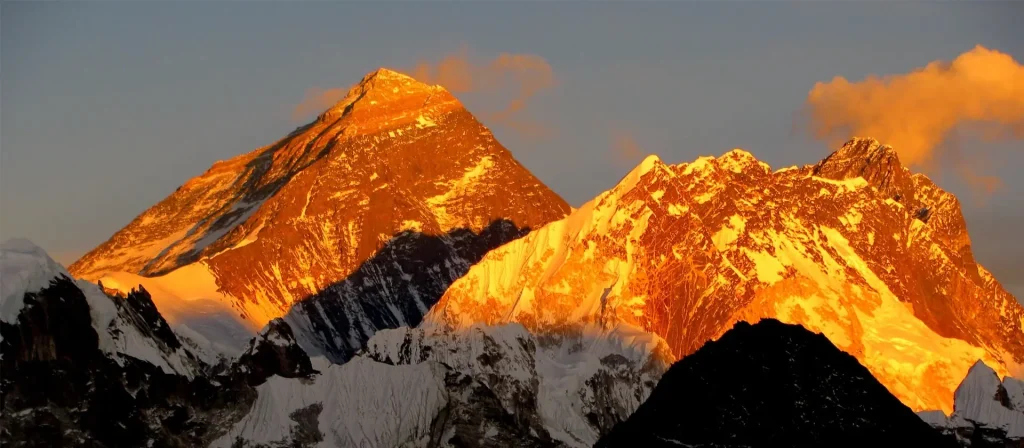
Whatever dates you choose, imagine standing at Kala Patthar as the first light turns Everest gold. That moment is what the cold mornings are for.
FAQs for EBC Trek in October
Is October a good time for the EBC trek?
Yes. October is one of the two main trekking seasons, with clear skies, little rain and some of the best mountain views of the year. The trade-offs are peak-season crowds and cold nights at altitude. It suits fit, well-prepared trekkers who book early.
How cold will it be during EBC Trek in October?
Nights are the issue. At Gorak Shep they typically fall to around −13 to −9 °C, and Kala Patthar at dawn can reach −13 to −16 °C, colder in wind. Days are milder, so layers matter. Treat these as planning ranges, since conditions vary day to day.the wind.
Will it rain or snow on the EBC trek in October?
Rarely. October is the start of the dry season, though a light shower below about 3,500 m is possible in the first week. Snow is uncommon on the standard route, but mountain weather can change, so your guide may adjust plans if conditions require it.
Do I need to book early for October?
Yes. October is peak season, and lodges above Dingboche are limited. We currently have no fixed departures listed for this month, but you can book a private trek or customise your own itinerary through our booking page. Availability around the Mani Rimdu dates is tightest, so ask early.
Are Lukla flights reliable in October?
Weather is usually good, but delays still happen. In peak months flights usually run from Manthali (Ramechhap), which means a 5-6 hour drive and a very early start. Keep a spare day around your international flights and take insurance that covers disruption.
Do I need a guide for the EBC trek in October?
We strongly recommend a licensed guide for safety, navigation and altitude management, and every eBcTrails package includes one. Rules for trekking in the Everest region have been reported differently, so confirm the current requirements before you travel.
When is Mani Rimdu in 2026?
Mani Rimdu at Tengboche Monastery runs from 26 to 28 October in 2026. It follows the Tibetan lunar calendar, so the dates change each year, and it’s worth confirming with your guide before you travel. Lodges near Tengboche fill early during the festival.
Is October better than spring for the EBC trek?
Neither is simply better. October offers the clearest, driest air and the Mani Rimdu festival, with cold nights and peak crowds. Spring brings milder nights, rhododendron colour and Base Camp’s climbing season, but more afternoon cloud toward May. Choose by what matters most to you.


