
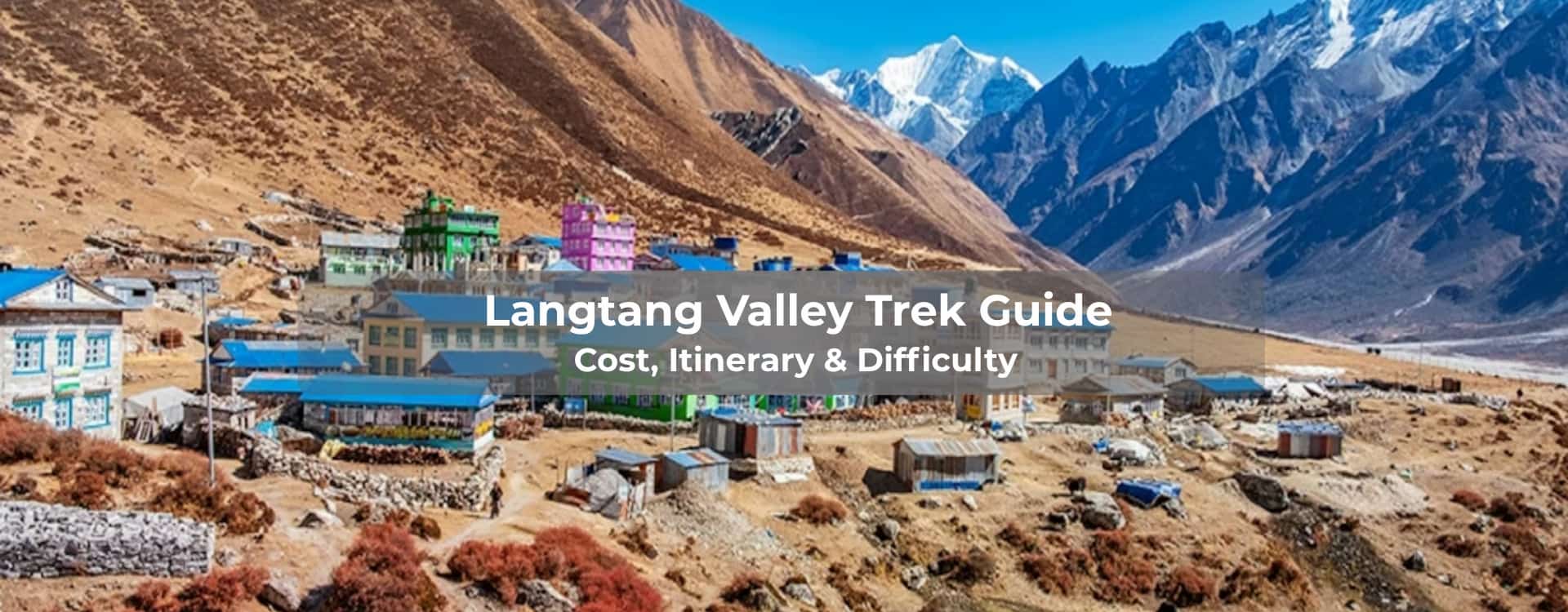
The Langtang Valley Trek, often known as the ‘Valley of Glaciers’, sits just within 120 kilometres from the capital, which is not that far from the Everest region, a popular trekking destination for most of the enthusiasts. You can easily escape the chaos of Kathmandu and feel the serenity of the Langtang within a fortnight. And the appeal of the fewer crowds than popular destinations like the Everest regions or the Annapurna Circuit trek will offer you the priceless peace and unfiltered environment of biodiversity and raw culture.
In this comprehensive Langtang Valley Trek Guide, you’ll be able to look at the clear costs, glance over the itineraries and find out every difficulty and common mistake in trekking, helping you to plan your trip and packing list and fix your budget quite easily.
With the devastating earthquake in Nepal in April 2015, the valley was buried, affecting all the teahouses and accommodation options. But after more than a decade, teahouses were rebuilt, and the Langtang trail came back stronger with more logistics and accommodation options.
Another great reason to choose the Langtang trek is that it offers comparable scenery to that of Annapurna Base Camp at roughly half the cost and less of the time. Such a reason can be beneficial for both budget and luxury trekkers and might reduce the size of the packing list required for the trekking.
The trek is suitable for trekkers with moderate fitness who have tight schedules (up to 14 days) and are very budget-conscious and who want a full experience of what it is like to be in the lap of the Himalayas and untouched nature and raw civilisation.
What is Langtang Valley Trek?
The Langtang Valley is often called Nepal’s “best-kept secret”. It is hidden away in the Rasuwa district of Bagmati Province. This area shares a border with Tibet and is a great place to learn about life in the Himalayas. It is all protected by the large Langtang National Park. The name itself is a poetic legacy of the Tibetan language. “Lang” means “yak“, and “Tang” means “to follow“, so together they mean “the place where the yak was found”. “Old stories tell of a monk who followed a lost yak deep into the valley, only to find a hidden paradise of stunning beauty.
Everest and Annapurna are famous for their giant peaks, but Langtang is a peaceful and underappreciated gem. It offers the perfect Himalayan adventure without the crowds, making it a great place for people who like peace and quiet. The landscape is like a colourful mosaic of life. As you climb higher, you walk through magical rhododendron forests, which are home to the shy red panda and the rare musk deer. Then you come out into a beautiful alpine world with ancient glaciers and tall peaks like Langtang Lirung.
Langtang at a Glance
| Feature | Specification |
| Duration | 7–10 days |
| Max Elevation | Kyanjin Ri (4,773m) or Tserko Ri (4,984m) |
| Start/End Point | Syabrubesi |
| Distance | ~65km round trip |
| Grade | Moderate |
| Accommodation | Teahouses |
The journey is a balance of physical challenge and cultural immersion. Starting from the riverside town of Syabrubesi, the trail climbs steadily toward Kyanjin Gompa, where the valley opens into a wide, dramatic amphitheater of ice. Whether you are scanning the cliffs for Himalayan tahr or sharing tea with the local Tamang and Tibetan-descendant communities, Langtang offers a soul-stirring alternative to Nepal’s more commercialized routes.
Langtang Valley Trek—Quick Glance over the Itinerary
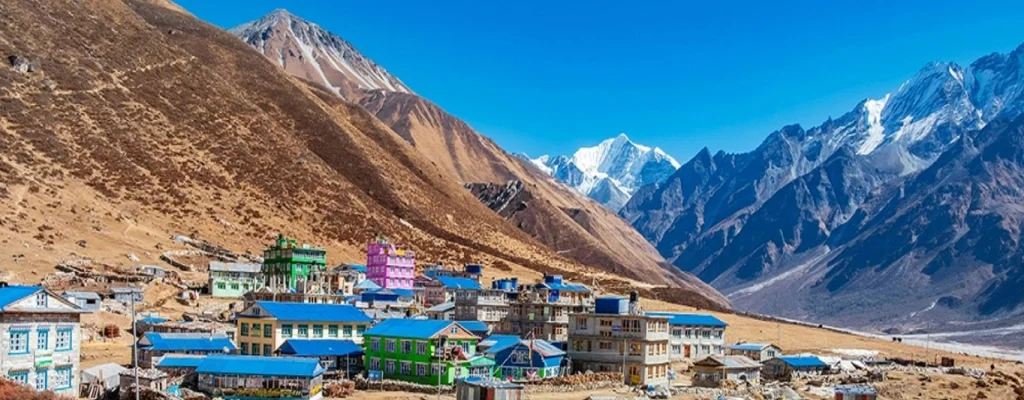
The standard Langtang Valley Trek Itinerary guide covers almost 7 thrilling days of ultimate experience of biodiversity and landscape. While the itineraries may be somewhat different from various trekking companies in Nepal, the overall route remains the same. For example, eBcTrails offers you the sight seeing of the capital city and experience the hundred years of culture, so your journey to Langtang Valley starts typically from Day 3 and the itinerary covers 10 to 12 days of journey.
Standard 7-day Itinerary
- Day 1: The first step of the journey starts with a drive from Kathmandu to Syabrubesi (1,503 m / 4,931 ft) which is typically 6-8 hours from the bus or 4 hours from the Jeep. During this initial journey, you will be able to see stunning views of Ganesh Himal (7,422 m / 24,350 ft) and other notable peaks.
- Day 2: After staying overnight in the Syabrubesi, which serves as a gateway to Langtang National Park, you will hike to Lama Hotel (2,410 m / 7,907 ft), which is a vibrant landmark and teahouse for resting for the day.
- Day 3: On the third day of the journey, you will hike for 6-7 hours to reach Langtang Village (3,430 m / 11, 2534 ft) where you will be see the stunning view of Langtang Lirung (7,227 m / 23,711 ft). Despite being rebuilt after the earthquake, the village remains poised with picturesque landscape and Tamang culture.
- Day 4-5: The fourth day of the Langtang Valley Trek guides you to Kyanjin Gompa (3,870 m / 12,697 ft), which is the highest point for the standard trek to reach. The walk remains relatively short with only 3-4 hours walk but incredibly scenic with views of mountains and biodiversity.
The fifth day is for acclimatization, which is very important due gradual hiking over the past few days. This rest day allows you to take a breather and enjoy the 360° picturesque view of Langtang range. - Day 6-7: The sixth and seventh day of the Langtang Valley Trek is to re-route the same trail of Lama Hotel and Syabrubesi to reach Kathmandu to conclude your trekking of Langtang Valley.
While the standard itinerary suggests a seven-day trek, the actual duration is flexible and can be adjusted based on your physical fitness, prevailing weather conditions, and overall health. For those seeking a more immersive experience, we highly recommend extending your journey to include the sacred lakes of Gosaikunda or a challenging hike to the summit of Tserko Ri for unparalleled panoramic views.
Tserko Ri Hike – An Optional Trek You Won’t Regret
Tserko Ri (4,984 m/16,352 ft) is a highly rewarding, albeit demanding, acclimatisation hike that most trekkers undertake from Kyanjin Gompa. Reaching the summit feels like standing on top of the world, offering a 360-degree panorama of the Langtang Lirung glacier, Yala Peak, and the majestic Dorje Lakpa (6,966 m).
On exceptionally clear days, the expansive Tibetan plateau stretches out before you in a sea of brown and ochre hills. While the trail is steep and involves navigating some rocky moraine, the view of the frozen valley below and the jagged peaks above makes every drop of sweat worth it.
Langtang Valley Trek Guide for Budgeting
Permit and Document Fees
Perhaps one of the most important documents for an uninterrupted journey to Langtang Valley is documents like permits and TIMS cards. Without these documents, your journey might be halted, and possibly you might not be able to continue at all.
Specifically for Lantang National Park, the permit cost ranges depending on where you are from. If you are a resident of one of the SAARC nations, you will be charged USD 15, whereas foreigners from any other country will be charged USD 25 for the entry. The domestic tourist (Nepalese) will be only charged USD 1-2 for the entry. You can get this from the Dhunche Checkpoint or the Nepal Tourism Board in Kathmandu.
A TIMS card typically costs USD 15-20 per person; you can get this from the Nepal Tourism Board located in Kathmandu upon filling out the form. Please make sure to carry your essential documents like your passport, their photocopies, and a passport-size photo so that you can use them wherever necessary.
It is also worth noting that from February 2025, one licensed guide is mandatory for trekkers for many trekking destinations, including the Langtang Valley Trek. Trekkers without one will be and have been turned around. The licensed guide fee typically costs around USD 25-35/day depending on the experience of the guide.
Budget Planning (budget, mid-range and comfort)
The budget planning differs based on the type of trekking you want.
| Categories/Trek Tier | Budget | Mid-Range | Luxury |
| Permits | USD 15 (SAARC Countries) | USD 25 (non-SAARC countries) | USD 15 (SAARC Countries) | USD 25 (non-SAARC countries) | USD 15 (SAARC Countries) | USD 25 (non-SAARC countries) |
| Transport | Bus (~$10) | Shared Jeep (~35) | Private (~120) |
| Accomodation | $5-15 (Standardized Teahouses) | $20-25 (Better views and other amenities) | $40+ (Premium Tier Lodges) |
| Meals | $20-25/day | $30-35/day | $40+ |
| Guide | Licensed guide fees range from $25 to $45 based on their experience. | ||
| Porter (optional) | $20-30/day based on agencies and season | ||
The total cost may come to around $500-650 for budget, $750-1000 for mid-range and $1100+ for luxury trekking along the Langtang Trails. Along with these, you may have to spend more for extra facilities like charging, Wi-Fi, and hot showers.
Travel insurance is also non-negotiable, especially at the altitude of the Langtang Valley Trek. Also, make sure that you carry cash in Nepali currency rather than your own, and it is also better to not rely on ATMs, as they are not available past Syabrubesi.
Please note that the rates mentioned are known approximations of what you should expect, not the exact calculation. Pricing depends on various factors like agency, season, etc. Please contact your agencies for an exact budget approximation.
Langtang Trail Difficulty and best time to visit—An Honest Assessment
When a Langtang Valley trek guide says this trip is “moderate”, they mean it in a real way, not just to be vague. You should be ready for about 5–7 hours of trekking each day from days two to five, during which you’ll climb about 3,300m. You won’t need any climbing gear or ropes, but the uneven ground and thin Himalayan air will be the hardest parts.
The trail gets a lot rougher after the Lama Hotel, and the steep switchbacks that lead up to Kyanjin Gompa will really test your legs. If you can easily walk 15–20 km on hilly ground at home, you’re in good shape for the valley.
The height is what makes the Langtang Valley trek hard. No matter how much time you spend at the gym, you could get altitude sickness once you reach 3,000m. Look for signs like a headache that won’t go away, nausea, feeling completely drained, or trouble sleeping. The key to the Himalayas is to take your time and really use that day off at Kyanjin Gompa to let your body get used to the new environment.
Some people take Diamox, but you should talk to your doctor first. To be completely honest, which is something you might not get from every guide, you should think twice about this route if you have heart problems, high blood pressure that you can’t control, or if you’ve never hiked for more than one day before.
The best season to trek in the Langtang Valley is usually in the spring or autumn, when the weather is nice. Start working out 8 to 12 weeks before you leave. Try to do 3–4 cardio workouts a week, with the goal of hiking steadily for at least an hour each time. Don’t skip leg day either. Step-ups, lunges, and squats will be your best friends.
Keep in mind that the steep walks back down are often harder on your knees than the climbs up. The difference between really enjoying those amazing mountain views and just counting the steps to the next teahouse is being ready.
Langtang Valley Trek Guide to Trail Rules, Essential Permits, and Getting There: The Logistics Checklist
Let’s get straight to the point: the rule that says you need a licensed trekking guide is not up for discussion. This isn’t just a suggestion; it’s the law on many of Nepal’s most popular trails, like Langtang Valley. If you don’t have one, the Dhunche Checkpoint will stop you and turn you around, wasting valuable trekking time. Locking in your licensed guide through a trusted travel agency that is verified by the Nepal Tourism Board is the easiest way to make sure you follow the rules. Before you book, always check their credentials on the official TAAN website.
Pro-Tip: Know the Difference Between a Guide and a Porter
A common oversight for first-time trekkers is blurring the lines between a guide and a porter. They are distinct roles, and they are priced differently:
- The Licensed Guide: Your essential resource and leader. They are route experts, know the crucial landmarks, handle your mandatory permits, and are trained in emergency procedures. Think of them as your trekking safety net and cultural interpreter.
- The Porter: The backbone of your journey. These hard-working locals specialise in carrying your heavy gear, allowing you to focus on the trail and your breathing. While a guide is mandatory, a porter is technically optional. However, given the challenging, rugged sections past Lama Hotel, bringing a porter is a highly recommended move to save your energy and knees.
Reaching Syabrubesi: Choosing Your Mode of Adventure
Your adventure truly begins with the journey to Syabrubesi, the trailhead, and your choice of transport dictates both the travel time and the cost.
- Local Bus (7-9 hours): The most budget-friendly option, offering an authentic, if sometimes crowded, experience of Nepal’s hill roads.
- Shared Jeep (4-5 hours): A significant time saver that offers a faster, slightly more comfortable ride and is a great middle ground for cost.
- Private Vehicle (Fastest, most expensive): The quickest way to start your trek, prioritising speed and comfort above all else.
Culture, Food and Teahouse Life on the Langtang Trail
As Sherpas are the majority group in Everest region treks, Tamangs are the primary ethnic group of the Langtang Valley. They have their own distinct language and traditions leaning on Buddhist customs, which are actually fascinating to get to know and learn. Such cultural heritage is one of the core reasons to visit the valleys and villages around the Langtang.
The Tamang Heritage Trail Trek trip allows you to experience the trail on a more cultural route along with experiencing the spectacular natural beauty before joining the main Langtang Valley route at Lama Hotel.
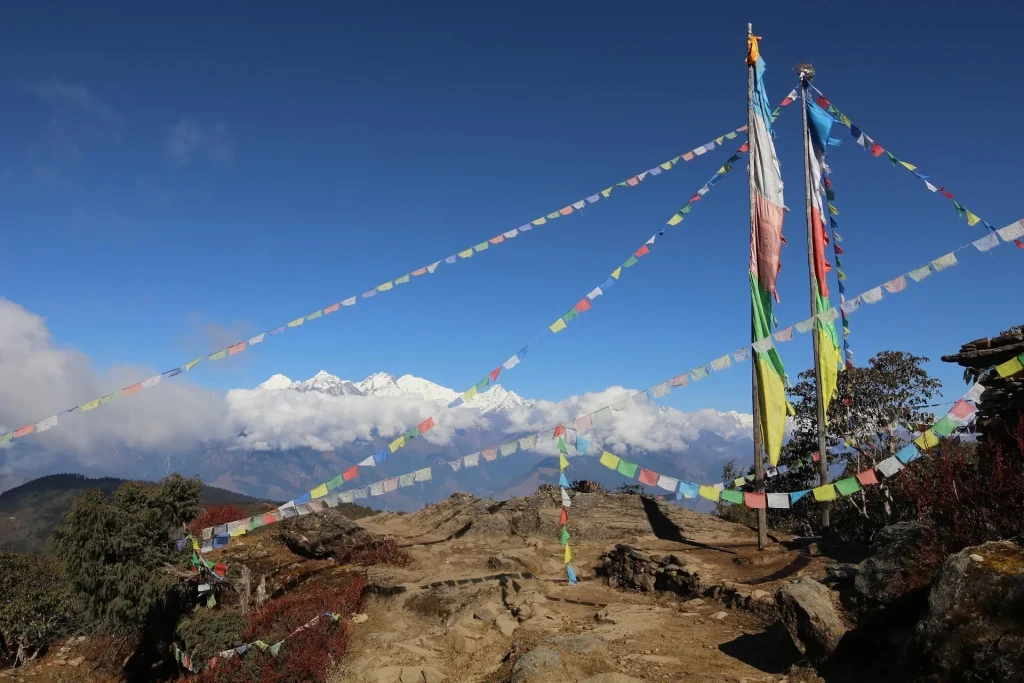
Along the trail of Lantang Valley, you will also be able to experience the local cuisine in the available teahouses. The local foods like dal bhat, tsampa porridge and mo:mo will cost you typically $5-7 based on the location. These cuisines are the major source of energy equally for trekkers and locals alike.
You will be able to visit the Yak Cheese Factory in Kyanjin Gompa, run by the local communities together, which is actually one of the highlights of the said location. Its popularity is due to its centuries-old method to make exquisite cheese, which can be taken as a souvenir home.
It is also worth mentioning again that teahouse expenses are your own, and besides the food and accommodation, other amenities like Wi-Fi, hot showers, charging ports, etc. will be charged extra, so budgeting properly for such cases is necessary.
The 2015 earthquake took a heavy toll on the Langtang region, but the resilience of the local people is evident as they continue to rebuild their villages and preserve their cultural heritage. Taking a moment to visit the local memorials is a meaningful way to show respect for the lives lost and support the community in their ongoing journey of recovery.
FAQs on Langtang Valley Trek Guide
Q: Can I trek Langtang without a guide?
No — as of February 15, 2025, a licensed trekking guide is legally mandatory for the Langtang Valley trek. Attempting to trek solo will result in being turned back at the Dhunche Checkpoint. Licensed guide fees typically range from USD 25–45 per day depending on experience.
Q: How fit do I need to be for Langtang Valley Trekking?
Moderate fitness is required to handle 5–7 hours of daily trekking and a total ascent of about 3,300m. If you can walk 15–20km on hilly terrain, you are ready. It is recommended to train for 8–12 weeks prior, focusing on cardio and leg strength through lunges, squats, and step-ups.
Q: Is Langtang safe after the 2015 earthquake?
Yes. Following the 2015 earthquake, the trail and teahouses have been fully rebuilt with more logistics and accommodation options. The region has been continuously operational and open to trekkers since 2016, showcasing the resilience of the local communities.
Q: How does Langtang compare to Everest Base Camp?
Langtang is shorter (7–10 days vs. 12–16), significantly cheaper ($500–$1,000+ vs. $1,200–$2,500+), and offers comparable scenery with fewer crowds. It also has a lower maximum altitude (4,984m at Tserko Ri vs. 5,364m at EBC), making it a peaceful alternative to commercialized routes.
Q: What is the best month for trekking in Langtang?
October–November offers the clearest skies and most stable weather, while April is ideal for witnessing the rhododendron bloom. It is best to avoid the monsoon season of July–August due to wet and challenging trail conditions.
Final Words on Langtang Valley Trek Guide
The Langtang Valley Trek is a great example of both the beauty of nature and the strength of people. It combines stunning high-Himalayan scenery with a peaceful, crowd-free experience. For budget-conscious trekkers with moderate fitness levels, Langtang offers the same awe as the Everest and Annapurna regions but in less time and for less money. The local communities have only gotten stronger since the 2015 earthquake, and they have rebuilt their teahouses and restored the valley’s welcoming spirit.
As you finish making your plans, keep in mind the most important things: you need to carefully plan your trip, get the necessary permits and a licensed guide, and make sure you have them all before you get to the Dhunche checkpoint. Be careful with the moderate difficulty and the altitude. Take your time going up and make the most of your acclimatisation day at Kyanjin Gompa. The prize is a thrilling trip through rhododendron forests, past old glaciers, and into the heart of the Tamang culture.
Take the First Step: Book Your Langtang Adventure
Are you ready to escape the chaos of Kathmandu and find your peace in the “Valley of Glaciers”? All the necessary logistics, permits, and trusted licensed guides can be handled through us. Secure your spot on the trail today and turn your dream of a Himalayan trek into reality.
Or, you can go beyond the traditional route with Tamang Heritage Trail Trek or Gorgeous Gosaikunda Trek


