
Everybody wants to glimpse the top of the world. Trekking to the Everest Base Camp is one of the best options to get a possible closer view of Everest even without extreme mountaineering skills. So it is no surprise that the first question most people ask is, ‘How much does it actually cost?’
You have probably already found quotes ranging from $800 to $5,000 for what looks like the same trek. Here is the actual problem for new trekkers as it appears to have a different cost range on different platforms. Both numbers are technically correct. Neither one tells you what you’ll actually spend.
This article covers the real Everest Base Camp trek cost for 2026/27—permits, packages, flights, food, hidden costs, and the red flags that signal a fraud operator. It’s aimed at first-timers, international trekkers, and anyone trying to compare options without getting burned.
Table of Contents
One important note: This article will not cover your international flights to/from Nepal.
What Actually Does the Everest Base Camp Trek Cost in 2026?
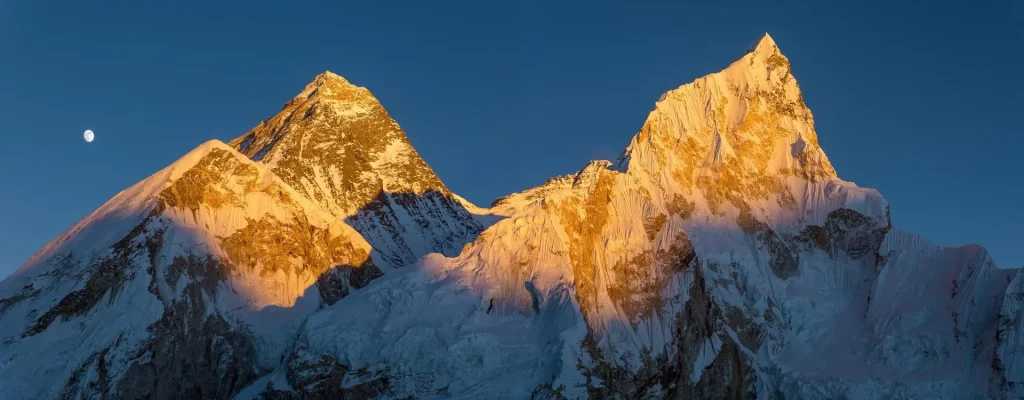
Before getting into the variables, here’s the honest summary for a standard 14-day guided EBC trek once you’re in Nepal:
| Trek Style | Estimated Cost (USD) | What You’re Getting |
| Budget-Independent | $950 – $1,250 | DIY, hiring local help as you go |
| Budget Guided Group | $1,133 – $1,500 | Large group, basic teahouses |
| Standard Guided Package | $1,500 – $2,500 | Mid-range agencies, solid support |
| Private Guided Trek | $1,800 – $3,000 | Personalized pace, better lodges |
| Luxury (Helicopter Return) | $3,500 – $5,500+ | Premium lodges, helicopter descent |
Most international trekkers doing a well-supported, 14-day guided trek land between $1,800 and $2,500 for in-Nepal expenses. If a quote sits comfortably below that with no obvious explanation, ask what’s missing.
For a closer look at what each package style delivers on the ground, see eBcTrails’ Everest Base Camp Trek packages, which offer below-average cost with equal standards and facilities.
Why Everest Base Camp Trek Costs Vary So Much
The EBC Trek costs vary because of the respective preparation and choices. in between two trekkers. Two people can stand at the same viewpoint and have paid $2,000 different amounts to get there. That’s not a pricing anomaly—it’s nine variables, each one a tradeoff between cost, comfort, and safety:
Trek style: Going solo or joining a guided group changes everything from logistics to daily costs. Solo saves on package price but adds responsibility and, since April 2023, still requires a licensed guide by law.
Season: Peak months (March–May, September–November) cost more because demand is higher, weather is better, and flight cancellations drop. Shoulder seasons are cheaper but carry more weather risk.
Group size: Larger groups dilute guide and logistics costs per person. Private treks put the full fixed cost on you.
Operator type: International agencies carry Western overhead—office rent, booking platform commissions, and middlemen. Nepal-based operators cut most of that out. Same trail, lower price.
Accommodation tier: The gap between a basic teahouse room and a heated, en-suite lodge in Namche is real money. At altitude, a private bathroom is a genuine luxury, not a minor upgrade.
Transport choice: Standard fixed-wing flights to Lukla are far cheaper than helicopter charters but far more vulnerable to weather delays.
Route length: Route length is another big variable for Everest Base Camp Trek cost. Every extra acclimatization day adds food and lodging costs. A 12-day express trip sounds cheaper—but a proper 14-day itinerary reduces your emergency evacuation risk, which is a much bigger expense if things go wrong.
Guide/porter ratio: A higher staff-to-trekker ratio means more attention and faster response if someone gets sick. Budget packages often cut here first.
Add-ons: Wi-Fi, hot showers, device charging, bottled water—none of these are included in a basic room price. They can easily add $20–$30 per person per day if you’re not paying attention.
The Everest Base Camp trail itself is the same at every price point. You’re walking the same path, breathing the same thin air, looking at the same peaks. A $3,000+ price tag usually means you’re covering a large company’s overhead, not getting a meaningfully different mountain experience.
What the Everest Base Camp Package Price Includes—and What It Doesn’t
A legitimate EBC package should be clear about both. Here’s the standard breakdown:
Usually included:
- Round-trip domestic flights (Kathmandu or Ramechhap to Lukla)
- Licensed, English-speaking guide and porters (including their food and accommodation)
- Teahouse accommodation throughout
- Three daily meals
- All required permits (Sagarmatha National Park + Khumbu Pasang Lhamu Rural Municipality)
Almost always excluded:
- International flights to Nepal
- Travel insurance—specifically, helicopter evacuation coverage above 5,000 m. This is not optional.
- Tips for guide and porter (budget 10–15% of land costs)
- Personal gear
- Nepal entry visa ($50 for 30 days)
Red flag: Any “guided package” that doesn’t list permits and meals explicitly is hiding costs. You’ll discover them once you’re high on the mountain with no alternatives.
Everest Base Camp Permit Costs and Mandatory Fees (2026 Rates)
A lot of Mount Everest Base Camp Trek cost guides online are still referencing the old TIMS card system. That was replaced in 2020. If you see any guide listing a TIMS card for the Everest region, disregard it.
The Two Permits You Need
Sagarmatha National Park Entry Permit: NPR 3,000 (~$23–$30), including 13% VAT. Covers your legal entry into the UNESCO World Heritage region. Buy it in Kathmandu at the Nepal Tourism Board office or at the Monjo checkpoint.
Khumbu Pasang Lhamu Rural Municipality Permit: NPR 2,000–3,000 (~$20–$23). This local government fee goes directly to Khumbu infrastructure. Get it in Lukla or Monjo.
If you’re taking the longer overland route starting from Jiri, you’ll also need the Gaurishankar Conservation Area permit—check with your agency if this applies to your itinerary.
The Solo Trekking Rule (Since April 2023)
Solo foreign trekkers are legally required to hire a licensed guide. This isn’t a suggestion—it’s enforced at checkpoints.
A licensed guide for Everest Base Camp Trek costs $25–$45 per day. On top of that, you cover their food and accommodation, adding roughly $15–$20 per day. A practical middle option: a porter-guide at $22–$28 per day satisfies the legal requirement and carries up to 10 kg of your gear.
This rule directly affects how independent travelers should budget. Don’t plan around skipping it.
SAARC vs. Non-SAARC Rates
Citizens of SAARC nations (India, Bhutan, Bangladesh, Sri Lanka, Maldives, and Pakistan) pay lower national park fees:
- Sagarmatha National Park: NPR 1,500 (~$12) vs NPR 3,000 for other foreign visitors
- Khumbu Local Permit: broadly similar across nationalities, with occasional seasonal discounts
Carry your original passport and photocopies to verify nationality at the Monjo checkpoint.
Lukla Flights: The Cost Most Trekkers Underestimate
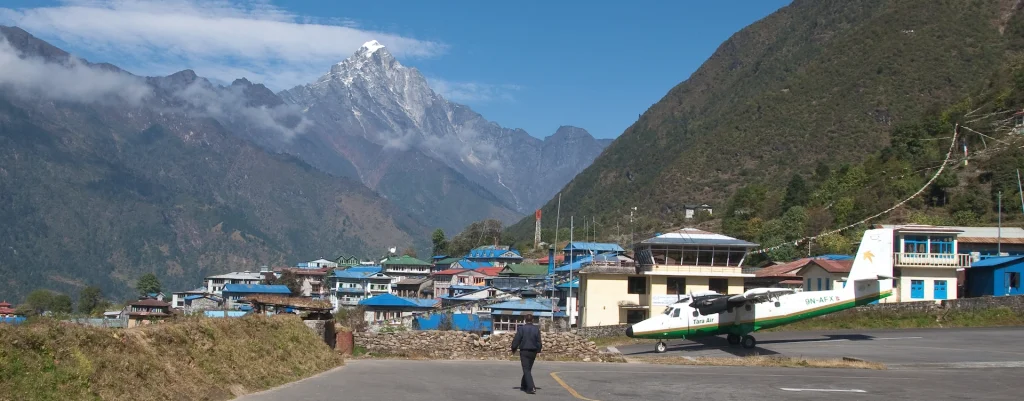
For most trekkers, the Lukla flight is the single largest non-package expense—and in 2026 it’s more expensive than it used to be.
What Flights Cost in 2026
Aviation fuel price increases have pushed one-way Kathmandu–Lukla tickets to around $254 for international visitors in 2026, a 10–20% rise from recent seasons. Budget: $400–$500 for a round trip, depending on the carrier and booking timing.
During peak season, many flights depart from Ramechhap airport rather than Kathmandu’s Tribhuvan International—check your itinerary carefully, as this means an additional 3–4 hour drive from Kathmandu.
Helicopter alternative: $500–$600 one-way from Kathmandu. Expensive, but helicopters operate under conditions that ground fixed-wing aircraft—worth considering if your schedule has no flexibility.
The Delay Problem
Lukla is one of the most weather-dependent airports on earth. Delays of one to three days are common, not exceptional. Budget at least two buffer days at both the start and end of your trip in Kathmandu. A quality guesthouse in Thamel costs $25–$70 per night. Ignoring this easily adds $150+ to your bill—and risks missed international connections.
The Road Alternative
Skipping the Lukla flight entirely is possible and increasingly popular to save on the Everest Base Camp trek cost. Starting from Salleri or Phaplu by jeep from Kathmandu eliminates the flight cost, saves $200–$300 per person, and adds hill country scenery and lower-altitude acclimatization that flight trekkers miss completely. The trade-off: it adds 2–3 days to your trek. If your schedule allows it, this is the best cost-saving move available in 2026.
Understand more about Kathmandu to Lukla flight options for your next Everest Trek
Day-by-Day Everest Base Camp Trek Costs
The “altitude premium” is real. The further you climb from Kathmandu, the more everything costs—food, water, a phone charge, and a hot shower. Here’s what to actually expect.
Teahouse Accommodation
Teahouses operate on an understood arrangement: room rates are subsidized by the expectation that you eat dinner and breakfast there. Don’t eat there, and the room rate often triples.
- Lower and mid-altitude (Phakding to Dingboche): $3–$7 per night for a twin-share room
- High altitude (Lobuche, Gorak Shep): $15–$25+ per night for a basic room
- Premium lodges in Namche Bazaar: $40–$80 per night with hot showers and private bathrooms
Food
Expect your Budget around $25–$40 per day for food and water. A few things worth knowing:
Dal bhat—lentil soup, rice, and vegetable curry—costs $3–$5 and comes with unlimited refills. It’s nutritionally better suited to altitude trekking than most alternatives, and it’s what your guide eats. Western-style meals (pasta, pizza, and burgers) run $8–$15; are less fresh, if available at all, at altitude due to supply logistics; and don’t refuel you as well.
Bottled water reaches $3–$5 per liter at higher elevations. Bring purification tablets or a UV filter. It costs almost nothing, eliminates the plastic waste problem, and is exactly as effective.
Cash Planning
The last reliable ATM is in Namche Bazaar. Withdraw enough cash there for the rest of the trek—ATMs at higher elevations exist but frequently run empty or malfunction.
Tipping: Set this money aside before you leave Kathmandu. Recommended minimums for a 14-day trek:
- Head guide: $8–$12 per day
- Porter: $5–$7 per day
Budget the full amount in advance, not as an afterthought at the end.
The altitude markup: A snack that costs $1 in Kathmandu can run $4–$5 near Base Camp. Human-powered logistics at extreme altitudes drive this—it’s not price gouging; it’s the supply chain reality.
Connectivity and Charging
- Device charging at teahouses: $2–$5 per device (solar-sourced, increasingly unreliable above 4,000m)
- Everest Link Wi-Fi cards: $5 for basic access, up to $30 for data packages—reliable coverage generally drops above Dingboche
- A high-capacity power bank is the most practical investment for managing connectivity on the upper trail
Budget vs. Standard vs. Luxury: What You Actually Get in EBC Trek
Budget ($950–$1,500): High Effort, Lower Margin for Error
Budget trekking works fine if you’re physically prepared and the operator is legitimate. Basic teahouses, shared rooms, dal bhat as a staple, and group guides shared across multiple trekkers are general expenses included in the Everest Base Camp Trek cost list. The trail experience is identical to more expensive packages.
The real risk in Everest Base Camp cost-cutting packages isn’t the teahouses—it’s what operators cut to get the price that low. Underqualified guides, no emergency protocols, and no supplementary oxygen available. Before booking at this price point, check the agency’s TAAN registration and ask directly about their emergency evacuation procedure.
For a detailed look at how budget and luxury trekking actually compare on the ground, eBcTrails breaks down both approaches here.
Standard ($1,500–$2,500): Where Most First-Timers Land
This is the right tier of the Everest Base Camp Trek cost for the majority of international first-time trekkers. Better lodge selection, reliable guide qualifications, proper porter ratios (typically one porter per two trekkers), and—critically—agencies in this tier usually have standing arrangements with helicopter companies for emergency evacuations. You won’t need to arrange that yourself under stress at 4,500m.
Luxury ($3,500–$5,500+): Time and Recovery, Not Just Comfort
The luxury tier of the Everest Base Camp Trek cost includes three things: comfort at each stop, a private guide, and the helicopter return from Gorak Shep. That helicopter cuts four days of descent to 20 minutes, saves your joints, and delivers an aerial view of the Khumbu Icefall that walking can’t replicate. At $800–$1,200 per seat, it’s a significant add-on—worth it for people with limited time windows or those who’ve already completed the full descent on a previous trek.
Premium lodges (Yeti Mountain Home, Everest Summit Lodges) provide heated rooms, electric blankets, and en suite bathrooms even at high altitudes. The mountain stays the same. The recovery between days improves substantially.
If you want to skip the full trek and experience the upper Khumbu from the air, eBcTrails’ helicopter EBC option covers that route specifically.
All-In Cost by Nationality
Once you add international flights, a visa, insurance, and gear, the real total of Everest Base Camp costs looks different depending on where you’re traveling from:
| Origin | Standard Package + All Extras | Estimated Total (2026) |
| UK/Europe | Long-haul flights + insurance | $3,000 – $4,200 |
| USA/Canada | Highest flight costs | $3,500 – $4,800 |
| Australia/NZ | Long travel time + flights | $3,500 – $4,500 |
| South Asia (India, etc.) | Lower permits + short-haul flights | $1,500 – $2,200 |
Hidden Costs, Scam Red Flags, and Emergency Budgeting of Everest Base Camp Trek
The Costs Most People Forget
Travel insurance with helicopter evacuation: $80–$200 depending on provider. Non-negotiable. An uninsured helicopter evacuation from altitude costs $3,000–$5,000 out of pocket. Your policy must explicitly cover emergency evacuation above 5,000 m—not all standard travel policies do.
Altitude medication (Diamox/acetazolamide): $10–$30. Get a prescription before you leave home.
Kathmandu gear rental: If you’re not bringing a full kit from home, budget $50–$150 for rentals in Thamel. Boots and base layers are worth buying properly—rent the heavier items like down jackets and sleeping bags.
You can see the Trekking Packing List to know which are the equipment you can bring from home and which you can rent.
Post-trek Kathmandu stay: It is easy to forget but it should be well included in the Everest Base Camp Trek cost. Add $50–$150 for recovery nights and meals after you come off the mountain.
Scam Red Flags
- Any quote below $950 for a fully guided 14-day package including Lukla flights, guide, porter, and permits—read every inclusion line carefully
- Agencies without verifiable TAAN registration
- Package descriptions listing “guide” without confirming licensing
- No written emergency protocol — ask before you pay a deposit
What to Do If Things Go Wrong
Acute Mountain Sickness (AMS) can affect anyone regardless of fitness. The serious forms—High Altitude Pulmonary Edema (HAPE) and High Altitude Cerebral Edema (HACE)—require immediate descent and evacuation. This is why insurance isn’t optional.
Keep a $100–$200 cash buffer for weather delay nights in Kathmandu. Budget nothing for gear replacement in Thamel—it’s available but not cheap.
For beginners worried about what can go wrong on the trail, eBcTrails’ guide to common trekking mistakes is worth reading before you book.
How much does Everest Base Camp cost then?
Here’s the honest final number: most trekkers doing a well-planned 14-day guided EBC trek costs around $1,800–$2,500 in Nepal, plus $600–$1,500 in international flights, $80–$200 in insurance, and $200–$500 in gear depending on what you already own.
The trekkers who regret it are almost never the ones who spent an extra $200 on a better operator or a proper sleeping bag. They’re the ones who rushed the planning or chose on price alone.
Three things to do right now:
- Verify your operator’s TAAN registration before paying any deposit
- Get travel insurance sorted first—many high-altitude policies require purchase before final payment
- Talk to someone who went recently—r/Nepal on Reddit and specialist trekking forums have current, honest accounts of trail conditions and operator quality
If you want to explore what a full Everest region trek looks like in 2026 across different itineraries and price points, eBc Trails lists their current packages with transparent pricing.
The mountain isn’t going anywhere. Your preparation determines everything else.
FAQs on Everest Base Camp Trek Cost
What is the total Everest Base Camp trek cost for 2026?
In Nepal, costs for a guided 14-day trek range from around $1,500 for a basic package to $5,500+ for luxury with helicopter return. Most trekkers doing a standard guided trip spend $1,800–$2,500 in country. Add international flights, insurance, a visa, and gear for your full door-to-door number.
What permits do I need, and what do they cost?
Two permits: the Sagarmatha National Park Entry Permit (~$23–$30 including VAT) and the Khumbu Pasang Lhamu Rural Municipality Permit (~$20–$23). SAARC nationals pay roughly half the national park fee. The old TIMS card is not required in the Everest region.
Are Lukla flights included in the Everest Base Camp trek cost?
Most full packages include them. Independent trekkers should budget $400–$500 for the return. In 2026, one-way fares have risen to around $254 due to fuel cost increases. During peak season, flights often depart from Ramechhap—confirm this with your operator.
What travel insurance do I need?
For Everest Base Camp Trek, you might require a policy that explicitly covers emergency helicopter evacuation up to 6,000m. Standard travel insurance often doesn’t include this. World Nomads and Global Rescue both operate in Nepal. Sort this before you pay your final deposit.
Should I buy gear at home or rent in Kathmandu?
Both. Buy boots and base layers at home—fit matters too much to risk with rentals. Rent heavier items (down jacket and sleeping bag) in Thamel to save luggage weight and upfront cost.
What are daily food and accommodation costs on the trail?
Budget $30–$50 per day for combined lodging and meals. Teahouse rooms are cheap ($3–$25 depending on altitude), but expect to eat dinner and breakfast there—it’s how the system works. Food costs rise with altitude. Dal bhat is the best value and the best fuel for trekking.
How much should I tip my guide and porter?
Set aside $8–$12 per day for your guide and $5–$7 per day for each porter for a 14-day trek. Calculate and carry this cash from Kathmandu—don’t leave tipping as a last-minute decision.
Does the Everest Base Camp trek cost in 2026 change between spring and autumn?
Permit fees stay fixed. Domestic flights and premium accommodation cost more in peak season (March–May, September–November) due to demand. Shoulder seasons are cheaper but carry more weather risk and potential flight delays.
Is it cheaper to trek without a guide?
Since April 2023, solo foreign trekkers are legally required to hire a licensed guide—so independent trekking no longer means guideless trekking. You can still save on package costs by arranging things independently, but you cannot skip the guide requirement.


