
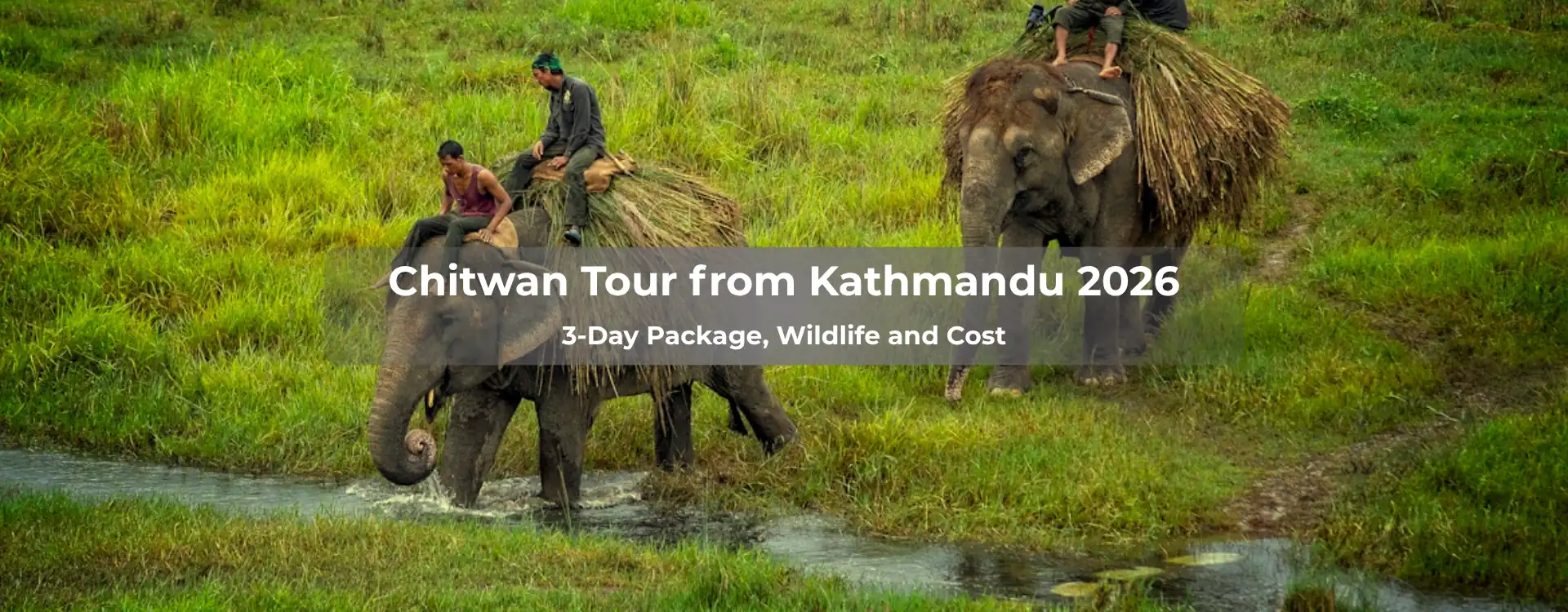
You’ve just booked your trek. Maybe it’s Everest Base Camp, maybe Annapurna, maybe a shorter Poon Hill route. And somewhere between finalizing your permits and packing your down jacket, a second question creeps in: should I also do Chitwan tour?
It’s a fair question, and most guides online don’t answer it well. They’ll tell you Chitwan has rhinos and tigers, they’ll throw out a vague price range, and they’ll leave you to figure out the rest yourself.
A 2-night, 3-day Chitwan tour from Kathmandu usually costs around $150–$250 per person in 2026. For most first-time travelers, three days is the right amount of time. It allows two full safari activities and a cultural evening. It also avoids cutting into your trekking schedule.
This guide walks through the actual day-by-day itinerary, an honest breakdown of what that cost includes (and what it doesn’t), realistic wildlife-sighting expectations, and the safety details most Chitwan tour guides skip entirely. If you’re deciding whether to pair Chitwan with your Nepal trek—and if so, how to do it without wasting a day—this is written for you.
Immerse yourself in adventure and serenity with eBctrails Trishuli rafting and Chitwan tour package.
Why Add Chitwan to Your Nepal Trip (And Is 3 Days Really Enough)?
Chitwan National Park was established in 1973 as Nepal’s first national park, and UNESCO listed it as a World Heritage Site in 1984. That matters practically, not just as a trivia point: it means the park is genuinely protected habitat, not a roadside zoo dressed up for tourists. What you see there—one-horned rhinos grazing in tall grass, crocodiles along the Rapti River, hundreds of resident and migratory bird species—is wild, not staged.
Most travelers pair it with the mountains for a simple reason: it’s the opposite of a trek. After days of cold mornings, tea houses, and altitude, Chitwan trades all of that for warm lowland air, a slower pace, and a completely different kind of nature. It’s less “adventure” and more “immersion,” which is exactly why it works as a second half of a Nepal trip rather than a substitute for one.
So, is 3 days actually enough? Yes, for the vast majority of travelers. Here’s the honest comparison:
- 1 night / 2 days: Workable if you’re tight on time, but you’ll likely fit in only one real safari activity. Feels rushed, and you’ll spend a disproportionate share of your trip in transit relative to time in the park.
- 2 nights / 3 days: The sweet spot. You get two full days of activities. This is enough for a jeep safari and a canoe ride. You can also do a guided jungle walk. You will see the Tharu cultural program. You also get a relaxed final morning before heading back. This is what the rest of this guide covers in detail.
- 3 nights / 4 days: Worth it specifically if you’re a serious wildlife photographer chasing tiger sightings or you want to add a second safari session at a different time of day (early morning vs. late afternoon activity patterns differ). For a first-time traveler who isn’t specifically chasing tiger odds, the extra day has diminishing returns.
If you’re coming from a trek like Everest Base Camp or Annapurna Base Camp, 2 nights / 3 days fits cleanly into most itineraries without requiring you to sacrifice trekking days. Families and first-time Nepal travelers without a trekking component also tend to find 3 days the right balance of “enough to feel complete” without “so much it drags.”
How to Get from Kathmandu to Chitwan
There are three ways to make the trip, and each involves a real tradeoff between cost, time, and comfort—not just a checklist of options.
Tourist Bus
The most common and budget-friendly choice. Tourist buses leave Kathmandu in the early morning (typically around 7:00 AM) and take roughly 5–6 hours to reach the Sauraha area, with a lunch stop along the way. Expect to pay somewhere in the US$8–20 per person range. The tradeoff: fixed departure times, a shared vehicle, and a ride that can feel long if the highway is congested—which it sometimes is, particularly around Kathmandu Valley‘s exit routes.
Private Car or Jeep
A private vehicle cuts the trip to roughly 5-6 hours (depends on the season) and gives you full control over departure time and stops. Costs run around US$135–200 for the vehicle (shared across your group, so it’s far more reasonable for 3–4 travelers than for a solo trip). This is the option most families and travelers prioritizing comfort choose, and it’s also the easiest to combine with a same-day pickup straight from your hotel.
Domestic Flight
The fastest option by far is around 25 minutes in the air to Bharatpur Airport, followed by a short 30–45 minute road transfer to Sauraha. Flights run roughly US$130–265 per person round trip. Worth it if you’re short on time or want to avoid the road entirely, but keep in mind domestic flights in Nepal are weather-dependent and can be delayed or rescheduled, particularly in monsoon season—build in a buffer if you’re flying and have a tight connection afterward.
Our take: for most first-timers doing a 2-night, 3-day trip, the private car strikes the best balance—you save real time compared to the bus without paying flight prices, and you land at your Chitwan lodge without a mid-route transfer.
2 Nights 3 Days Chitwan Tour Itinerary
Here’s what a well-paced 2-night, 3-day itinerary actually looks like, hour by hour rather than in vague blocks.
Day 1 – Arrival & First Safari
- Morning: Depart Kathmandu by your chosen transport (see above). Arrive in the Sauraha/Chitwan area by early-to-mid afternoon.
- Afternoon: Check in, welcome drink, and a short briefing on the next two days’ activities and safety guidelines from your guide.
- Late afternoon: First activity—typically a guided village walk through a Tharu community, or, depending on timing, your first canoe ride on the Rapti River. Sunset by the riverbank is a genuinely nice way to close day one.
- Evening: Dinner followed by a Tharu cultural dance performance, including traditional dances like the peacock dance and stick dance.
Day 2 – Full Wildlife & Culture Day
- Early morning: Jeep safari—the main event, typically 1-2 hours into the park’s core wildlife zones. This is your best –window for rhino and bird sightings and the highest-probability slot for a tiger sighting if you’re going to get one.
- Midday: Return to the lodge for lunch and rest (afternoons in Chitwan’s lowland climate get warm, especially outside winter months).
- Afternoon: Canoe ride and guided jungle walk or a visit to the Elephant Breeding Center, depending on your operator’s schedule.
- Evening: Free time or a second cultural program, depending on package.
Day 3 – Final Safari & Departure
- Early morning: Optional early birdwatching walk or a shorter second safari—birdlife activity peaks at dawn, so this slot is worth prioritizing if birdwatching interests you.
- Morning: Breakfast, check-out, and transfer back toward Kathmandu (or onward to Pokhara, if that’s your route).
Seasonal note: if you’re traveling during the monsoon-adjacent shoulder months (roughly July–September), expect this itinerary to flex—jeep safaris may be shortened or rerouted around flooded trails, and the jungle walk may be swapped for more river-based activity. Ask your operator specifically how they adjust the schedule for rain before you book a monsoon-season date.
If you’re combining this with a trek, this itinerary slots in cleanly either right before you head to the mountains (as an acclimatization-free warm-up) or right after (as a genuine wind-down)—see our Annapurna Base Camp cost guide if you’re still finalizing your full Nepal budget.
Chitwan Tour Wildlife: What You’ll Really See on Safari
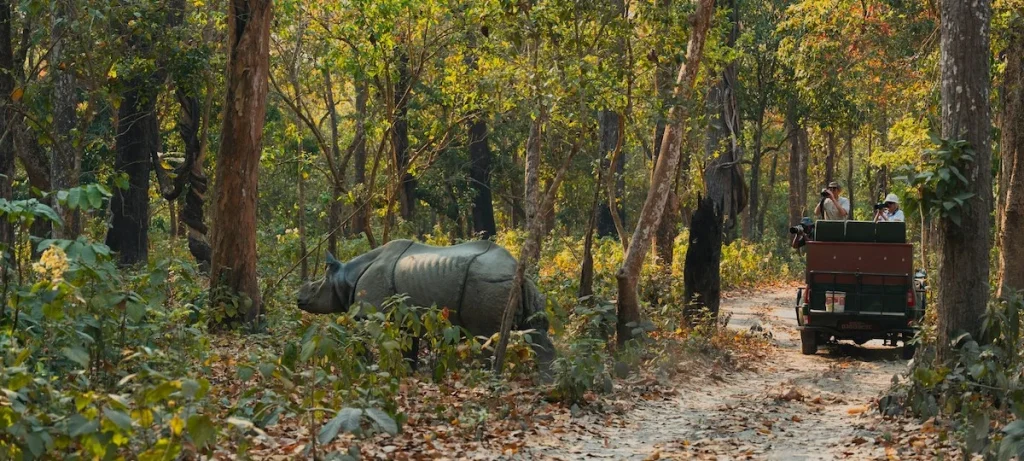
Let’s set honest expectations, because most tour marketing doesn’t.
One-Horned Rhinoceros
This is Chitwan’s headlining species, and for good reason—sighting odds are genuinely high. Rhinos graze in the park’s grasslands and near water sources, and a jeep or canoe safari gives you a strong chance of seeing one at close range. If you see only one large mammal on your trip, statistically it’ll be this one. You might occasionally spot a rhino wandering the streets of Sauraha during your Chitwan tour.
Bengal Tiger
The honest answer to “will I see a tiger”: probably not, but it’s possible. Tigers are elusive by nature and actively avoid human contact, so sightings are rare even though Chitwan has a healthy resident population. Don’t book expecting a guaranteed tiger encounter—book expecting a real, wild chance, which is a very different thing. Early morning jeep safaris offer the best odds.
Gharial & Marsh Crocodiles
The Rapti and Narayani Rivers are home to both the critically endangered gharial (a long, narrow-snouted crocodile species) and the more common marsh mugger crocodile. A canoe ride is the best way to see them—quiet enough not to startle them and close enough to get a good look from the water.
Birdlife
With over 500 recorded species, Chitwan is one of South Asia’s premier birdwatching destinations—kingfishers, hornbills, storks, eagles, and seasonal migratory species all pass through. If birdwatching interests you at all, prioritize the early-morning slot on Day 3; bird activity is highest right after dawn.
How to Maximize Your Sighting Chances
- Choose early morning safari slots over midday ones—most wildlife is more active and visible in cooler hours.
- Canoe rides are quieter than jeeps and better for crocodile and bird sightings; jeeps cover more ground and are better for rhino and (rare) tiger odds.
- Stay quiet and follow your guide’s instructions closely—sudden noise is the single biggest reason groups miss sightings.
Chitwan Tour Package Cost 2026: Full Price Breakdown
Most guides give you a range and stop there. Here’s what’s actually inside that range for a standard 2-night, 3-day package.
| Item | Typical Cost (per person, standard tier) |
|---|---|
| Chitwan National Park entry/conservation fee | ~US$17–20 (varies by nationality; SAARC and Nepali nationals pay less) |
| Licensed naturalist guide fee | Usually bundled into package price |
| Accommodation (2 nights, standard 3-star lodge) | ~US$40–70/night, bundled |
| All meals (breakfast, lunch, dinner) | Bundled in most packages |
| Jungle activities (jeep safari, canoe ride, jungle walk) | Bundled |
| Tharu cultural show | Bundled |
| Transport (Kathmandu ↔ Chitwan) | US$8–20 (bus) / US$135–200 (private car) / US$130–265 (flight)—often not bundled; confirm before booking |
| Typical total, standard package | US$150–250 per person, excluding flight upgrade |
Budget tier (US$100–150): simpler lodging, shared transport, fewer activity add-ons—fine for a no-frills experience, but check what’s actually excluded.
Luxury tier (US$300–500+): private guide, higher-end jungle lodge, private transport, and often an additional activity like a night safari or extended birdwatching session.
What’s Usually NOT Included
- Alcoholic drinks and bottled/soft drinks beyond what’s specified
- Personal expenses (laundry, phone charges, souvenirs)
- Travel insurance and trip cancellation coverage
- Tips for your guide and driver (customary but not mandatory)
- Transport to/from Chitwan is in many budget packages—always confirm this line item specifically, since it’s the most common source of “surprise” costs
Why Prices Vary
Season is the biggest swing factor—peak months (October–December, March–May) push prices up due to demand, while monsoon-season bookings (July–September) are often discounted. Group size matters too: per-person transport costs drop sharply once you’re splitting a private car three or four ways instead of traveling solo.
Best Time to Visit Chitwan (and How to Prepare Safely)
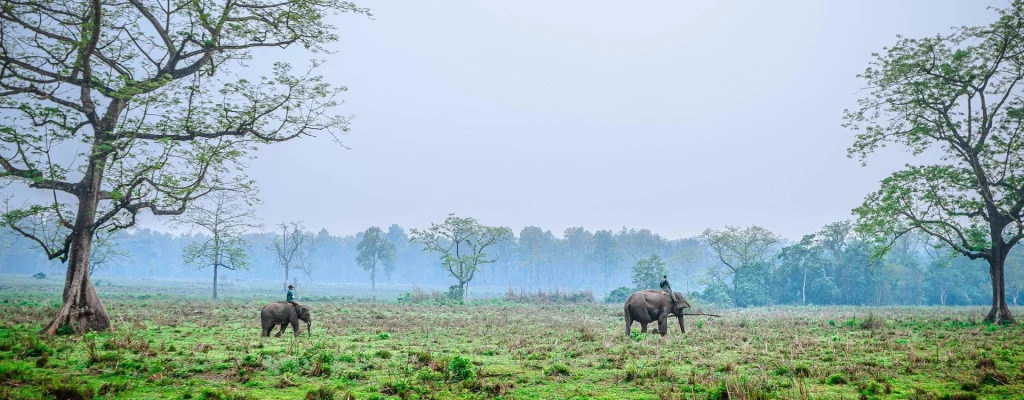
October–March (Peak Season)
Clear skies, comfortable temperatures, and the best overall wildlife visibility—grasslands are shorter after the monsoon, making rhinos and deer easier to spot. This is when the itinerary above runs exactly as described, with no weather-related adjustments. Book your transport and lodging further in advance during this window; it’s the busiest stretch of the year.
April–June (Hot Season)
Temperatures climb, but this actually works in your favor for wildlife-spotting—animals cluster around remaining water sources, concentrating sightings. Pack light, breathable clothing, and prioritize the early-morning safari slot before midday heat sets in.
July–September (Monsoon)
Heavy rain, a lush green park, and noticeably fewer tourists—some travelers prefer this quieter version of Chitwan. Expect the itinerary to flex (see the seasonal note in the itinerary section above): jeep safaris may run shorter routes, and river activities depend on water levels. Confirm your operator’s rain-contingency plan before booking a monsoon date.
Safety & Practical Preparation
- Always go with a licensed guide. This isn’t a formality—guides are trained to read animal behavior and keep your group at a safe distance, particularly around rhinos, which can be unpredictable if startled despite their generally calm demeanor.
- Dress for jungle conditions: light, breathable layers for daytime, a light jacket for cooler evenings, closed walking shoes (not sandals) for jungle walks, and neutral colors rather than bright ones.
- Insect protection matters. Bring repellent and consider long sleeves for dawn and dusk activities, when mosquito activity peaks.
- Basic health prep: no special vaccinations are mandatory for Chitwan specifically, but standard travel health precautions (safe drinking water and a basic first-aid kit) apply as they would anywhere in Nepal’s lowlands.
- Families and older travelers: Chitwan is generally well-suited to both—the pace is far gentler than a mountain trek—but let your operator know in advance if anyone in your group has mobility limitations, so activities like the jungle walk can be adjusted or substituted.
FAQs for Chitwan Tour Package
Is 3 days enough for a Chitwan tour?
Yes, for most travelers. Two nights and three days give you two full activity days—a jeep safari, canoe ride, jungle walk, and cultural program—without the itinerary feeling rushed. Extend to 4 days only if you specifically want a second safari session or you’re prioritizing tiger-sighting odds over efficiency
Can you see tigers in Chitwan National Park?
It’s possible but not guaranteed. Chitwan has a healthy resident Bengal tiger population, but tigers are naturally elusive and avoid human contact. Early morning jeep safaris offer the best odds. Still, expect a real chance, not a sure thing. Rhino, bird, and crocodile sightings are much more reliable.
Is the Chitwan tour safe for families and solo travelers?
Yes, for both, provided you stay with a licensed guide and follow park safety instructions. The pace is far gentler than a mountain trek, which makes it a comfortable choice for families with children and older travelers. Solo travelers commonly join group safari activities, which also makes for a social, low-pressure experience
Do I need a special permit for Chitwan beyond the park entry fee?
No separate trekking-style permit is required—the park entry/conservation fee (typically bundled into your package cost) covers your access. This is simpler than the multi-permit process required for Himalayan treks.
Can I combine the Chitwan tour package with the Everest Base Camp or Annapurna Base Camp treks?
Yes, and it’s one of the most common combinations travelers make. Most add Chitwan either as a pre-trek warm-up (no altitude adjustment needed) or as a post-trek wind-down. A 2-night, 3-day Chitwan add-on fits into most standard trekking itineraries without major schedule changes.
Is an elephant-back safari still offered in Chitwan?
Increasingly, no, elephant-back safaris have been phased out across much of Chitwan due to animal welfare concerns, and jeep and canoe safaris are now the standard. If welfare-conscious wildlife tourism matters to you, confirm directly with your operator which activities are included.
Conclusion
If you’re weighing whether to add a Chitwan tour to your Nepal trip, here’s the short version: 2 nights and 3 days is enough for most travelers, a standard package will run you roughly US$150–250 per person once transport is factored in, and you should go in expecting near-certain rhino and bird sightings with a real but not guaranteed chance at a tiger.
Budget using the itemized breakdown above rather than a vague online estimate, confirm what’s included (especially transport) before you book, and choose your travel dates with the seasonal notes in mind if you have flexibility.


