
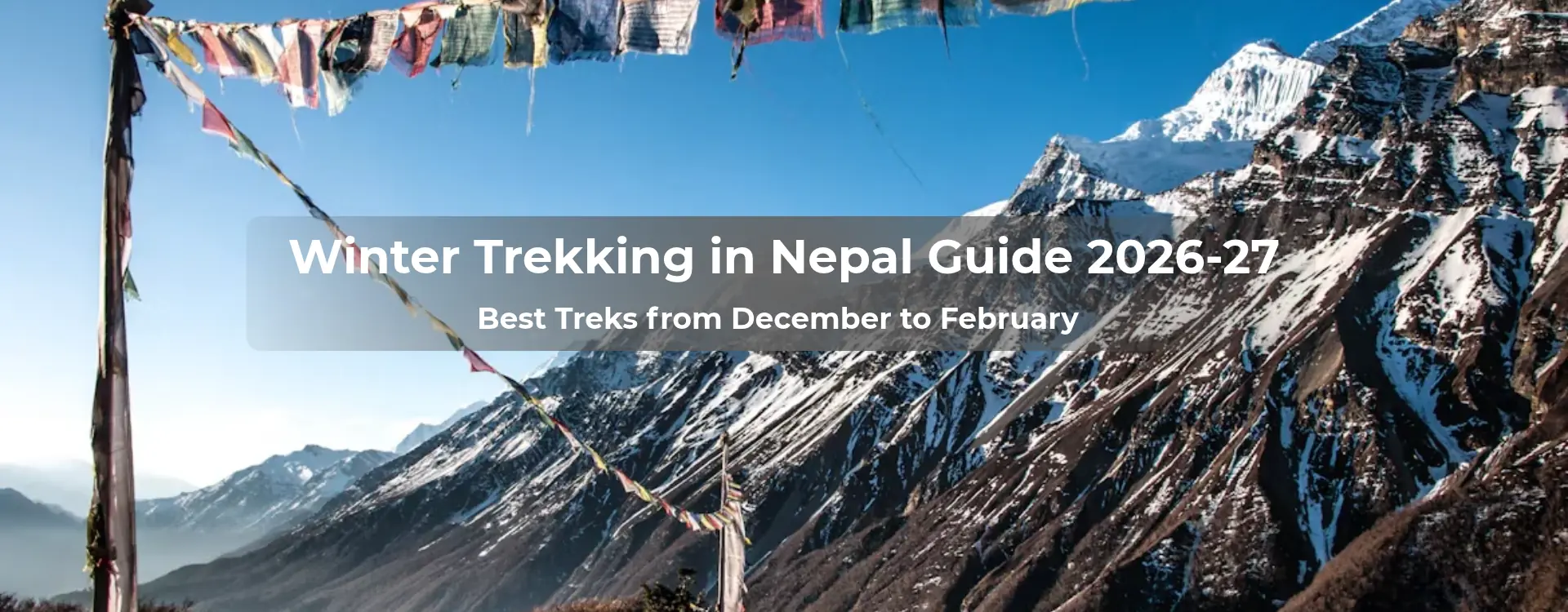
Yes, you can trek in Nepal in winter, and on the right route it is one of the best times to go. From December to February the monsoon haze is gone, mountain views are at their sharpest, and the trails are far quieter than in October. The trade-off is cold: nights drop below freezing above roughly 3,000 m, and snow can close high sections after a storm.
Winter trekking in Nepal works when the route matches the season. Low- and mid-altitude treks such as Poon Hill, Mardi Himal, Langtang Valley and the Everest View trek stay open and walkable. High-pass routes, including the Thorong La crossing on the Annapurna Circuit and the Everest Three Passes, are usually not realistic in deep winter.
This guide shows which treks stay open and safe in December, January and February; how cold and how high each route gets; what to pack; and which eBcTrails package fits each route. It is written for travelers planning a winter 2026–27 trek and for early-spring bookers who want to secure late February and March dates now.
eBcTrails is a Kathmandu-based trekking company running guided treks across the Everest, Annapurna and Langtang regions.
Quick answer
- Best months: early December for the mildest weather, January for the clearest views (and the coldest nights), and February for the most snow.
- Safest first winter trek: Ghorepani Poon Hill, with a maximum altitude of 3,210 m.
- Strong views at moderate altitude: Langtang Valley and the Everest View trek.
- Go with caution: Annapurna Base Camp, Everest Base Camp, Khopra Ridge and Langtang–Gosaikunda.
- Skip in deep winter: Thorong La and the Everest Three Passes.
Which Nepal Treks Stay Open in Winter? The Go / Caution / Avoid Guide
Most low and mid-altitude treks stay open all winter. Routes below about 3,500 m that retreat downhill are the safest. Treks to 4,000–5,500 m stay open but need cold-weather gear, buffer days and a guide who reads the snow. High-pass crossings are the ones to postpone.
We rate every route in three tiers:
Go. Low altitude, short days and an easy exit. Snow is light and lodges stay open. These suit first-time winter trekkers.
Caution. The trek is possible, but you will face sub-zero nights, wind or snow on the upper trail. Add one or two buffer days, carry a warmer sleeping bag, and confirm lodge availability before you leave.
Avoid. Pass crossings and routes where a single storm can close the trail with no safe retreat. Postpone these to spring or autumn.
| Trek | Max altitude | Typical range (night low to day high) | Snow risk | Verdict | Package |
| Ghorepani Poon Hill | 3,210 m | −2 °C to 10 °C | Light to moderate on the ridge after storms | Go | Poon Hill Mardi Himal Trek |
| Everest View Trek | About 3,860 m (Tengboche) | −8 °C to 6 °C (Namche, January) | Light to moderate | Go | Everest View Trek |
| Langtang Valley | About 3,800 m (Kyanjin) | −8 °C (Kyanjin night) to 12 °C | Moderate | Go, with care | Langtang Valley Trek |
| Mardi Himal | 4,500 m (Base Camp) | −5 °C to 3 °C | Moderate to heavy above High Camp | Go to High Camp. Caution beyond | Mardi Himal Trek |
| Annapurna Base Camp | 4,130 m | −5 °C to 12 °C | Heavy above 3,000 m | Caution | Annapurna Base Camp Trek |
| Khopra Ridge | 3,660 m | −5 °C to 3 °C | Moderate to heavy | Caution | Khopra Ridge Trek |
| Langtang–Gosaikunda | 4,380 m (Gosaikunda) | Colder than Kyanjin | Heavy | Caution (experienced trekkers) | Langtang Gosaikunda Trek |
| Everest Base Camp | 5,364 m (5,545 m at Kala Patthar) | −15 °C to −20 °C at night | Moderate, wind-packed | Caution | Everest Base Camp Trek |
| Annapurna Circuit (Thorong La) | 5,416 m | Below −15 °C at pass level | Heavy, pass closures | Avoid | Postpone to spring or autumn |
| Everest Three Passes | 5,535 m (Kongma La) | Below −15 °C at pass level | Heavy, pass closures | Avoid | Postpone to spring or autumn |
Temperatures are typical ranges for each area, not forecasts, and they shift from year to year. A storm can change any verdict, so your guide makes the final call each morning. Whatever the tier, plan for shorter daylight: start early and reach the lodge by mid-afternoon.
December vs January vs February: Which Winter Month Is Best for Trekking in Nepal?
Choose December for the mildest weather and the easiest first winter trek, January for the clearest mountain views and the fewest people, and February if you want longer days and a head start on spring. January is usually the coldest month, and February usually brings the heaviest snow on higher trails. For long-term monthly patterns, see the Department of Hydrology and Meteorology (DHM) climate reports.
| December | January | February | |
| Nights at 3,000–4,000 m | Cold, below freezing | Coldest of the season | Cold, easing late in the month |
| Snow | Light, mostly above 3,500 m | Moderate on upper trails | Highest snow risk on high routes |
| Mountain views | Very good | Often the clearest | Good, with more cloud and snowfall events |
| Crowds | Busiest at Christmas and New Year | Quietest | Light, rising toward March |
| Best for | First-timers, Poon Hill, Everest View | Photographers, experienced trekkers | Flexible travellers, early-spring planners |
Nepal Trekking in December
Early December is the gentlest month for winter trekking. The skies are still settled after the post-monsoon season, lodges are operating normally, and nights are cold without being extreme. This is the best month for a first winter trek on Poon Hill or the Everest View trek.
The catch is the calendar. The Christmas and New Year week is the busiest stretch of the winter, so book flights and lodges early. Daylight is short, around 10½ hours at the solstice, so start walking at first light and aim to reach the lodge by mid-afternoon. Check the DHM weather forecasts in the days before you travel.
Nepal Trekking in January
January is the coldest month and often the clearest. Crisp air and low humidity give the sharpest views of Annapurna, Langtang and Everest, and the trails are at their quietest. It rewards trekkers who are prepared for the cold.
Expect harder nights at altitude and, on some high routes, reduced lodge service. Add a buffer day, carry a warmer sleeping bag, and confirm lodge availability before you set off. January suits photographers and experienced trekkers on the Langtang Valley trek and on the Everest Base Camp trek with full cold-weather preparation.
Nepal Trekking in February
February brings the heaviest snow on the upper sections of the Annapurna Base Camp trek, the Mardi Himal trek and the Khopra Ridge trek. Days are noticeably longer, and conditions begin to shift toward spring as the month ends.
Lower, easier routes remain a strong choice; our guide to the best easy treks in Nepal for beginners covers them. Snow-covered ridges can look spectacular. Plan more flexibility into higher itineraries, because a storm can hold you at a lodge for a day. If you are booking late February or March, see our early-spring guidance below.
Altitude and Temperature by Route in Winter
Temperatures fall steadily as you climb. Valleys stay mild, the Annapurna foothills see light frost, and sub-zero nights begin around 3,000 m. Above 4,500 m on the Everest Base Camp route, nights can reach −15 °C to −20 °C, and wind chill makes it feel colder.
| Area | Typical altitude | Typical range (night low to day high) | Treks covered |
| Kathmandu and Pokhara valleys | About 1,300 m and 820 m | About 2 °C to 20 °C | Trek start and finish points |
| Annapurna foothills | 2,800–3,210 m | −2 °C to 10 °C | Ghorepani Poon Hill |
| Annapurna high camps | 3,500–4,130 m | −5 °C to 12 °C | Annapurna Base Camp, Mardi Himal, Khopra Ridge |
| Langtang Valley | Up to about 3,800 m | −8 °C (Kyanjin night) to 12 °C | Langtang Valley, Langtang–Gosaikunda |
| Lower Khumbu | 3,440–3,860 m | −8 °C to 6 °C | Everest View Trek |
| Upper Khumbu | 4,900–5,364 m | −15 °C to −20 °C at night | Everest Base Camp |
These are typical ranges, not forecasts, and they vary from year to year. Four practical points follow from the table:
- Wind chill. Ridges and passes feel several degrees colder than the thermometer reads, so pack a windproof shell as well as insulation.
- Sleeping bag. Lodges provide blankets, but rooms are unheated. A bag rated for the lowest night temperature on your route is the single most important piece of winter kit. Confirm the rating with your trek leader.
- Lodge heating. Dining rooms are warm in the evening when the stove is lit, and bedrooms are not. Plan to change into dry layers before dinner.
- Daylight. Short days limit how far you can safely walk. Winter itineraries are paced accordingly, which is why they often include buffer days.
Cold and altitude go together. Before you choose a route above 3,500 m, read the Himalayan Rescue Association’s guidance on altitude illness and the Nepal Tourism Board’s safety in the mountains page. For a first winter trek at lower altitude, start with the Langtang Valley guide.
Best Winter Treks in Nepal
Each trek below is rated for a December to February departure, using the Go / Caution / Avoid scale from earlier in this guide. Temperatures are typical ranges, not forecasts.
1. Ghorepani Poon Hill Trek
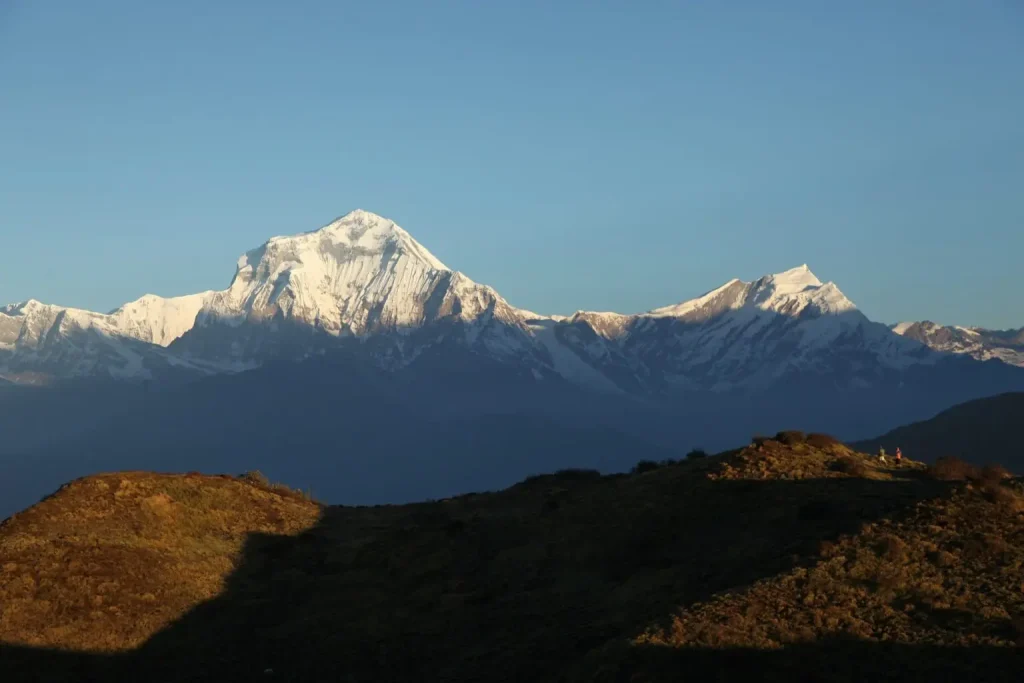
Winter verdict: Go. The best first winter trek in Nepal.
Max altitude: 3,210 m | Typical days: 3-9, depending on itinerary | Night-to-day range: −2 °C to 10 °C | Snow risk: Light to moderate on the ridge after storms | Best month: December
Poon Hill is the safest introduction to winter trekking in Nepal. The route stays below 3,300 m, the trail runs through villages with plenty of lodges, and you can retreat downhill quickly if a storm arrives. Winter also gives Poon Hill its best moments: the sunrise view over Dhaulagiri and the Annapurna range is often at its sharpest between December and January, when the air is dry and clear.
Expect cold mornings. The sunrise climb starts before dawn, and the viewpoint can be freezing while you wait for first light. Carry a down jacket, gloves and a warm hat in your daypack. Stone steps and ridge sections can be icy after snowfall, so trekking poles help.
This trek suits first-timers, families with older children and anyone testing their cold tolerance before a higher route. If you want to extend it, our Poon Hill and Mardi Himal trek combines both. For other Annapurna options, see our guide to the best Annapurna treks.
2. Everest View Trek
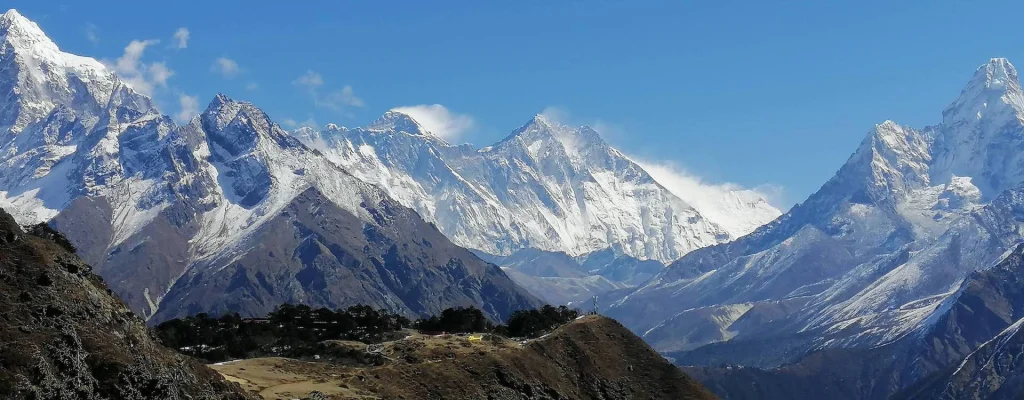
Winter verdict: Go. Everest views without the extreme altitude.
Max altitude: About 3,860 m (Tengboche) | Typical days: About 11 | Night to day range: −8 °C to 6 °C (Namche, January) | Snow risk: Light to moderate | Best month: December to January
The Everest View trek shows you the Khumbu without pushing to Base Camp. You walk the classic route to Namche Bazaar and on toward Tengboche, with views of Everest, Lhotse and Ama Dablam, while staying below 4,000 m. That keeps nights far milder than at Base Camp, and the risk of altitude illness is lower.
Winter brings clear skies and quiet trails. Namche and the lower villages stay open, and lodges are warm in the dining room even though bedrooms are not. The real winter risk is the flight into Lukla. Weather can delay flights, so add at least one buffer day at each end of the trip.
This route suits trekkers who want an Everest-region experience, photographers, and anyone who is unsure about 5,000 m. If Base Camp itself is your goal, read the winter notes in our Everest Base Camp trek guide, and compare conditions with EBC in October.
3. Langtang Valley Trek
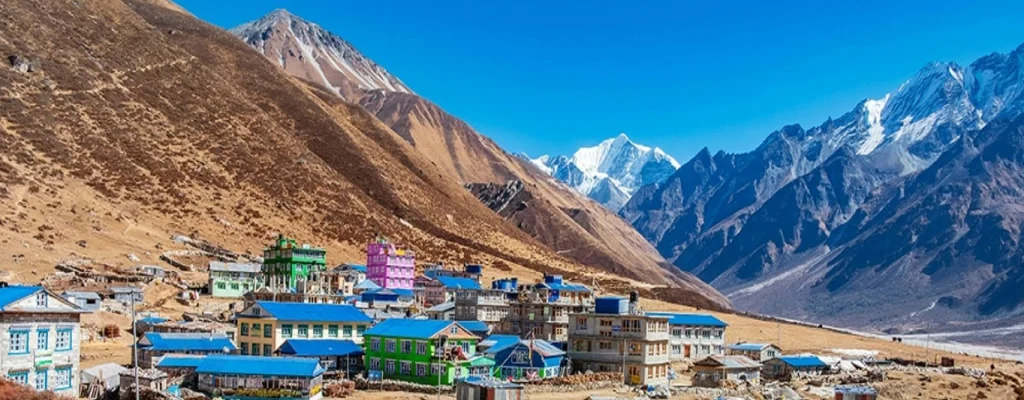
Winter verdict: Go, with care.
Max altitude: About 3,800 m (Kyanjin Gompa) | Typical days: 11, but depends on itinerary | Night to day range: −8 °C (Kyanjin night) to 12 °C | Snow risk: Moderate | Best month: March-May, September to November.
Langtang is close to Kathmandu and sits in a single valley, which makes it a practical winter option. There is one main trail, no high pass to cross, and the retreat is simply back down the valley. In winter the views up to Langtang Lirung and the surrounding peaks are crisp, and you will share the trail with very few other trekkers.
The challenge is cold and altitude together. The valley gains height steadily, and Kyanjin sits near 3,800 m, where nights are the coldest on this route. Build in an acclimatization day and read the CDC’s guidance on altitude illness before you go. Lodge service higher in the valley can be reduced in deep winter, so confirm availability before you leave.
This trek suits fit first-timers and experienced trekkers who want solitude. Read our full Langtang Valley trek guide for the day-by-day route, or view the Langtang Valley package.
4. Mardi Himal Trek
Winter verdict: Go to High Camp; Caution beyond.
Max altitude: 4,500 m (Base Camp); High Camp is lower | Typical days: 5–9, depending on itinerary | Night to day range: −5 °C to 3 °C | Snow risk: Moderate to heavy above High Camp | Best month: December
Mardi Himal is a ridge walk with close views of Machapuchare, and it is quieter than the main Annapurna trails. In winter the lower forest sections are cold but walkable, and High Camp offers some of the best mountain scenery of any short trek.
The upper ridge is where winter changes the trek. Snow builds on the final section to Base Camp, the trail can be hard to follow in poor visibility, and the exposed ridge catches the wind. Your guide may decide to stop at High Camp or Viewpoint, and that is a normal call, not a failure. Carry microspikes, a windproof shell and a sleeping bag rated for the lowest night temperature.
This trek suits fit trekkers who like ridge walks and accept that the summit-day plan can change. See our Mardi Himal trek guide for the full itinerary, the Mardi Himal package, or the combined Poon Hill and Mardi Himal itinerary.
5. Annapurna Base Camp Trek
Winter verdict: Caution.
Max altitude: 4,130 m | Typical days: 6–14, depending on itinerary | Night to day range: −5 °C to 12 °C (nights at Base Camp are far colder than this range suggests) | Snow risk: Heavy above 3,000 m | Best month: Early December
Annapurna Base Camp in winter is a very different trek from the autumn version. The amphitheatre of peaks is at its most dramatic with fresh snow, and the trail is quiet. But the upper valley holds deep snow, the final stretch above the Deurali area is exposed to avalanche risk after heavy snowfall, and lodges at the top can close if conditions turn. Your guide’s morning decision on whether to continue is part of the trek, not a disruption to it.
Plan for it. Add one or two buffer days, carry microspikes and gaiters, and book a sleeping bag rated for well below zero. Early December is the safest window, before the heaviest snow of January and February.
This trek suits fit trekkers with some altitude experience who accept that the plan can change. See the full route on our Annapurna Base Camp trek page, and our ABC cost guide for pricing. If you are travelling at the edge of the season, our Annapurna Base Camp in November guide shows how conditions compare.
6. Everest Base Camp Trek
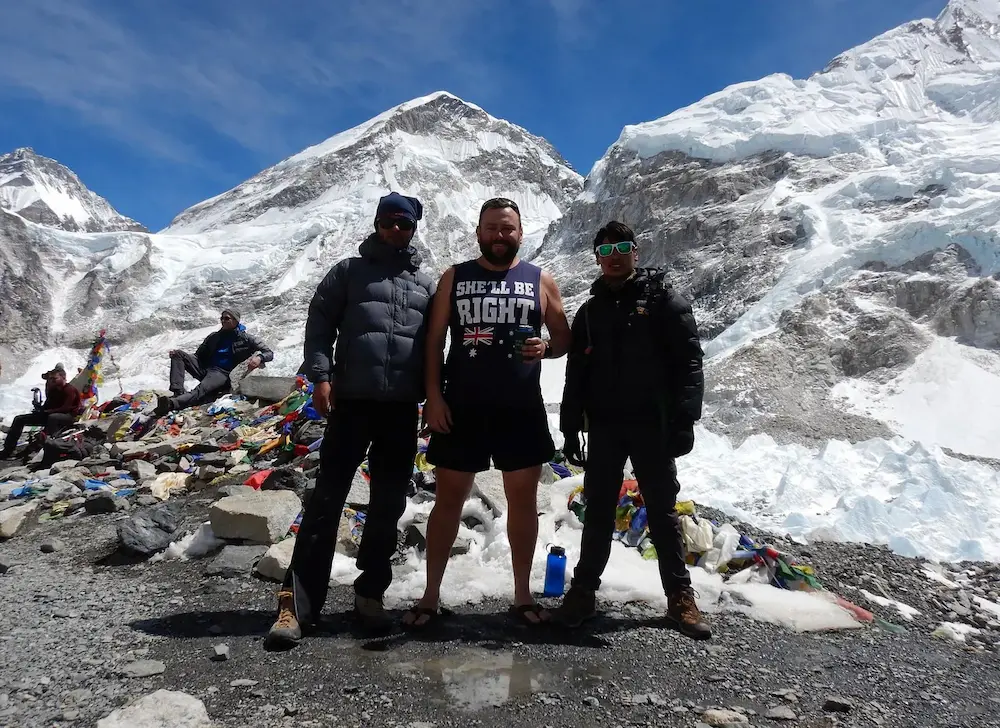
Winter verdict: Caution. The most demanding winter route in this guide.
Max altitude: 5,364 m (Base Camp), 5,545 m (Kala Patthar) | Typical days: About 15| Night to day range: −15 °C to −20 °C at night near the top | Snow risk: Moderate, with wind-packed snow | Best month: December
Everest Base Camp in winter is achievable, and it offers clear skies and the quietest trail of the year. It also combines the lowest temperatures of any trek here with the highest altitude. Nights above Dingboche are severe, wind chill makes days feel colder than the thermometer reads, and the high villages may have fewer lodges operating. Confirm lodge availability for every night above Dingboche before you commit.
Preparation matters more than fitness alone. You need a four-season sleeping bag, an insulated down jacket, proper boots and a conservative acclimatisation schedule. Build in buffer days at both ends, because Lukla flights can be delayed by weather. Altitude sickness risk is the same as in other seasons, so read the Himalayan Rescue Association’s guidance on altitude illness before you go.
This trek suits experienced, well-prepared trekkers who want Base Camp without the autumn crowds. See our Everest Base Camp trek page for the itinerary. If you want Everest views at lower altitude, choose the Everest View trek above.
7. Khopra Ridge Trek
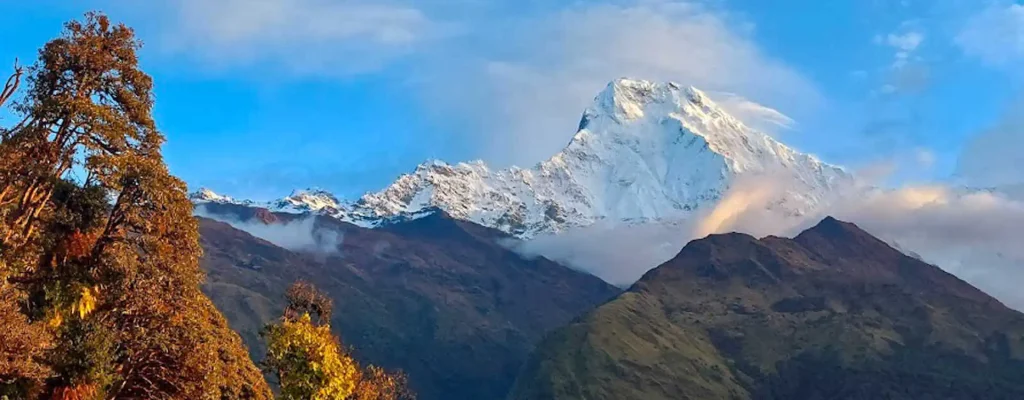
Winter verdict: Caution.
Max altitude: About 3,660 m (Khopra Danda) | Typical days: About 12 | Night to day range: −5 °C to 3 °C | Snow risk: Moderate to heavy | Best month: December
Khopra Ridge is the quiet alternative to Poon Hill. The route climbs through forest to a high ridge with close views of Annapurna South and Dhaulagiri, and in winter you may see almost no other trekkers. That solitude is the appeal, and it is also the risk. Lodges are basic, some may be closed, and a snowfall can slow the final sections.
Treat Khopra as an experienced-trekker route in winter. Confirm lodge availability before departure, carry extra food and a warm sleeping bag, and keep the optional side trip to Khayer Lake (above 4,500 m) off the plan in deep winter.
This trek suits trekkers who have already done a winter route and want something quieter. See the Khopra Ridge and Khayer Lake package. If you want an easier first step, start with Poon Hill.
8. Langtang–Gosaikunda Trek
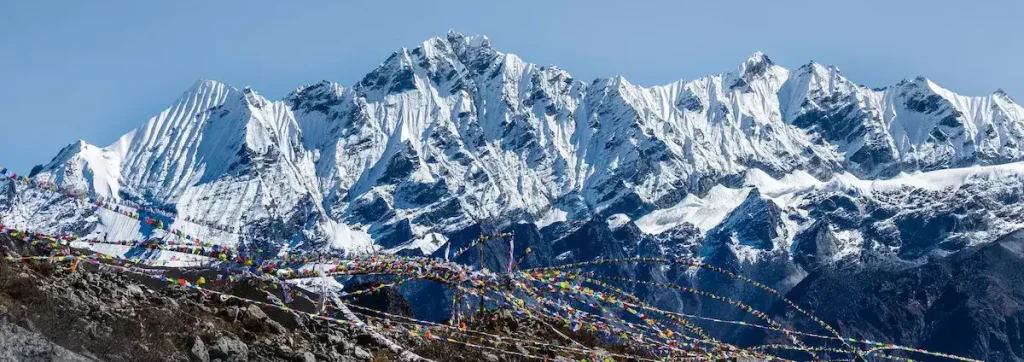
Winter verdict: Caution. For experienced trekkers only.
Max altitude: 4,380 m (Gosaikunda), with the Laurebina La pass above that | Typical days: About 16 | Night to day range: Colder than Kyanjin (−8 °C at night) | Snow risk: Heavy | Best month: Early December
This is the longest and highest route in the “Caution” group. It combines the Langtang Valley with the holy lakes of Gosaikunda, and in winter that means heavy snow on the high section, frozen or partly frozen lakes, and a pass crossing that depends on recent conditions. Lake and pass conditions vary from year to year, so we confirm them with local guides before each departure rather than promising a crossing.
Be realistic about what you can control. A fixed plan to cross the pass is a risk in winter; a flexible plan that can end at Kyanjin or turn back is a safer one. Carry microspikes, gaiters, a four-season sleeping bag and extra buffer days.
This trek suits experienced winter trekkers only. If you are unsure, do the Langtang Valley trek alone. The full route is on the Langtang–Gosaikunda package.
Winter Treks to Skip or Postpone
Some Nepal treks are best saved for spring or autumn. These routes depend on high passes, and a single storm can close the trail with no safe way back.
- Annapurna Circuit (Thorong La, 5,416 m). Heavy snow on the pass makes the crossing unreliable in deep winter, and the descent on the far side is long and exposed. Choose a lower Annapurna route instead, such as Poon Hill or Annapurna Base Camp. You can read about the route on our Annapurna Circuit trek page, and plan it for spring or autumn.
- Everest Three Passes (up to 5,535 m at Kongma La). Three high-pass crossings in one trek means three chances for snow to stop you. In winter the cold and altitude combine at their worst. The better winter option is the Everest View trek or a carefully planned Base Camp trek. See the Three Passes trek for spring dates.
- Manaslu Circuit (Larkya La, about 5,106 m). The pass is typically snowed in during deep winter, which makes the circuit impractical. Our Manaslu Circuit trek is best planned for autumn or spring.
This is not a “never” list. Experienced mountaineers with the right support can cross passes in winter, but for standard trekking itineraries the risk is rarely worth it. If your heart is set on one of these, tell us your dates, and we will suggest the safest alternative or the best season to return.
What to Pack for a Winter Trek in Nepal
Pack for the coldest night on your route, not the average day. A winter trek is mostly about staying warm in the evening, when you stop moving, and in the early morning, when you start. Layers let you adjust through the day.
| Layer | What to bring | Why it matters |
| Base layer | 2 merino or synthetic tops and bottoms | Wicks sweat. Avoid cotton, which stays wet and cold |
| Mid layer | Fleece or light insulated jacket | Your main warmth while walking |
| Insulation | Down or synthetic jacket | For evenings, rest stops and sunrise starts |
| Shell | Windproof and waterproof jacket and trousers | Wind chill is the biggest comfort factor on ridges |
| Head and hands | Warm hat, buff, liner gloves, insulated gloves or mittens | Extremities lose heat first |
| Footwear | Insulated, waterproof trekking boots, warm socks, gaiters | Cold feet end treks faster than any other problem |
| Traction | Microspikes and trekking poles | Packed snow and ice on steps and ridges |
| Sleeping | Sleeping bag rated for the lowest night temperature on your route | Lodge rooms are unheated, so this is the most important item |
| Extras | Sunglasses or goggles, sun cream, lip balm, headlamp with spare batteries | Snow glare is strong and cold drains batteries |
A few practical points:
- Rent or buy in Kathmandu. Bulky items such as sleeping bags and down jackets can be rented in Kathmandu’s Thamel district, so you do not need to carry them from home. Check condition and warmth rating before you leave.
- Match the bag to the route. Poon Hill needs far less than Everest Base Camp. Confirm the right rating with your trek leader before you buy or rent.
- Keep electronics warm. Cold shortens battery life, so carry phones, cameras and power banks inside your jacket at night.
- Pack light. Porters carry a limited weight, so choose items that do more than one job.
For a full checklist, see our trekking packing list. If you are comparing a high winter route, the Everest Base Camp trek page lists what is included in the package.
Winter Trekking Safety: Altitude, Cold, Snow and Flights
Winter does not remove the usual mountain risks; it adds cold and snow to them. The good news is that most winter problems are predictable and preventable with the right pace, kit and guide.
Altitude
Altitude illness can happen in any season. The risk depends on how high you sleep and how fast you gain height, according to the CDC Yellow Book. Ascend gradually, include rest days on higher routes, and do not climb higher if you have symptoms such as a headache, nausea or unusual tiredness. If symptoms worsen, descend. Read the Himalayan Rescue Association’s guidance before you travel.
Cold and frostbite
Watch for numb, white or waxy skin on your fingers, toes, nose and ears. Warm the area gradually, do not rub it, and tell your guide immediately. Drink plenty of fluids, because cold air and altitude both dry you out, and keep your hands and feet dry.
Snow and ice
Snow changes the trail. Start early, use microspikes on packed snow, and let your guide decide whether to continue after a storm. Trails often hold safely a day after snowfall, and waiting is better than forcing a crossing.
Flights and buffer days
Weather can delay or cancel mountain flights, especially into Lukla. Build in at least one buffer day at each end of a flight-dependent trek, and do not book an international flight home on the day you return.
Insurance
Choose travel insurance that covers helicopter evacuation and the maximum altitude of your route. Check the policy wording before you travel, because some policies cap altitude below the high point of your trek.
Guides and rules
Since 1 April 2023, Nepal has required foreign trekkers in national parks, conservation areas and restricted regions to be accompanied by a licensed guide or porter-guide through a registered agency, as set out in this US Embassy alert. Winter makes a guide more valuable because they read conditions daily. Choose an agency registered with the Trekking Agencies’ Association of Nepal (TAAN), and see our guide on solo trekking in Nepal for how the rules affect independent travelers. For general mountain safety guidance, read the Nepal Tourism Board’s safety in the mountains page.
Permits and Costs for Winter Treks
Permits are the same in winter as in other seasons, and your trekking agency arranges them for you. Foreign trekkers pay an entry fee for each protected area they walk through.
| Region | Permit | Typical fee (foreign trekker) | Treks it covers |
| Annapurna | Annapurna Conservation Area Permit (ACAP) | About NPR 3,000 | Poon Hill, Mardi Himal, Annapurna Base Camp, Khopra Ridge |
| Langtang | Langtang National Park permit | About NPR 3,000 | Langtang Valley, Langtang–Gosaikunda |
| Everest | Sagarmatha National Park permit, plus a local Khumbu municipality fee | About NPR 3,000, plus a local fee reported at NPR 2,000–3,000 | Everest Base Camp, Everest View Trek |
TIMS card requirements and costs differ by region and have changed recently, so we do not list a fixed figure here. Fees are revised from time to time, so confirm the current amounts with your agency or the Nepal Tourism Board before you book.
On cost, winter pricing varies by route, group size and how many buffer days you add. For a detailed breakdown, see our Annapurna Base Camp trek cost guide, and ask us for a quote for any other route.
Winter vs Autumn vs Spring: Which Season Suits You?
Winter is the quietest and clearest trekking season, but it is also the coldest. Autumn is the busiest and most stable, and spring is the warmest.
| Autumn (Oct–Nov) | Winter (Dec–Feb) | Spring (Mar–May) | |
| Crowds | Busiest | Quietest | Busy, rising through April |
| Views | Excellent | Often the clearest | Good, with more haze later |
| Temperatures | Mild to cool | Coldest | Warmest |
| Snow | Light | Highest on upper trails | Melting, varies by altitude |
| Best for | First-time Nepal trekkers | Quiet trails, clear skies | Rhododendron forests, warmer nights |
For autumn conditions, compare our guide to EBC in October and our Annapurna Base Camp in November guide.
Booking for Late February and March
If you are planning a late February or early spring departure, book early. Winter bookers and early-spring bookers overlap in this window, and securing your flights, guide and lodges ahead of time gives you more choice. Late February still carries winter conditions on high routes, while March brings warmer days and the start of the spring season. A flexible plan works best: choose a route with a lower-altitude fallback, such as the Poon Hill and Mardi Himal trek,
How to Choose Your Winter Trek
- First winter trek, shorter and lower: Poon Hill.
- Everest views without extreme altitude: Everest View trek.
- Quiet valley, clear peaks, fit trekkers: Langtang Valley.
- Dramatic snow scenery, experienced trekkers: Annapurna Base Camp or Everest Base Camp, with buffer days.
- Solitude and a flexible plan: Khopra Ridge or Mardi Himal.
- Want a high pass? Wait for spring or autumn.
If you are unsure, tell us your dates, fitness and experience, and we will recommend the safest fit.
Frequently Asked Questions About Winter Trekking in Nepal
Can you trek in Nepal in winter?
Yes. Low and mid-altitude routes such as Poon Hill, Everest View and Langtang Valley stay open from December to February. High-pass routes are usually not realistic in deep winter. The key is matching your route to the season and preparing for the cold.
Is winter trekking in Nepal safe?
It is safe on the right route with proper kit, buffer days and a licensed guide. The main risks are cold, snow, altitude and flight delays. Choose a route that suits your experience and let your guide make daily decisions about conditions.
Which winter trek is best for beginners?
Ghorepani Poon Hill is the safest first winter trek. It stays below 3,300 m, has plenty of lodges and offers an easy retreat downhill. See our guide to the best easy treks in Nepal for beginners for more options.
Does it snow at Poon Hill in winter?
Snow is possible on the ridge, mostly after storms, and ice can form on steps and ridge sections. Heavy snow is more likely at higher altitudes than at Poon Hill. Carry microspikes and trekking poles in case.
How cold is Everest Base Camp in winter?
Nights near the top can reach about −15 °C to −20 °C, and wind chill makes it feel colder. Pack a four-season sleeping bag and an insulated down jacket, and confirm the right rating with your trek leader.
Are teahouses open in winter?
Most lodges on lower and mid-altitude routes stay open. Some higher lodges reduce service or close in deep winter, so confirm availability for every night before you set off.
Is Annapurna Base Camp possible in winter?
Yes, with caution. Snow is heavy above about 3,000 m, and early December is usually the safest window. Your guide decides each morning whether it is safe to continue
Which month is best for winter trekking: December, January or February?
December is the mildest, January is usually the clearest and coldest, and February tends to bring the most snow on high routes. Your best month depends on the route and your tolerance for cold.
Do I need a guide for winter trekking in Nepal?
Foreign trekkers in national parks, conservation areas and restricted regions must be accompanied by a licensed guide or porter-guide through a registered agency, a rule in place since April 2023. Read more in our guide to solo trekking in Nepal.
Will flights to Lukla run in winter?
Winter skies are often clear, but weather can still delay or cancel flights. Add at least one buffer day at each end of your trek, and confirm the current flight arrangements with your operator.
Plan Your Winter Trek with eBcTrails
Winter trekking rewards good planning. eBcTrails runs guided treks across the Everest, Annapurna and Langtang regions, and we choose routes, dates and buffer days to match winter conditions.
Ready to plan? Choose a route to start:
Contact us with your dates, group size and experience, and we will recommend the safest and most rewarding winter route for you.


